
Denture Treatment in Vrindavan Yojana, Lucknow
Denture Treatment in Vrindavan Yojana, Lucknow
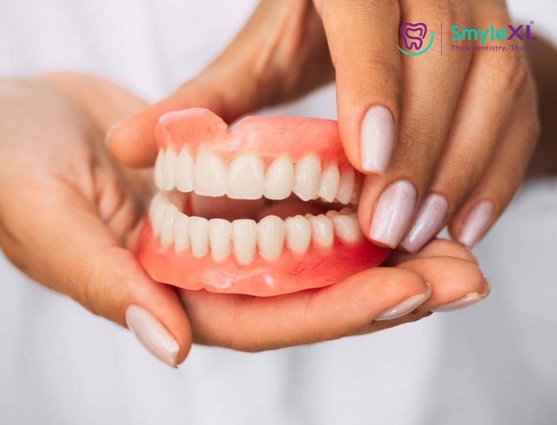
You may notice yourself chewing on one side of your mouth, avoiding crunchy foods, or covering your smile because of missing teeth. If you’re considering dentures in Vrindavan Yojana, Lucknow, understanding how different types of dentures work can help you find a suitable way to replace missing teeth.
Losing one or more teeth can gradually affect everyday activities. Food may become harder to chew, certain words may be difficult to pronounce, and the appearance of your smile may change. When several teeth are missing, the cheeks and lips may also lose some of the support previously provided by the teeth.
Dentures replace missing teeth and some of the surrounding gum tissue, helping restore chewing ability, speech, and facial appearance. At SmyleXL Dental Clinic, denture treatment is planned according to the number of missing teeth, the condition of the gums, and individual comfort and functional needs.
Dentures are removable dental appliances used to replace missing teeth. They consist of artificial teeth attached to a base designed to fit over the gums, helping restore everyday functions such as chewing and speaking.
Modern dentures can be made using acrylic, metal, or other dental materials, depending on the type of restoration and individual requirements.
Complete dentures replace all the teeth in the upper or lower jaw. They rest on the gums and are designed to support the lips and cheeks while restoring the appearance of missing teeth.
Partial dentures replace several missing teeth when some natural teeth remain. They may use suitable clasps or other attachments to help keep the appliance in position.
Immediate dentures are prepared before tooth extraction and placed shortly after the teeth are removed. They allow patients to avoid being without replacement teeth during the initial healing period, although adjustments are commonly needed as the gums heal.
These dentures attach to dental implants placed in the jawbone, providing additional support and stability. They require a separate assessment to determine whether implants are suitable.
The appropriate denture depends on the number of missing teeth, gum health, jawbone condition, and the patient’s ability to maintain the appliance.
Dentures may be recommended when several teeth are missing or when remaining teeth cannot be preserved. The need for dentures depends on how tooth loss affects chewing, speech, and everyday comfort.
Common signs include:
Not everyone with missing teeth needs dentures. Dental bridges and implants may also be considered depending on the condition of the remaining teeth and jawbone.
Dentures help replace missing teeth, improve everyday oral function, and restore some of the support provided by natural teeth.
1. Improves Chewing Ability
Dentures create replacement biting surfaces, allowing patients to eat a wider variety of foods more comfortably. Some hard or sticky foods may still require adjustments in eating habits.
2. Supports Clearer Speech
Replacing missing teeth can improve pronunciation of sounds that depend on the position of the tongue, lips, and teeth.
3. Restores Smile Appearance
Artificial teeth are selected and arranged to create a natural-looking smile based on facial features and individual preferences.
4. Supports Facial Appearance
Complete dentures can provide support to the lips and cheeks, helping reduce the sunken appearance that sometimes develops after extensive tooth loss.
5. Offers a Removable Replacement Option
Traditional dentures can be removed for cleaning, making them a suitable option for patients who prefer a removable restoration.
6. Replaces Multiple Teeth Together
A complete or partial denture can replace several missing teeth within the same appliance, depending on the treatment plan.
Dentures may take some time to feel comfortable because the mouth needs to adjust to a new appliance. Most early difficulties can be managed through gradual adaptation, good cleaning habits, and professional adjustments.
Some considerations include:
Persistent pain, repeated mouth sores, or difficulty keeping a denture in place should be evaluated by a dentist.
Denture treatment involves examining the mouth, recording the shape of the gums and remaining teeth, creating the appliance, and adjusting it for comfort and function. The process generally requires multiple appointments.
Step 1: Dental Examination
The dentist examines the gums, remaining teeth, and jawbone condition. Any dental problems that may affect denture fitting are identified.
Step 2: Impressions or Digital Scans
Measurements of the mouth are taken using impressions or digital scanning, depending on the treatment requirements.
Step 3: Planning the Denture Design
The dentist determines the denture type, artificial tooth arrangement, and suitable materials. Tooth color and shape are selected to complement the patient’s appearance.
Step 4: Trial Fitting
A trial denture may be used to check tooth positioning, appearance, bite, and overall fit before the final appliance is completed.
Step 5: Denture Placement
The finished denture is placed in the mouth and checked for stability, comfort, and chewing function. Necessary adjustments are made.
Step 6: Follow-Up and Maintenance
Patients receive instructions about cleaning, removing, and storing their dentures. Follow-up visits help identify pressure points and make adjustments as the mouth adapts.
Immediate dentures follow a slightly different process because they are prepared before extraction and placed soon afterward.
The cost of dentures in Vrindavan Yojana, Lucknow generally ranges from ₹2,000 to ₹31,500 or more, depending on the type of denture, number of teeth being replaced, materials selected, and treatment requirements. At SmyleXL Dental Clinic, the final estimate depends on the condition of the gums, remaining teeth, and the design of the replacement appliance.
Denture Type | Approximate Cost |
Complete and Partial Dentures (Private Care) | ₹2,000–₹20,000 |
Immediate Denture (Single Arch, Standard Acrylic) | ₹7,200–₹16,000 |
Full Upper and Lower Dentures (Standard, Both Arches) | ₹13,500–₹31,500 |
The overall range is a general pricing reference, not a uniform per-arch rate. The dual-arch estimate covers both the upper and lower dentures together. Implant-supported dentures involve separate treatment planning and are not included in these standard removable denture estimates.
Complete, partial, and immediate dentures differ in their design and preparation. Replacing an entire arch of teeth may involve different materials and fabrication steps than replacing only a few teeth.
The number of missing teeth affects the size, design, and overall construction of the denture. Treatment involving both arches may cost more than a single-arch restoration.
Acrylic, metal-based, and other denture materials have different properties and manufacturing requirements. The material chosen can affect both comfort and cost.
Patients with gum inflammation, damaged teeth, or other oral health problems may require additional treatment before the denture can be fitted.
Tooth selection, bite adjustments, laboratory fabrication, and the complexity of achieving a suitable fit can influence the final expense.
Depending on the selected treatment package, the charge may include:
Exact inclusions should be confirmed in the treatment estimate.
Additional charges may apply for:
Not every patient requires these services. A detailed estimate should identify the denture type, whether one or both arches are included, and any additional treatment expenses.
Disclaimer: The prices mentioned above are approximate and indicative. Actual costs may vary depending on the denture type, materials, number of missing teeth, condition of the gums, fabrication requirements, and additional dental procedures. A dental examination is necessary to determine the appropriate treatment and provide an accurate cost estimate.
SmyleXL Dental Clinic provides denture treatment with attention to replacing missing teeth, improving oral function, maintaining hygiene, and helping patients understand their treatment options.
Experienced Dentists
The dentists assess missing teeth, gum condition, and bite relationships before recommending a suitable denture type and design.
5-Step Sterilization Protocol
The clinic follows a five-step sterilization protocol to support instrument hygiene and infection control during dental examinations and procedures.
Highly Ethical and Cost-Transparent Dentistry
Patients receive information about denture materials, expected treatment steps, estimated expenses, and any additional procedures that may be needed.
Personalized Care in a Relaxing Environment
Denture treatment is planned around individual oral conditions, comfort, and functional needs. Patients are guided through the fitting process and given instructions for adapting to and maintaining their dentures.
Missing teeth can gradually affect how comfortably you eat, speak, and smile. Dentures provide a removable way to replace missing teeth and restore some of the functions and facial support previously provided by natural teeth.
For people considering dentures in Vrindavan Yojana, Lucknow, understanding the different denture types, fitting process, maintenance requirements, and expected costs can make treatment decisions easier.
Proper cleaning, regular dental examinations, and adjustments when needed are important for maintaining comfortable dentures. Consulting a dentist can help determine which tooth replacement option is appropriate for your oral health and everyday needs.
1. Which Type of Denture Is the Most Comfortable to Wear?
Implant-supported dentures often provide greater stability, while well-fitted conventional dentures can also be comfortable. The most suitable option depends on your gum and jawbone condition, remaining teeth, and individual needs.
2. Can You Sleep With Dentures In?
Dentures should generally be removed before sleeping to give the gums time to rest and allow proper cleaning. In certain situations, such as immediately after tooth extraction, a dentist may recommend wearing immediate dentures overnight for a limited period.
3. How Long Does It Take to Get Used to New Dentures?
Most patients begin adjusting to new dentures within a few weeks, although complete adaptation may take longer. Mild soreness, increased saliva, and changes in speech or chewing can occur during this period.
4. Can I Eat Normally With Dentures?
Yes, dentures can help you eat a wider variety of foods, although they do not provide the same biting strength as natural teeth. Beginning with soft foods, taking smaller bites, and chewing evenly on both sides can make eating more comfortable.
5. How Long Do Dentures Usually Last?
Conventional dentures often last around five to ten years, although they may need adjustments or replacement sooner. Their lifespan depends on material wear, changes in the gums and jawbone, and regular maintenance.