Full Mouth Restoration in Vrindavan Yojana, Lucknow
Full Mouth Restoration in Vrindavan Yojana, Lucknow
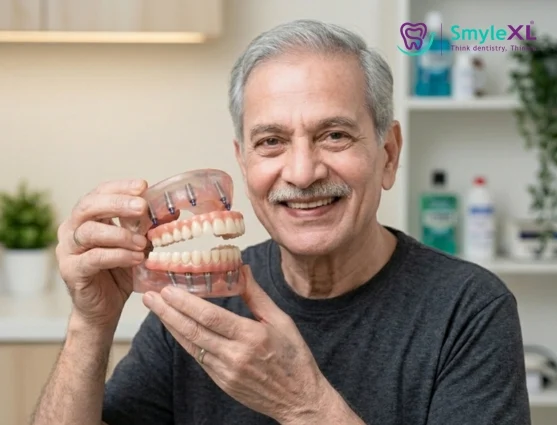
Eating a meal becomes difficult when several teeth are missing, damaged, or too weak to chew comfortably. You may begin avoiding certain foods, chewing on one side, or noticing changes in how your teeth meet. If you’re considering full mouth restoration in Vrindavan Yojana, Lucknow, understanding the available treatments can help you identify how your dental health and everyday comfort may be improved.
When multiple teeth are affected by decay, tooth loss, wear, or gum problems, treating just one tooth may not address the overall condition of the mouth. A more comprehensive approach may be necessary to restore chewing function, bite balance, and dental appearance.
Full mouth restoration combines different dental procedures based on individual needs. At SmyleXL Dental Clinic, treatment planning considers the condition of the remaining teeth, gums, jawbone, and bite to determine an appropriate restoration plan.
Full mouth restoration is a combination of dental treatments used to repair or replace multiple damaged or missing teeth. The aim is to restore oral function, improve chewing comfort, and support long-term dental health.
Unlike a smile makeover, which primarily focuses on appearance, full mouth restoration addresses both functional and structural dental problems.
Depending on the condition of the mouth, treatment may involve:
Not every patient requires all these procedures. The treatment plan depends on which teeth can be preserved and which need replacement.
Full mouth restoration may be considered when several dental problems affect chewing, tooth stability, or everyday comfort.
Common signs include:
A complete dental examination helps determine whether full mouth restoration or treatment of individual teeth is more appropriate.
Full mouth restoration aims to improve chewing, replace missing teeth, and restore the function of damaged dental structures.
1. Improves Chewing Ability
Replacing missing teeth and restoring damaged ones can make eating more comfortable and improve chewing efficiency.
2. Preserves Existing Teeth
Where possible, procedures such as crowns and root canal treatment help retain natural teeth rather than removing them.
3. Replaces Missing Teeth
Implants, bridges, and dentures can restore gaps that affect oral function and appearance.
4. Improves Bite Balance
Restoring the shape and position of damaged or missing teeth may help distribute chewing forces more evenly.
5. Supports Facial Appearance
Replacing several missing teeth can help restore support to the lips and cheeks.
6. Addresses Multiple Dental Problems Together
A comprehensive plan considers how different teeth and restorations function together, rather than treating each problem without considering the overall bite.
Full mouth restoration can involve several procedures, so healing and adjustment requirements vary according to the treatment plan.
Some considerations include:
Careful planning, regular reviews, and appropriate oral hygiene can help manage these concerns and support long-term results.
Full mouth restoration usually takes place in stages, beginning with a detailed examination and ending with the placement and assessment of the final restorations.
Step 1: Comprehensive Dental Examination
The dentist examines the teeth, gums, bite, and remaining dental structures. Dental X-rays or other imaging may be recommended to assess tooth roots and jawbone condition.
Step 2: Treatment Planning
A restoration plan is prepared according to the teeth that can be preserved, those requiring replacement, and any existing infections or gum problems.
Step 3: Managing Existing Dental Problems
Cavities, gum disease, and infected teeth are addressed before extensive restorative work. Root canal treatment or extraction may be necessary in selected cases.
Step 4: Restoring or Replacing Teeth
Depending on the plan, dental crowns, bridges, implants, or dentures are used to restore damaged and missing teeth.
Implant treatment may require a healing period before the final replacement teeth are attached.
Step 5: Checking the Bite and Fit
The dentist checks how the restored teeth meet during biting and chewing. Necessary adjustments are made to improve comfort and function.
Step 6: Final Evaluation and Maintenance
Once treatment is completed, the restorations are assessed for stability, appearance, and function.
Patients receive instructions for cleaning and maintaining their restored teeth, along with recommended follow-up appointments.
The cost of full mouth restoration in Vrindavan Yojana, Lucknow generally ranges from ₹72,000 to ₹13,50,000, depending on the number of teeth involved, procedures required, restoration materials, and complexity of treatment.
At SmyleXL Dental Clinic, the estimated expense depends on whether the treatment involves preserving existing teeth, replacing missing teeth, or combining several procedures.
Treatment | Approximate Cost |
Overall Full Mouth Restoration | ₹72,000–₹13,50,000 |
Full Mouth Dental Implants | ₹2,00,000–₹8,00,000+ |
Dental Crowns and Capping | ₹5,000–₹25,000 per tooth |
Root Canal Treatment | ₹2,000–₹8,000 per tooth |
Single Dental Implant | ₹30,000–₹75,000 per implant |
Dentures | ₹20,000–₹80,000 |
These prices are indicative and represent different procedures or treatment combinations. Individual procedure costs should not automatically be added together, as the total depends on the agreed restoration plan.
Restoring a few damaged teeth involves different expenses from replacing most or all teeth in the mouth.
Crowns, bridges, implants, and dentures differ in materials, fabrication, and clinical requirements. The chosen procedures influence the total cost.
Teeth with extensive decay, fractures, or infections may require root canal treatment, rebuilding, or extraction before restoration.
Patients with gum disease or inadequate bone support may require additional treatment before implants or other restorations can be placed.
Restoration materials, implant systems, laboratory fabrication, and the number of appointments can affect overall expenses.
Depending on the selected package, charges may include:
Exact inclusions depend on the proposed procedures and treatment estimate.
Additional expenses may apply for:
Not every patient requires these services. The estimate should clearly identify the procedures, materials, treatment stages, and additional charges.
Disclaimer: The prices mentioned above are approximate and indicative. Actual costs may vary depending on dental condition, number of teeth, selected restorations, treatment complexity, and additional procedures. A comprehensive dental examination is necessary to determine the treatment requirements and provide an accurate cost estimate.
SmyleXL Dental Clinic provides restorative dental care with attention to preserving natural teeth, replacing missing teeth, maintaining oral hygiene, and explaining treatment requirements.
Experienced Dentists
The dentists evaluate tooth condition, bite, gum health, and missing teeth before developing an appropriate restoration plan.
5-Step Sterilization Protocol
The clinic follows a five-step sterilization protocol to support instrument hygiene and infection control during dental procedures.
Highly Ethical and Cost-Transparent Dentistry
Patients receive information about recommended procedures, treatment stages, restoration materials, expected expenses, and any additional requirements.
Personalized Care in a Relaxing Environment
Treatment planning considers individual dental conditions, functional needs, and patient comfort. Each stage is explained clearly to help patients understand the process.
Multiple missing or damaged teeth can affect chewing, bite balance, and everyday oral comfort. Full mouth restoration provides a way to address these concerns through a combination of appropriate dental procedures.
For people considering full mouth restoration in Vrindavan Yojana, Lucknow, understanding the available treatments, procedures, expected expenses, and maintenance requirements can help make informed decisions.
Maintaining restored teeth requires regular brushing, cleaning around dental appliances, and appropriate dental examinations. Consulting a dentist can help determine which restorative procedures are suitable for your oral health.
1. How Long Does Full Mouth Restoration Take?
Full mouth restoration may take several weeks to several months, depending on the procedures required. Cases involving implants, bone grafting, or extensive dental work generally need longer treatment and healing periods.
2. Is Full Mouth Restoration Painful?
Some procedures may cause temporary discomfort, soreness, or swelling during recovery. The experience depends on the treatments performed, and dentists use appropriate measures to manage discomfort.
3. Can Full Mouth Restoration Be Done Without Implants?
Yes, full mouth restoration does not always require dental implants. Depending on the condition of the remaining teeth and gums, crowns, bridges, or dentures may be suitable alternatives.
4. How Long Do Full Mouth Restorations Last?
The lifespan depends on the restorations used, oral hygiene, and individual dental conditions. Crowns, bridges, dentures, and implant-supported restorations have different maintenance and replacement requirements.
5. What Is the Difference Between Full Mouth Restoration and a Smile Makeover?
Full mouth restoration primarily focuses on restoring damaged or missing teeth and improving oral function. A smile makeover mainly addresses cosmetic concerns such as tooth color, shape, and alignment, although some procedures may overlap.