
Root Canal Treatment in Davanagere
Root Canal Treatment in Davanagere
That persistent toothache that wakes you up at night, the sharp twinge when you enjoy something cold, or the dull, nagging ache that never fully settles, these symptoms often signal that something deeper is going on inside your tooth. When the inner tissue becomes irritated or infected, it can lead to increasing discomfort and, if left untreated, more serious dental problems.
This is where a root canal treatment becomes an essential and effective solution. Instead of removing the tooth, the procedure cleans and restores it from the inside, allowing you to keep your natural smile intact. At SmyleXL Dental Clinic, root canal treatment in Davanagere is performed with advanced techniques and a gentle approach, making the experience far more comfortable and reassuring than you might expect.
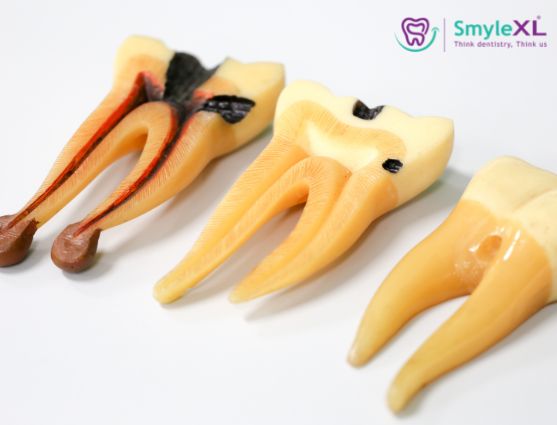
Deep inside every tooth is a soft tissue known as the pulp, which houses nerves and blood vessels. When this pulp becomes inflamed or infected, either because of deep decay, a fracture, or injury, it causes pain and may lead to an abscess. During root canal treatment, the dentist removes the affected pulp, thoroughly cleans and disinfects the inner root canals, and then fills and seals the space. This procedure preserves your natural tooth, preventing the need for extraction.
Your tooth often sends clear signals when something is wrong deep inside. You should consult your dentist if you experience:
Our dentist will check your tooth and take some X-rays to confirm whether root canal treatment is necessary. Catching these symptoms early can make the procedure simpler and more comfortable.
Any worries you may have can be eased by understanding what happens during root canal therapy. The procedure follows a clear, step-by-step approach designed to treat infection while keeping you comfortable throughout.
Initial Examination and Imaging
The process begins with a thorough examination of the affected tooth, along with detailed digital X-rays. These images help assess the root structure and detect any infection in the surrounding bone.
Ensuring Comfort
Before treatment starts, local anesthesia is administered to numb the tooth and nearby tissues. This ensures the procedure is carried out comfortably and without pain.
Accessing the Tooth and Removing Infected Pulp
A small opening is made in the tooth to reach the pulp chamber. Specialized instruments are then used to carefully remove the infected or inflamed pulp tissue.
Cleaning and Shaping the Canals
The root canals are meticulously cleaned, disinfected, and shaped. Antibacterial solutions are used to eliminate bacteria and prepare the canals for filling.
Filling the Canals
Once cleaned and dried, the canals are filled with gutta-percha, a safe and biocompatible material. This seals the canals and prevents future infection.
Temporary Filling and Final Restoration
A temporary filling is placed to protect the tooth between appointments. At a follow-up visit, a dental crown is placed to restore strength, function, and appearance.
Opting for root canal treatment offers several significant advantages that your dentist will discuss with you:
Proper aftercare ensures your root canal treatment heals successfully. Your dentist will provide specific instructions, but generally, you should:
Following these guidelines helps ensure the long-term success of your root canal treatment.
While the idea of a root canal might feel overwhelming at first, knowing what influences the cost can make the entire process much easier to understand.
Here are some factors that determine the price of root canal therapy:
Different teeth require different levels of work, which affects the cost.
Your dentist will explain the pricing based on which tooth needs treatment.
The severity of the infection plays an important role in determining the cost.
Many modern clinics rely on advanced equipment such as rotary instruments, digital X-rays, and upgraded sterilization systems to perform safer and more precise treatments.
These technologies help improve accuracy, reduce discomfort, and speed up the procedure, though they may add a small increase to the cost. Most patients value the added comfort and efficiency that these tools provide.
The level of experience and skill of your dentist can also affect pricing.
Dentists who perform root canals regularly may charge a bit more, but their expertise often results in more predictable outcomes, quicker appointments, and a smoother recovery.
After a root canal, the treated tooth becomes fragile and prone to fracture.
A dental crown is given to restore strength and protect the tooth from future damage.
The cost of the crown varies depending on the material, such as metal, porcelain, or ceramic, and is calculated separately from the root canal fee.
Here is an approximate cost range:
To get an accurate estimate of your needs, schedule a consultation at SmyleXL Dental Clinic, where our dentist will evaluate your tooth and provide a clear cost breakdown for your root canal treatment in Davangere.
Q1. Is root canal treatment painful?
Modern techniques and anesthesia make root canal treatment no more uncomfortable than getting a standard filling. Most people report feeling significant relief from their pre-existing pain once the procedure is complete.
Q2. How long does the procedure take?
A root canal treatment typically requires one to three visits to your dentist, with each appointment lasting about 60 to 90 minutes. Your dentist can give you an accurate timeline based on your specific situation.
Q3. Will I need a crown after my root canal?
Yes, teeth treated with a root canal do require a crown. After the infected pulp is removed, the tooth becomes weaker and more prone to cracking, so placing a crown is essential to protect it and restore its full strength and function.
Q4. How long do root canal treatments last?
With proper care and regular dental check-ups, a root canal-treated tooth can last a lifetime. The success rate for root canal treatment is very high when performed by an experienced dentist.
Q5. What happens if I don’t get root canal treatment?
Without treatment, the infection can spread, leading to bone loss, swelling, and potentially more serious health complications. Eventually, the tooth may need to be extracted.
Living with tooth pain doesn’t have to be your normal experience. Root canal treatment offers a way to save your natural tooth while eliminating discomfort and restoring your dental health. If you’re experiencing symptoms that might indicate the need for root canal treatment, the most important step is consulting with a dentist who can provide an accurate diagnosis and compassionate care.
We encourage you to schedule an examination with SmyleXL Dental Clinic, where our dentist will carefully assess your situation and discuss whether root canal treatment in Davanagere is the right solution for preserving your natural smile.