
Wisdom Tooth Removal in Vrindavan Yojana, Lucknow
Wisdom Tooth Removal in Vrindavan Yojana, Lucknow
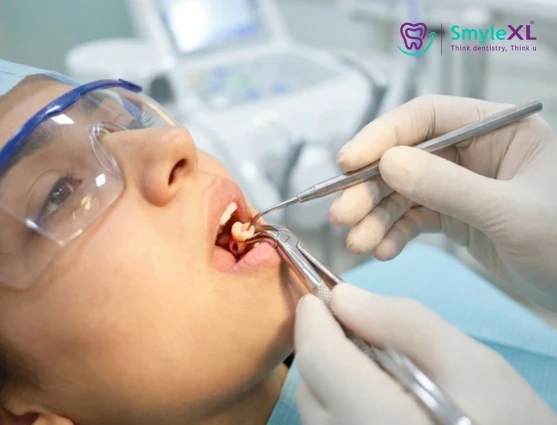
A dull ache at the very back of your mouth, swelling behind your last molar, or difficulty opening your mouth comfortably may indicate a problem with your wisdom tooth. If you’re considering wisdom tooth removal in Vrindavan Yojana, Lucknow, understanding why these teeth sometimes cause discomfort can help you recognize when dental treatment may be necessary.
Wisdom teeth usually appear during the late teenage years or early adulthood. By this stage, there may not be enough space in the jaw for them to grow properly. As a result, a wisdom tooth may emerge at an angle, remain partly covered by the gums, or become trapped beneath the surface.
While some wisdom teeth grow normally and require no treatment, others can cause repeated pain, gum infections, or damage to neighboring teeth. At SmyleXL Dental Clinic, wisdom tooth removal is planned according to the tooth’s position, symptoms, and surrounding dental structures.
Wisdom tooth removal is a dental procedure used to extract a problematic third molar from the back of the mouth. It may be recommended when the tooth causes repeated infections, decay, pain, or damage to nearby teeth.
Most adults develop up to four wisdom teeth, although some people have fewer or none. These teeth usually emerge between the ages of 17 and 25, but their development and eruption can vary.
A wisdom tooth that does not have enough space to emerge normally is known as an impacted wisdom tooth. It may remain completely beneath the gums or emerge only partially.
A simple extraction is performed when the wisdom tooth has emerged sufficiently and can be accessed using dental instruments.
Surgical removal is required when a tooth is difficult to access or cannot be removed through a straightforward extraction. The dentist or oral surgeon may need to make an opening in the gum and remove a small amount of surrounding bone.
An impacted wisdom tooth may be trapped beneath the gums, tilted toward another tooth, or positioned at an unusual angle. Its removal may involve dividing the tooth into smaller sections to allow controlled extraction.
Not every impacted wisdom tooth requires removal. The decision depends on symptoms, evidence of disease, and the potential effects on surrounding structures.
Repeated pain, swelling, gum infections, or difficulty cleaning around a wisdom tooth may indicate that extraction should be considered.
Common signs include:
These symptoms can also occur due to other dental conditions. An examination and dental X-ray help determine whether the wisdom tooth is responsible.
Removing a problematic wisdom tooth can help address recurring discomfort, manage infection, and protect nearby dental structures.
1. Helps Relieve Recurring Pain
Removing a wisdom tooth responsible for repeated inflammation or infection can help address the underlying cause of discomfort.
2. Reduces Repeated Gum Infections
Partially erupted wisdom teeth can trap food and bacteria beneath the surrounding gum tissue. Extraction removes this difficult-to-clean area when the tooth is causing recurring problems.
3. Protects Neighboring Teeth
Removing a poorly positioned wisdom tooth may help prevent further damage or decay affecting the adjacent molar.
4. Makes Oral Hygiene Easier
A problematic wisdom tooth may create areas that are difficult to brush and floss. Removing it can make the back of the mouth easier to maintain.
5. Addresses Certain Impacted Tooth Problems
Extraction may be recommended when an impacted tooth is associated with infection, decay, damage, or other diagnosed complications.
6. Helps Prevent Recurring Symptoms
When the wisdom tooth is the source of repeated problems, removal can prevent those tooth-related episodes from continuing.
Wisdom tooth removal is a commonly performed dental procedure, but some discomfort and a healing period are expected afterward. Recovery depends on whether the extraction is simple or surgical.
Possible concerns include:
Careful treatment planning and following aftercare instructions can help reduce avoidable complications. Worsening pain, heavy bleeding, fever, or increasing swelling should be evaluated promptly.
Wisdom tooth removal involves examining the tooth, assessing its position, removing it through a suitable extraction technique, and allowing the area to heal. The procedure varies according to whether the tooth is fully erupted or impacted.
Step 1: Dental Examination
The dentist examines the affected area and asks about pain, swelling, previous infections, and other symptoms.
Step 2: Dental Imaging
A dental X-ray helps identify the tooth’s position, root shape, and relationship with surrounding structures.
For complex cases, additional imaging may be recommended to assess the position of nearby nerves or other anatomical structures.
Step 3: Preparing for the Extraction
The dentist explains the planned procedure and prepares the treatment area. Appropriate pain-control measures are used during extraction.
Step 4: Removing the Wisdom Tooth
For a simple extraction, the dentist loosens the tooth using dental instruments and carefully removes it.
For an impacted tooth, a small opening may be made in the gum. In some cases, a limited amount of bone is removed, or the tooth is divided into sections to make extraction easier.
Step 5: Cleaning and Closing the Area
After the tooth is removed, the extraction site is examined and cleaned as required.
Stitches may be placed after surgical removal to help position the gum tissue during healing.
Step 6: Initial Recovery
A gauze pad is placed over the extraction site to help control bleeding and support blood clot formation.
The dentist provides instructions about eating, brushing, managing discomfort, and protecting the healing area.
Step 7: Follow-Up Care
A follow-up visit may be recommended to assess healing or remove stitches when necessary.
Most patients gradually return to their regular activities within several days, although recovery after a difficult surgical extraction may take longer.
The cost of wisdom tooth removal at SmyleXL Dental Clinic ranges from ₹2,000 to ₹15,000 per tooth, depending on whether a simple extraction or surgical procedure is required. Consultation charges range from ₹200 to ₹500 and may be billed separately.
The final treatment cost depends mainly on the wisdom tooth’s position, root structure, and the complexity of removing it.
Treatment | Approximate Cost |
Dental Consultation | ₹200–₹500 |
Simple Wisdom Tooth Extraction | ₹2,000–₹5,000 |
Surgical / Impacted Wisdom Tooth Removal | ₹5,000–₹15,000 |
These are indicative charges for the listed procedures. A wisdom tooth that has emerged normally may be removed through a simple extraction, while a tooth trapped beneath the gums may require surgical access.
A fully erupted tooth is generally easier to access than one that remains partially or completely beneath the gums. The tooth’s position can influence the complexity and cost of extraction.
Simple extraction usually requires fewer procedural steps. Surgical removal may involve opening the gum, removing a limited amount of bone, or dividing the tooth into sections.
Wisdom teeth may have curved, unusually shaped, or closely positioned roots. These differences can make removal more complicated.
Lower wisdom teeth may be located near important nerves, while upper wisdom teeth may lie close to the sinus. Additional assessment may be necessary in selected cases.
Swelling, recurring infections, or limited mouth opening may affect treatment planning and require additional care.
Depending on the procedure and treatment estimate, the extraction charge may include:
Exact inclusions depend on whether the procedure is simple or surgical.
Additional expenses may apply for:
Not every patient requires these services. The treatment estimate should specify the extraction type, included procedures, and any additional expenses.
Disclaimer: The prices mentioned above are approximate and indicative. Actual costs may vary depending on tooth position, root anatomy, extraction complexity, surrounding structures, and additional investigations or procedures. A dental examination and appropriate imaging are necessary to determine the treatment requirements and provide an accurate cost estimate.
SmyleXL Dental Clinic provides assessment and treatment for wisdom tooth concerns with attention to identifying the cause of discomfort, evaluating tooth position, maintaining hygiene, and explaining the procedure.
Experienced Dentists
The dentists examine the wisdom tooth, surrounding gums, and neighboring teeth before recommending suitable treatment. Surgical complexity and the need for specialist evaluation are considered during planning.
5-Step Sterilization Protocol
The clinic follows a five-step sterilization protocol to support instrument hygiene and infection control during dental procedures.
Highly Ethical and Cost-Transparent Dentistry
Patients receive information about the recommended extraction method, expected recovery, estimated expenses, and additional investigations or treatment requirements.
Personalized Care in a Relaxing Environment
Treatment planning considers individual symptoms, tooth position, oral health, and patient comfort. The extraction process and recovery instructions are explained in understandable language.
Wisdom teeth do not always need to be removed. However, a tooth that repeatedly causes pain, infection, or damage to surrounding structures may require extraction to address the problem and protect oral health.
For people considering wisdom tooth removal in Vrindavan Yojana, Lucknow, understanding the procedure, possible complications, recovery process, and expected costs can help make informed treatment decisions.
Paying attention to recurring discomfort, maintaining good oral hygiene, and undergoing appropriate dental examinations can help identify wisdom tooth problems early. Consulting a dentist can help determine whether monitoring or extraction is the suitable approach.
1. Is Wisdom Tooth Removal Painful?
Wisdom tooth removal can cause pressure or discomfort during the procedure, and soreness is common afterward. The dentist uses appropriate pain-control measures, while prescribed medication and aftercare instructions help manage discomfort during recovery.
2. How Many Days Does It Take to Recover From Wisdom Tooth Removal?
Many patients feel noticeably better within three to seven days, although complete healing takes longer. Surgical removal of an impacted tooth may involve more swelling and a longer recovery period than a simple extraction.
3. Can I Eat Normally After Wisdom Tooth Removal?
Soft, cool, or lukewarm foods are generally recommended during the initial recovery period. Avoid hard foods, very hot drinks, drinking through straws, and chewing directly over the extraction site until healing allows.
4. Do All Wisdom Teeth Need to Be Removed?
No, wisdom teeth that are healthy, properly positioned, and easy to clean may not require removal. Extraction is generally considered when a wisdom tooth causes disease, repeated symptoms, or damage to nearby structures.
5. What Happens If I Delay Removing an Impacted Wisdom Tooth?
An impacted wisdom tooth may remain stable without causing problems, but some can develop infection, decay, or damage to neighboring teeth over time. Regular dental monitoring helps determine whether removal is necessary.