
Have you ever noticed how some people’s smiles just stand out? Not because they have perfect movie-star teeth, but because their smile looks so natural that it blends seamlessly with their personality. If you’ve been thinking about upgrading your smile, you’ve probably come across two popular options—composite bonding and veneers.
But here’s the real dilemma: which one actually gives a more natural look? It’s a question many patients ask, especially those who want their smile makeover to feel authentic rather than artificial. At SmyleXL Dental Clinic, patients often come in with this very concern, and the good news is—you don’t have to figure it out alone. Let’s dive deep and explore both treatments so you can make the choice that’s right for you.
Table of Contents
ToggleUnderstanding Composite Bonding
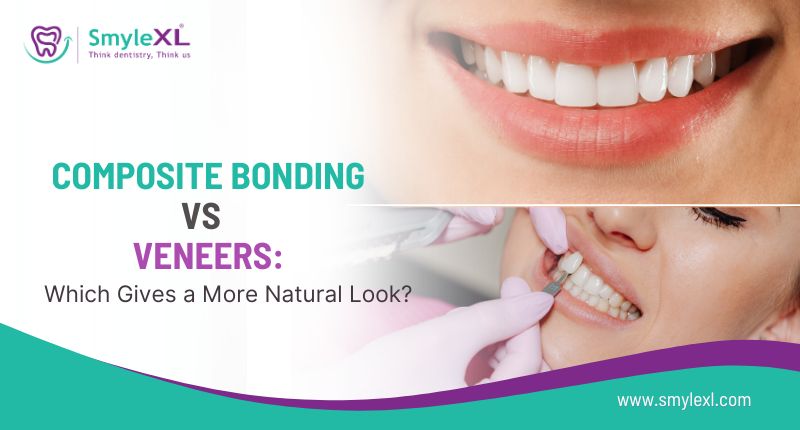
Composite bonding is one of the simplest and most cost-effective cosmetic dentistry treatments. In this procedure, a tooth-colored resin material is applied directly to the tooth and sculpted to correct minor flaws such as chips, cracks, discoloration, or gaps.
Since the material is shaped and polished on the spot, the results are immediate. It’s a great choice for patients looking for a quick smile refresh without committing to major changes.
What Are Veneers?
Dental veneers treatment is a more advanced solution for creating a flawless smile. Veneers are thin, custom-made shells (often porcelain) that are bonded to the front surface of the teeth. They can completely transform your smile by correcting color, shape, size, and even alignment issues.
Unlike bonding, veneers require a little preparation of the tooth surface to ensure a perfect fit. The result, however, is long-lasting, highly aesthetic, and resistant to staining—making veneers a favorite among patients who want a polished and natural look.
Natural Appearance: Bonding vs. Veneers
When it comes to which looks more natural, the answer depends on your specific situation.
Composite bonding matches the natural tooth color well and works best for minor corrections. If you’re fixing just one or two teeth, bonding can blend in beautifully. However, under certain lighting, the resin may not reflect light as naturally as enamel.
Veneers, on the other hand, are crafted in dental labs with high precision. Porcelain veneers, especially, mimic the translucency and shine of natural teeth. This makes them ideal for patients looking for a consistent, natural appearance across their entire smile.
Durability and Longevity: How Long Do They Really Last?
One of the biggest differences between composite bonding and veneers is how long they last.
Bonding: Typically lasts 3 to 7 years, depending on care and lifestyle habits like chewing hard foods or drinking staining beverages.
Veneers: Can last 10 to 15 years or longer with proper care, especially porcelain ones. They resist stains better than bonding, making them a more durable investment for those who want long-term results.
Cost Considerations: What’s Worth Your Investment?
For many patients, cost plays an important role in the decision.
Composite bonding: It is more affordable upfront, making it an attractive option for quick fixes or those on a tighter budget.
Dental veneers treatment: These cost more due to the precision, material quality, and long-term durability they provide. While veneers may seem expensive initially, their lifespan and natural results often make them a more cost-effective choice over time.
Comfort and Procedure Time: What to Expect in the Chair
Bonding is usually done in a single appointment, which makes it convenient if you’re short on time. The process is painless, and anesthesia is rarely needed unless repairing a decayed tooth.
Veneers usually require at least two visits. The first appointment involves preparing the teeth and taking impressions, while the second visit is for placement. Though it takes a little longer, patients often find the wait worth it for the stunning results.
Which One Should You Choose? Finding Your Best Smile Solution
The right option depends on your goals, budget, and dental condition.
- If you’re looking for a quick, affordable fix for minor flaws, composite bonding may be your best choice.
- If you want a long-lasting, natural, and dramatic transformation, veneers are the way to go.
At SmyleXL Dental Clinic, dentists evaluate your needs with digital scans and smile simulations so you can preview your results before committing. This way, you can confidently choose the treatment that aligns with your expectations.
Frequently Asked Questions
- Which treatment looks more natural—bonding or veneers?
Veneers usually deliver the most natural look because porcelain closely mimics the shine and translucency of natural enamel. Composite bonding also blends with your natural teeth, but it may not reflect light as convincingly as veneers. For a consistently lifelike result, veneers are often the preferred choice. - How long does composite bonding last compared to veneers?
Composite bonding generally lasts 3–7 years with proper care and good oral habits. Veneers, on the other hand, are much more durable and can last 10–15 years or longer. Their stain resistance also keeps them looking fresh for a long time. - Is dental veneer treatment painful?
Not at all. The procedure requires minimal tooth preparation and is made as comfortable as possible for you. Most people describe the process as smooth and pain-free, with only mild sensitivity afterward that fades quickly. - Can bonding or veneers fix gaps between teeth?
Yes, both treatments can help close spaces between teeth. For smaller gaps, bonding works well, but veneers are often the better choice for larger spaces. Veneers provide a more even, natural look across the smile while improving overall symmetry. - Are veneers reversible?
Since a thin layer of enamel is removed during placement, veneers are not reversible. However, they are designed to be long-lasting, durable, and resistant to wear. With proper care, they provide a reliable solution for many years. - Can I whiten bonded teeth or veneers later?
No, whitening treatments don’t work on bonding or veneers because they don’t change color like natural teeth. If you plan on getting your teeth whitened, it’s best to do it before the procedure so the dentist can match the new restorations to your natural shade. - Which option is more budget-friendly?
Composite bonding is less expensive at the start, making it a great short-term solution for minor fixes. Veneers cost more, but their durability and natural appearance give better value in the long run. The choice depends on your goals and budget.
Make the Smart Choice
Both composite bonding and veneers can enhance your smile, but the right choice depends on your needs and expectations. If you’re seeking minor improvements, bonding offers a quick and cost-effective fix. For those who desire a long-lasting and highly natural smile, dental veneers treatment is unmatched.
At SmyleXL Dental Clinic, every smile makeover is personalized with advanced technology and expert care, ensuring your results look as natural as possible.
Ready to discover which treatment suits you best? Book your consultation today and take the first step toward your dream smile.