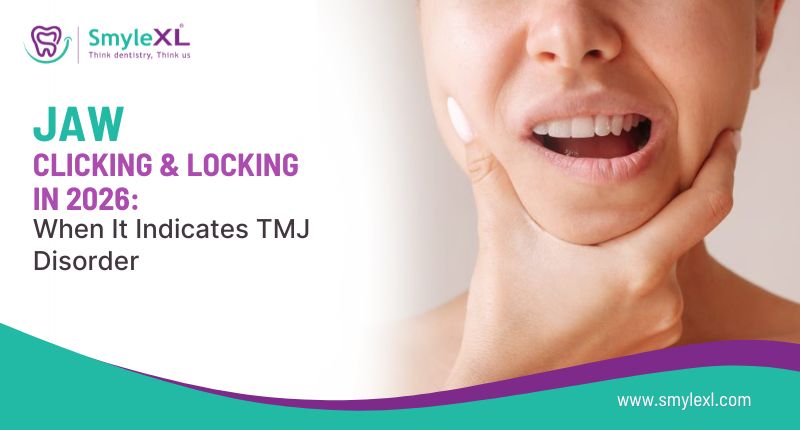

A clicking sound in the jaw can feel strange at first. You may notice it while chewing, yawning, or talking, and for many people, it seems harmless enough to ignore. In earlier years, jaw clicking was often dismissed as a minor issue that would go away on its own. In 2026, however, dental professionals are seeing a sharp rise in jaw related complaints, especially among adults who spend long hours on screens, experience daily stress, or unknowingly clench their teeth.
Jaw clicking and locking are no longer rare complaints. They are increasingly linked to temporomandibular joint disorders, commonly known as TMJ disorders. These conditions affect the joint that connects your jaw to your skull and plays a vital role in daily activities such as eating, speaking, and facial expressions. When this joint does not function smoothly, even simple movements can become uncomfortable or painful.
At SmyleXL, we see patients from Sun Pharma Road and nearby areas often report jaw noises, stiffness, or sudden locking without realizing that these symptoms may be early warning signs. Knowing when jaw sounds are harmless and when they indicate a deeper issue can help you seek timely jaw pain treatment in Sun Pharma Road at SmyleXL Dental Clinic and avoid long term discomfort.
Table of Contents
ToggleUnderstanding the Jaw Joint and How It Works
The temporomandibular joint is one of the most frequently used joints in the human body. It connects the lower jaw to the temporal bone of the skull and allows complex movements that include opening, closing, and side to side motion. A small cartilage disc inside the joint acts as a cushion and helps ensure smooth movement.
When the joint, disc, muscles, and ligaments work in harmony, jaw movements are silent and effortless. Problems begin when this balance is disturbed. The disc may shift, muscles may tighten excessively, or inflammation may develop inside the joint. Over time, these changes can cause clicking sounds, stiffness, pain, or locking of the jaw.
Because this joint is used constantly throughout the day, even minor issues can become noticeable quickly.
Why Jaw Clicking and Locking Are Increasing in 2026?
Modern lifestyles have changed the way people use their bodies, and the jaw is no exception. Dentists today see patterns that were less common a decade ago.
Some of the main reasons include:
- Increased stress levels leading to jaw clenching and teeth grinding
- Long hours on laptops and mobile phones are causing poor neck and head posture
- Irregular sleep routines
- High caffeine intake contributing to muscle tension
- Skipping routine dental visits
- Delaying treatment due to busy schedules
Many patients do not realize they clench their jaw during concentration or sleep. Over time, this constant pressure puts strain on the jaw joint and surrounding muscles, making TMJ disorders more common.
When Jaw Clicking Is Normal and When It Needs Attention?
Not every jaw sound means there is a serious problem. Some people experience occasional clicking without pain or difficulty in movement, and this may not require treatment. However, there are clear signs that suggest the jaw needs professional evaluation.
Seek dental care if you notice:
- Frequent or loud clicking or popping sounds
- Jaw locking open or closed
- Pain while chewing or talking
- Difficulty opening the mouth fully
- Facial pain or tenderness
- Ear pain or ringing without infection
- Headaches linked to jaw movement
These symptoms often indicate that the joint is under stress or not functioning properly.
If you experience any of these indications, SmyleXL dental Clinic provides early jaw pain treatment in Sun Pharma Road, which can help restore normal movement and prevent worsening of the condition.
Common Causes of TMJ Disorders
TMJ disorders rarely develop due to a single reason. Most cases involve a combination of factors that gradually affect the joint.
Common causes include:
- Teeth grinding or clenching, especially during sleep
- Misaligned bite or missing teeth
- Injury to the jaw, face, or neck
- Arthritis affecting joint tissues
- Excessive gum chewing or hard foods
- Prolonged emotional stress
- Poor posture affecting head and neck alignment
Dentists at SmyleXL Dental Clinic focus on identifying these contributing factors rather than only addressing surface symptoms. This approach helps achieve long lasting relief.
How TMJ Disorders Affect Daily Life?
TMJ problems often affect more than just the jaw. Patients frequently report symptoms that impact their overall quality of life.
These may include:
- Difficulty enjoying meals
- Avoiding certain foods due to discomfort
- Sleep disturbances caused by jaw pain
- Persistent headaches or facial tension
- Neck and shoulder pain
- Difficulty concentrating
- Mood changes due to chronic discomfort
What starts as a minor click can slowly turn into a daily struggle if ignored.
Modern TMJ Treatment Options in 2026
Treatment for TMJ disorders has evolved significantly over the years. In 2026, the focus is on conservative, non-invasive methods that reduce pain and restore function without unnecessary procedures.
Common approaches include:
- Custom oral appliances to reduce clenching and correct bite stress
- Physiotherapy exercises to relax jaw and neck muscles
- Posture correction guidance
- Stress management techniques
- Medication to control inflammation when needed
Surgical options are rarely required and are considered only in severe cases where other treatments do not provide relief.
Patients seeking jaw pain treatment in Sun Pharma Road often visit SmyleXL Dental Clinic and experience noticeable improvement once a personalized treatment plan is followed consistently.
Why Early TMJ Treatment Makes a Difference?
Ignoring jaw symptoms allows the condition to progress. Over time, untreated TMJ disorders can lead to:
- Chronic facial pain
- Reduced jaw mobility
- Permanent joint damage
- Difficulty eating or speaking
- Increased treatment time and cost
Early intervention helps protect the joint, reduce discomfort, and restore normal jaw function before permanent damage occurs.
Simple Habits That Support Jaw Health
Daily habits play a powerful role in preventing TMJ issues.
Helpful practices include:
- Avoid chewing gum excessively
- Maintain good posture while working
- Take regular breaks from screens
- Practice relaxation techniques to reduce stress
- Be mindful of clenching during the day
- Seek dental care if teeth grinding is suspected
Preventive care combined with professional guidance helps maintain jaw comfort in the long term.
Frequently Asked Questions
Is jaw clicking always a sign of TMJ disorder?
Jaw clicking alone does not always indicate a disorder. If clicking occurs without pain or restriction, it may not require treatment. However, persistent clicking combined with discomfort should be evaluated.
Can TMJ disorder heal on its own?
Mild cases may improve with lifestyle changes and stress reduction. Moderate to severe cases usually need professional care to prevent progression.
Does posture really affect jaw pain?
Yes. Poor neck and head posture places additional strain on jaw muscles and joints, contributing to TMJ symptoms.
How long does TMJ treatment usually take?
Treatment duration varies depending on severity. Many patients notice improvement within a few weeks when treatment is followed consistently.
Can TMJ disorder return after treatment?
With proper care and habit changes, symptoms often remain under control. Regular follow-ups help prevent recurrence.
Listening to Your Jaw Matters More Than Ever
Jaw clicking and locking should never be ignored when they begin to affect comfort or daily activities. In 2026, with changing lifestyles and increasing stress, TMJ disorders are becoming more common, but they are also more manageable when addressed early.
SmyleXL offers comprehensive evaluation and effective jaw pain treatment in Sun Pharma Road, focusing on comfort, clarity, and long term relief. Paying attention to early jaw symptoms and seeking timely care can help restore ease, confidence, and everyday comfort.