
When it comes to oral health, most people know about cavities and tooth fractures. But there’s another silent troublemaker that often goes unnoticed until it causes serious problems like tartar. If left untreated, tartar buildup can damage your gums, weaken your teeth, and even lead to tooth loss.
At SmyleXL Dental Clinic in Mumbai Central, we often see patients who didn’t realize how harmful tartar could be until their gums started bleeding or swelling. Understanding tartar and when you might need gum treatment can help you protect your smile in the long run.
Table of Contents
ToggleWhat Exactly Is Tartar?
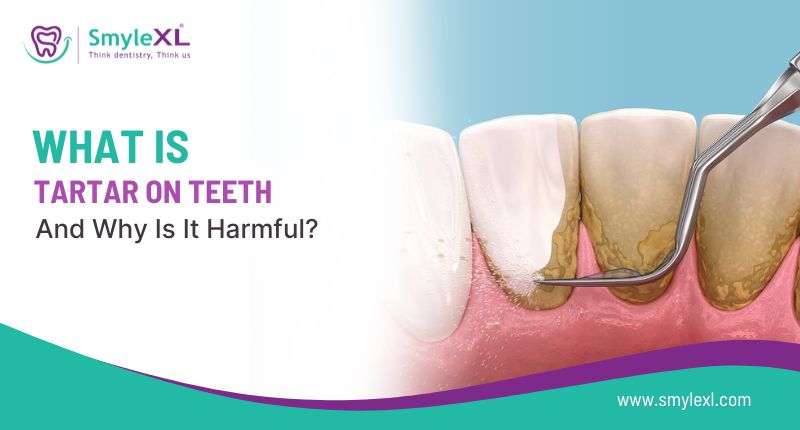
Tartar, also known as dental calculus, is hardened plaque.
- Plaque is a soft, sticky film of bacteria that constantly forms on your teeth.
- When plaque is not removed properly through brushing and flossing, it mixes with minerals in your saliva.
- Within 24 to 72 hours, it can harden into tartar.
Unlike plaque, tartar cannot be removed by regular brushing. Once it forms, it sticks firmly to your teeth and along the gumline, and that’s where the real problems begin.
Where Does Tartar Usually Form?
Tartar usually forms in areas where plaque is left undisturbed and brushing or flossing is less effective.
It most commonly builds up:
- Along the gumline – This is the most frequent spot, as plaque easily settles where the tooth meets the gum.
- Behind the lower front teeth – Saliva glands are located nearby, which can cause plaque to harden faster in this area.
- Around back molars – These teeth are harder to reach and clean properly.
- Between crowded or misaligned teeth – Areas that are difficult to clean daily tend to accumulate buildup.
These are also the spots where gum problems often begin, since tartar near the gums can lead to irritation and inflammation over time.
Why Is Tartar Harmful?
Tartar isn’t just a cosmetic issue. It actively damages your oral health in several ways.
1. It Irritates and Inflames the Gums
Tartar creates a rough surface that attracts even more plaque and bacteria. These bacteria release toxins that irritate the gums, leading to:
- Redness
- Swelling
- Bleeding while brushing
- Tenderness
This early stage of gum disease is called gingivitis, and it’s the first sign you may need professional gum treatment.
2. It Leads to Gum Disease (Periodontitis)
If gingivitis is not treated, it can progress into periodontitis, a more serious form of gum disease.
At this stage:
- Gums start pulling away from teeth
- Deep pockets form between teeth and gums
- Infection spreads below the gumline
- The bone supporting the teeth may begin to weaken
Without timely gum treatment, this condition can eventually cause tooth mobility and even tooth loss.
3. It Causes Bad Breath
Tartar traps bacteria. The longer it stays, the more bacteria multiply, leading to persistent bad breath (halitosis).
If you’ve tried mouthwash but the smell keeps coming back, tartar buildup might be the real villain.
4. It Increases the Risk of Cavities
Because tartar holds bacteria close to the tooth surface, it increases the chances of tooth decay. The bacteria produce acids that damage enamel, leading to cavities.
5. It Affects Your Smile
Tartar often appears as:
- Yellow deposits
- Brown stains
- Hard crusty buildup near the gums
It makes teeth look dirty even if you brush regularly.
Signs You May Have Tartar Buildup
Here are common warning signs:
- Bleeding gums while brushing
- Swollen or red gums
- Persistent bad breath
- Visible yellow or brown deposits on teeth
- Gum recession
- Loose teeth (in advanced cases)
If you notice any of these symptoms, visiting a dental clinic for evaluation and possible gum treatment is important.
Why Can’t You Remove Tartar at Home?
Once plaque turns into tartar, it becomes hard like stone.
No matter how hard you brush:
- It won’t come off.
- Scraping it yourself can damage enamel and gums.
Professional tools and techniques are required to safely remove tartar without harming your teeth.
How Is Tartar Removed?
At SmyleXL Dental Clinic, tartar removal is done through professional cleaning procedures.
1. Scaling
Scaling removes tartar from:
- Tooth surfaces
- Gumline
- Areas between teeth
This is the most common gum treatment for early-stage buildup.
2. Root Planing (Deep Cleaning)
If tartar has gone below the gumline, deeper cleaning is needed. Root planing smoothens the tooth roots to help the gums reattach properly.
This type of gum treatment is recommended for patients with gum disease.
3. Laser Gum Treatment (If Required)
In advanced cases, modern laser therapy may be used to:
- Remove infected tissue
- Reduce gum pockets
- Promote faster healing
Who Is More Prone to Tartar?
Some people are more likely to develop tartar quickly:
- Smokers
- People with poor oral hygiene
- Diabetic patients
- Individuals with dry mouth
- People who skip regular dental visits
- Those who consume sugary or starchy foods frequently
Even if you brush daily, some areas are difficult to clean without professional help.
How Often Should You Get Professional Cleaning?
Most dentists recommend professional cleaning every 6 months.
However, if you:
- Have gum problems
- Smoke
- Have braces
- Have a history of gum disease
You may need more frequent visits.
Regular cleaning reduces the need for complex gum treatment later.
Can Tartar Affect Overall Health?
Yes. Research shows a connection between gum disease and:
- Heart disease
- Diabetes complications
- Respiratory infections
- Pregnancy complications
Since tartar contributes to gum disease, removing it is not just about your smile; it’s about your overall health.
How to Prevent Tartar Buildup?
Prevention is always easier and more affordable than treatment.
Here’s what you can do:
Brush Twice Daily
Use a fluoride toothpaste and brush properly for at least two minutes.
Floss Daily
Flossing removes plaque from areas your brush cannot reach.
Use an Antibacterial Mouthwash
This helps reduce bacteria in the mouth.
Avoid Excess Sugary Foods
Sugar feeds bacteria that create plaque.
Visit Your Dentist Regularly
Routine checkups help catch tartar early before it turns into a serious gum issue.
When Do You Need Gum Treatment?
You may need gum treatment if:
- Gums bleed regularly
- There is visible tartar buildup
- You have deep gum pockets
- Teeth feel loose
- You experience gum pain
At SmyleXL Dental Clinic, we carefully examine your gums and recommend the right gum treatment based on your condition.
Why Choose SmyleXL Dental Clinic for Gum Treatment?
At SmyleXL Dental Clinic, we combine:
- Advanced dental technology
- Gentle cleaning techniques
- Experienced dental professionals
- Personalized treatment plans
Our goal is not just to remove tartar, but to protect your gums and prevent future problems.
We focus on early diagnosis, patient education, and long-term oral health.
Don’t Let Tartar Turn Into a Bigger Problem
Tartar may seem like a small issue at first, but if ignored, it can lead to serious gum disease and tooth loss. The good news? It’s preventable and treatable with timely professional care.
If you notice signs of tartar buildup or gum problems, don’t wait.
Book your appointment at SmyleXL Dental Clinic in Mumbai Central today and take the first step toward healthier gums and a brighter, stronger smile with expert gum treatment.