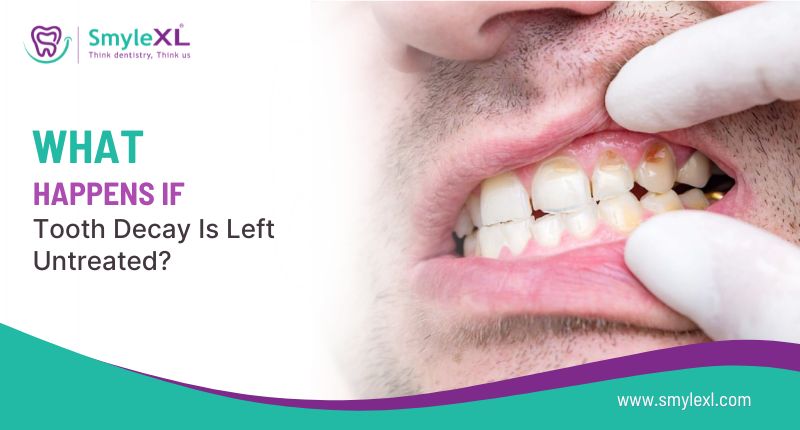

Tooth decay rarely announces itself loudly in the beginning. It usually starts quietly, with a little sensitivity to sweets, mild discomfort while drinking something cold, or a faint brown spot you assume can wait. Life gets busy, the pain fades, and the dental visit is postponed.
But tooth decay doesn’t pause just because you do.
At SmyleXL Dental Clinic, we often meet patients who say, “It was just a small cavity… I didn’t think it would turn into this.” What began as a minor issue gradually deepened into severe pain, infection, or even tooth loss.
Understanding what truly happens when decay is ignored can help you avoid unnecessary discomfort, expense, and long-term damage. Let’s break it down clearly, without fear, but with honesty.
Table of Contents
ToggleWhat Exactly Is Tooth Decay?
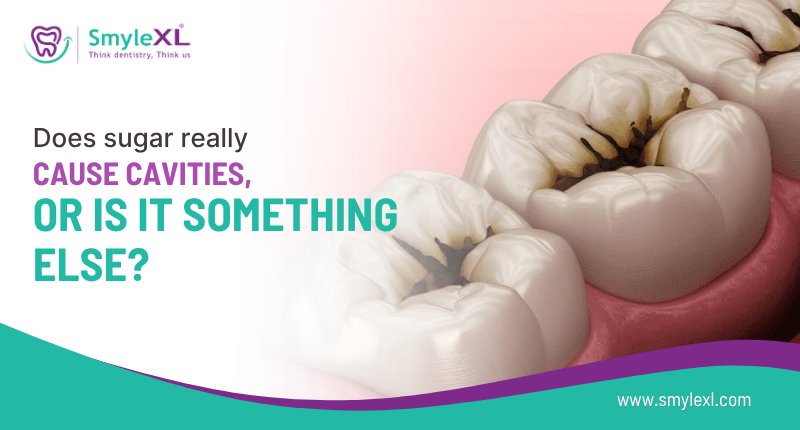
Tooth decay occurs when bacteria in your mouth feed on sugars and release acids that slowly dissolve the outer layer of your tooth, known as enamel. Enamel is strong, but it isn’t indestructible. When acid attacks continue over time, tiny weak spots form. These eventually turn into cavities, small holes in the tooth surface.
In the early stage, you may not feel anything. That’s what makes it dangerous. Decay doesn’t hurt immediately.
If you attend routine check-ups and professional teeth cleaning appointments, these early signs can often be detected and treated before they progress. But when ignored, decay travels deeper.
Stage 1: Enamel Damage
The first stage of tooth decay affects only the enamel. You may notice:
- White or chalky spots
- Slight discoloration
- Mild sensitivity to sweets
At this point, the damage is still reversible in many cases. Fluoride treatments and proper oral care can strengthen weakened enamel. Professional teeth cleaning removes plaque buildup that fuels bacterial growth.
Unfortunately, many people skip this stage entirely because there is little to no pain.
Stage 2: Dentin Involvement
Once decay penetrates enamel, it reaches dentin, the softer layer beneath. Dentin is more porous and sensitive. When bacteria enter this layer, decay spreads faster.
Now you may experience:
- Sharp pain when eating sweets
- Sensitivity to hot or cold drinks
- Food getting stuck in one particular tooth
- Visible dark spots or small holes
At this stage, a simple filling can restore the tooth. The procedure is straightforward and usually completed in one visit.
But when left untreated, decay continues inward.
Stage 3: Pulp Infection
The pulp is the innermost part of the tooth. It contains nerves and blood vessels. When bacteria reach this area, inflammation and infection begin.
This is when pain becomes impossible to ignore.
Symptoms may include:
- Persistent throbbing pain
- Pain that worsens at night
- Swelling in the surrounding gum
- Sensitivity that lingers long after eating or drinking
- Difficulty chewing on that side
At this stage, the treatment is no longer a simple filling. A root canal procedure is typically required to remove infected tissue and save the tooth.
If even this stage is ignored, the situation can escalate further.
Stage 4: Abscess Formation
When infection spreads beyond the pulp, pus can collect at the root tip, forming an abscess. This is a serious condition.
Signs of a dental abscess include:
- Severe, constant pain
- Facial swelling
- Swollen lymph nodes
- Fever
- Bad taste in the mouth
- Difficulty opening the mouth
An abscess is not just a dental issue; it can affect overall health. Infection can spread to nearby tissues and, in rare but serious cases, enter the bloodstream.
Emergency care becomes necessary.
Can a Cavity Heal on Its Own?
This is one of the most common questions we hear at SmyleXL Dental Clinic.
The simple answer is no.
Once a cavity forms, meaning there is an actual hole in the tooth, it cannot naturally repair itself. Early enamel damage can sometimes be reversed with fluoride and improved hygiene, but a formed cavity requires professional treatment.
Delaying treatment only increases the extent of damage.
How Long Can You Ignore Tooth Decay?
There is no fixed timeline because progression depends on factors such as:
- Oral hygiene habits
- Diet (especially sugar intake)
- Saliva quality
- Frequency of teeth cleaning
- General health
A small cavity might remain relatively stable for a few months. In other cases, decay can spread rapidly within weeks.
What feels manageable today may become unbearable tomorrow.
Types of Tooth Decay
Understanding the different types of decay also explains why some cases worsen faster than others.
- Smooth Surface Decay
This occurs on the flat surfaces of teeth. It develops slowly and is often linked to poor brushing habits. Regular teeth cleaning appointments significantly reduce this risk. - Pit and Fissure Decay
These cavities develop in the grooves of back teeth. They are common among teenagers and young adults because food can easily lodge in these areas. They tend to progress quickly. - Root Decay
Root decay affects the exposed root surfaces, especially in adults with receding gums. Since roots are not protected by enamel, decay spreads rapidly and requires immediate attention.
What Happens If You Keep Ignoring It?
Ignoring tooth decay doesn’t mean it stops growing. Here are the real consequences:
- Increasing Pain
Pain usually begins as mild sensitivity and gradually turns into constant discomfort. It may interfere with sleep, eating, and concentration.
- Tooth Structure Weakening
As decay enlarges, the remaining healthy tooth structure becomes thin and fragile. Even biting into soft food can cause a fracture.
- Gum Inflammation
Infected teeth often irritate the surrounding gum tissue. Swelling, tenderness, and bleeding may occur.
- Persistent Bad Breath
Bacteria inside decayed teeth produce foul-smelling compounds. Even frequent brushing won’t eliminate the odor because the infection is internal.
- Tooth Loss
When damage becomes extensive, saving the tooth may not be possible. Extraction becomes the only option.
Tooth loss then leads to additional problems such as shifting teeth, bite imbalance, and difficulty chewing.
Impact on Overall Health
Oral infections are not isolated problems. Untreated decay can contribute to:
- Increased inflammation in the body
- Worsening of diabetic control
- Complications in individuals with heart conditions
- Nutritional issues due to difficulty eating
Oral health and general health are closely linked.
Preventing Tooth Decay from Progressing
Prevention isn’t complicated, but it requires consistency.
Here’s what truly helps:
- Brushing twice daily with fluoride toothpaste
- Flossing to remove debris between teeth
- Limiting sugary snacks and drinks
- Staying hydrated
- Visiting your dentist every six months
- Scheduling a professional teeth cleaning regularly
Professional cleaning removes hardened plaque (tartar) that brushing alone cannot eliminate. This reduces bacterial load and significantly lowers the risk of cavities.
Early Treatment Options
When decay is detected early, treatment is simple and comfortable.
Fluoride Therapy
Strengthens weakened enamel and can reverse very early decay.
Dental Fillings
Removes decayed tissue and restores the tooth with a durable material.
Root Canal Treatment
Required when infection reaches the pulp. It eliminates bacteria and saves the natural tooth.
Crown Placement
Sometimes needed after root canal treatment to protect the remaining tooth structure.
At SmyleXL Dental Clinic, treatment planning focuses on preserving your natural teeth whenever possible.
When Should You See a Dentist?
Don’t wait for severe pain.
Schedule an appointment if you notice:
- Tooth sensitivity
- Visible dark spots
- Pain while chewing
- Swelling in the gums
- Persistent bad breath
Even if you feel no symptoms, routine exams and teeth cleaning visits help detect hidden decay early.
Why Regular Check-Ups Matter?
Dental problems rarely become serious overnight. They worsen gradually.
Routine visits allow your dentist to:
- Identify early enamel changes
- Detect small cavities on X-rays
- Remove plaque buildup
- Offer personalized preventive advice according to you
Prevention is far less stressful than emergency treatment.
Don’t Wait for Pain to Make the Decision for You
Tooth decay is common, but ignoring it is risky.
What begins as a minor enamel issue can progress to nerve infection, abscess formation, and even tooth loss if left untreated. Pain, swelling, and financial burden are often the result of waiting too long.
The good news is that decay is manageable, especially when caught early.
If you’re unsure about a sensitive tooth or have been postponing a dental visit, it’s better to act now. At SmyleXL Dental Clinic, early intervention and preventive care, including professional teeth cleaning, help patients avoid complications and maintain healthy smiles.
Your teeth don’t heal on their own. But with timely care, they can last a lifetime.