
One morning while brushing, your toothbrush hits a tooth, and you feel a slight zing. When your tooth says, “I’m Fine”… but something feels off, you brush it off. Later, cold water feels sharper, and a sweet snack lingers longer. But no pain means everything must be fine, right?
That’s where most people get it wrong. Tooth decay doesn’t show up dramatically; it sneaks in slowly, like a leak you don’t notice until it’s too late.
In places like Nallagandla, a routine teeth cleaning in Hyderabad at SmyleXL Dental Clinic can catch these early signs before they turn into bigger, more expensive issues.
Table of Contents
ToggleWhat Actually Starts a Cavity?
Let’s clear one myth.
Sugar doesn’t directly “create” cavities.
Bacteria do.
Your mouth naturally contains bacteria. When they mix with leftover food particles, especially sugars and starches, they form plaque. This sticky layer clings to teeth and produces acids.
Those acids slowly weaken enamel.
Imagine leaving a drop of lemon juice on marble every day. Nothing changes immediately. But over time, the surface dulls and softens.
Your teeth go through a similar process.
And once enamel weakens, decay begins its quiet work.
The Problem With Waiting for Pain
Many people treat pain like a fire alarm.
“No pain? No issue.”
But cavities don’t follow that rule.
Early decay usually feels completely normal. By the time pain shows up, the cavity has often reached deeper layers of the tooth.
So relying on discomfort means you’re already late to the party.
Early stages stay subtle. You need observation, not reaction.
That’s exactly why regular check-ups and professional teeth cleaning in Hyderabad at SmyleXL Dental Clinic are essential. They catch what your mirror and toothbrush simply can’t see.
Early Signs of Cavities Most People Miss
Cavities rarely start with dramatic symptoms. Instead, they leave small clues.
Easy to ignore. Easy to dismiss.
Watch for:
- Sensitivity to cold or sweets
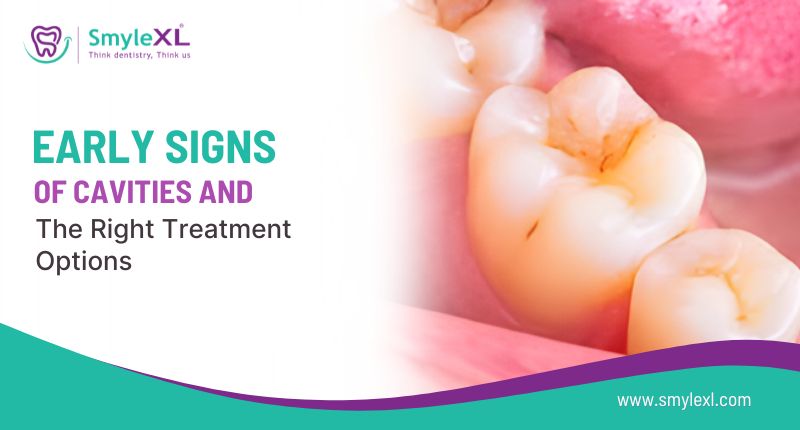
- Rough or chalky patches on teeth
- Mild staining or brown spots
- Food is getting stuck repeatedly in one area.
- Bleeding gums near a particular tooth
- Bad taste that doesn’t disappear
None of these screams “dental emergency.”
But together, they paint a story.
Think of them like tiny cracks on a phone screen. The phone still works, but you know something isn’t right.
Teeth behave the same way.
Why Brushing Alone Sometimes Isn’t Enough?
You brush twice daily. You rinse. You floss sometimes.
Still, cavities show up.
Frustrating, right?
Here’s why.
Your toothbrush cleans flat surfaces well. But it struggles with:
- Deep grooves on molars
- Tight spaces between teeth
- Areas near the gumline
- Old fillings or crowns
Plaque hides in these zones like dust behind furniture. No matter how often you sweep, some spots stay untouched.
Over time, those neglected areas become the starting point for decay.
Professional cleanings reach these places more effectively. Dentists use special instruments to remove hardened tartar that brushing simply cannot dislodge.
At SmyleXL Dental Clinic, Nallagandla, Hyderabad, many patients express surprise when dentists point out buildup in areas they thought they cleaned well.
It’s not about poor hygiene. It’s about access.
How Dentists Spot Cavities Before You Feel Them
Early detection changes everything.
Dentists don’t just “look” at teeth. They examine texture, color, and structure.
A routine visit may include:
- Visual inspection under bright light
- Digital X-rays to detect hidden decay
- Checking soft spots in enamel
- Assessing plaque and tartar levels
- Evaluating gum health
These steps reveal early damage long before pain develops.
It’s like checking the foundation of a house instead of waiting for a wall to collapse.
Small fixes stay small when caught early.
Treatment Options: From Tiny Fixes to Bigger Repairs
Not every cavity needs a major procedure.
In fact, early-stage decay often needs very simple care.
Treatment depends on how far the decay has progressed:
- Early enamel weakness → fluoride therapy or remineralization
- Small cavity → tooth-colored filling
- Moderate decay → larger filling or inlay
- Deep infection → root canal treatment
- Severely damaged tooth → crown or restoration.
Notice the pattern?
The earlier you act, the simpler the solution.
A five-minute filling today can prevent hours of treatment later.
That’s why preventive visits matter more than emergency visits.
Why Professional Cleaning Matters More Than You Think?
Many people see cleaning as “just polishing.”
But it does much more.
Professional cleaning:
- Removes tartar
- Reduces bacteria levels
- Lowers cavity risk
- Protects gums
- Helps dentists detect early issues
It resets your mouth to a healthier baseline.
Think of it like clearing clutter from a desk. Once everything is visible, you notice problems faster.
Routine teeth cleaning often becomes the easiest way to stay ahead of decay instead of chasing it later.
FAQs
Q1. How often should I get teeth cleaning to prevent cavities?
Most dentists recommend professional cleaning every six months for healthy adults. This schedule helps remove tartar that daily brushing cannot eliminate. Regular cleanings also allow dentists to detect early signs of decay before symptoms appear. Patients with higher cavity risk may need more frequent visits. Your dentist will personalize the timeline based on your oral health.
Q2. Can early cavities heal without fillings?
Very early enamel damage can sometimes reverse with fluoride treatments and improved hygiene. Dentists may recommend remineralization therapies that strengthen weakened enamel. However, once a cavity forms a physical hole, it will not heal naturally. At that stage, a filling becomes necessary. Early detection increases the chances of avoiding invasive treatment.
Q3. Why do I get cavities even though I brush daily?
Brushing helps, but it doesn’t reach every area of the mouth effectively. Plaque often hides between teeth, along the gumline, and in deep grooves. Diet, saliva quality, and genetics also influence cavity risk. Professional cleaning and flossing support daily brushing. A combined approach offers the best protection.
Q4. Are fillings painful or uncomfortable?
Modern dentistry focuses strongly on patient comfort. Dentists use local anesthesia to ensure you don’t feel pain during the procedure. Most fillings take less than an hour and involve minimal discomfort afterward. Patients usually return to normal activities the same day. Early cavities also require smaller, quicker treatments.
Q5. When should I see a dentist if I suspect decay?
You should schedule a visit as soon as you notice sensitivity, stains, or food trapping. Early evaluation prevents minor problems from progressing. Delaying care often leads to larger treatments later. Even if symptoms feel mild, a professional exam provides clarity. Timely action saves both teeth and costs.
Healthy Teeth Shouldn’t Surprise You
Cavities rarely appear overnight.
They build slowly, quietly, patiently.
But with the right care, you stay one step ahead.
Instead of waiting for pain, you learn to notice the small signals. Instead of reacting, you prevent.
If you’ve noticed subtle changes or it’s simply been a while since your last visit, a routine check-up and teeth cleaning in Hyderabad at SmyleXL Dental Clinic, Nallagandla, can help uncover what your eyes can’t see.
Because healthy teeth shouldn’t feel like guesswork.
They should feel predictable.
And sometimes, the difference between a tiny filling and a big procedure starts with one simple decision you make today.