
Snoring is often dismissed as a minor inconvenience, something that irritates a partner or disrupts a quiet night. But for many people, it is more than just noise. It is a sign that breathing during sleep is not as smooth as it should be.
You may have tried changing pillows, sleeping on your side, using nasal strips, or even losing weight. Yet the snoring continues. You wake up feeling tired. Your mouth feels dry. Your head feels heavy in the morning. Throughout the day, you struggle to concentrate.
What many people don’t realize is that the position of the jaw plays a major role in how well you breathe during sleep. In fact, for some individuals, improper jaw alignment is a hidden cause of chronic snoring and poor sleep quality.
Understanding this connection can unlock long-term relief. Visit SmyleXL Dental Clinic for a consultation with our experts for jaw treatment in Sun Pharma Road.
Let’s break it down in simple terms.
Table of Contents
ToggleThe Basic Science of Snoring
Snoring happens when airflow through the mouth and throat becomes partially blocked during sleep. When the airway narrows, air struggles to pass through. This causes the surrounding soft tissues, such as the tongue, soft palate, and throat walls, to vibrate.
That vibration creates the familiar snoring sound.
But why does the airway narrow in the first place?
Several factors can contribute:
- Excess soft tissue in the throat
- Nasal blockage
- Obesity
- Enlarged tonsils
- Sleeping position
- Alcohol consumption
- Jaw position
Among these, jaw alignment is often overlooked.
How the Jaw Influences the Airway?
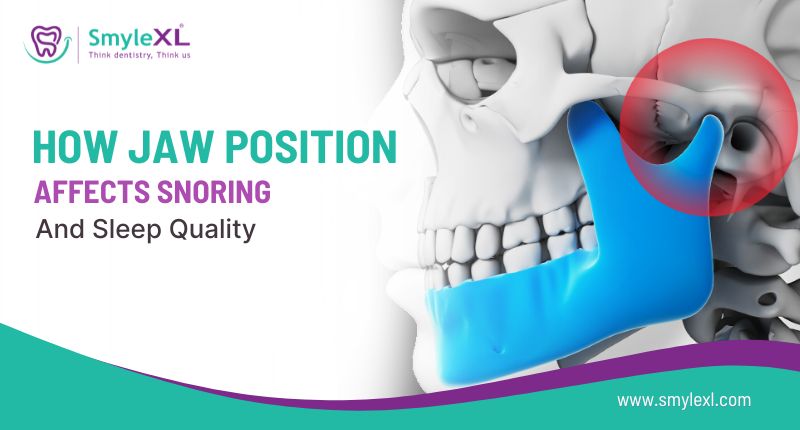
Your lower jaw (mandible) is responsible for more than chewing and speaking. It also plays a structural role in keeping your airway open.
When the lower jaw sits in a balanced, forward position, it helps maintain space behind the tongue. This space is critical because the tongue is attached to the lower jaw. If the jaw moves backward during sleep, the tongue follows.
When that happens, the tongue can partially block the airway.
This is especially common in individuals who:
- Have a small lower jaw
- Have a recessed chin
- Have misaligned bite patterns
- Experience jaw collapse during sleep
In such cases, snoring is not just about throat tissues; it’s about structural positioning.
Jaw Position and Sleep Apnea
Snoring can be a symptom of a more serious condition, obstructive sleep apnea (OSA). In sleep apnea, the airway collapses repeatedly during sleep, causing brief pauses in breathing.
A retruded (backward-positioned) jaw significantly increases the risk of airway obstruction.
People with jaw-related airway narrowing may experience:
- Loud snoring
- Gasping during sleep
- Frequent awakenings
- Morning headaches
- Daytime fatigue
- Poor concentration
Addressing the jaw position in such cases can improve breathing patterns and overall sleep quality.
This is where specialized jaw treatment in Sun Pharma Road at SmyleXL Dental Clinic can become an important part of the solution.
Signs Your Jaw May Be Affecting Your Sleep
You may not immediately connect jaw issues to sleep problems. However, certain signs can indicate a structural concern:
- A visibly small or recessed lower jaw
- Chronic jaw pain or stiffness
- Clicking sounds in the jaw joint
- Teeth grinding at night
- Difficulty closing the mouth comfortably
- Bite misalignment
If these are combined with snoring or disturbed sleep, evaluation of jaw alignment becomes essential.
The Role of the Tongue
The tongue rests on the floor of the mouth and attaches to the lower jaw. When the jaw moves backward during sleep, the tongue shifts backward as well.
This reduces the space in the throat.
In people with already narrow airways, even slight backward movement can trigger vibration or blockage.
A forward-positioned jaw supports the tongue and keeps the airway more stable.
That is why jaw correction treatments often focus on improving the jaw’s resting position.
How Sleeping Position Interacts with Jaw Alignment?
When you lie on your back, gravity pulls the jaw and tongue downward and backward. If your jaw is already structurally retruded, this effect becomes more pronounced.
Side sleeping can reduce snoring in some cases, but if the jaw structure itself is contributing to airway narrowing, position changes may not fully solve the issue.
Structural problems require structural solutions.
Treatment Options for Jaw-Related Snoring
The right approach depends on the severity of the problem. Not every snorer needs surgery. Many patients benefit from conservative and customized treatments.
- Oral Appliance Therapy
One of the most common non-surgical options is a custom-made oral appliance. This device gently moves the lower jaw forward while you sleep.
By advancing the jaw slightly, the appliance increases airway space and reduces vibration.
These devices are:
- Custom-fitted
- Comfortable
- Non-invasive
- Effective for mild to moderate snoring and sleep apnea
Many patients seeking jaw treatment explore this option before considering surgical interventions.
- Bite Correction and Orthodontic Treatment
In some individuals, improper bite alignment contributes to airway restriction. Orthodontic correction can improve jaw positioning over time.
This is particularly useful in younger patients, where jaw growth can still be guided.
- Jaw Advancement Surgery
For severe structural cases, surgical advancement of the lower jaw may be recommended.
This procedure permanently repositions the jaw forward, increasing airway space significantly.
While surgery is not necessary for everyone, it can be life-changing for patients with severe obstructive sleep apnea caused by jaw retrusion.
- Management of TMJ Disorders
Temporomandibular joint (TMJ) dysfunction can also affect jaw positioning. When the joint is unstable, the jaw may shift backward during sleep.
At SmyleXL Dental Clinic,TMJ issues through proper jaw treatment in Sun Pharma Road are addressed, which can stabilize positioning and improve breathing.
How Proper Jaw Alignment Improves Sleep Quality?
When the airway remains open throughout the night:
- Oxygen levels stay stable
- The brain does not need to repeatedly wake the body
- Sleep cycles remain uninterrupted
- Deep sleep stages improve
Better sleep leads to:
- Improved memory
- Better mood regulation
- Reduced blood pressure
- Increased daytime energy
- Better focus
The impact extends beyond just quieter nights. It improves overall health.
The Long-Term Impact of Ignoring Jaw-Related Snoring
Chronic snoring linked to airway obstruction can increase the risk of:
- High blood pressure
- Heart disease
- Stroke
- Type 2 diabetes
- Daytime accidents due to fatigue
Ignoring persistent snoring is not advisable, especially if accompanied by daytime sleepiness.
Early evaluation and appropriate jaw treatment can prevent complications and restore healthy sleep patterns.
Who Should Consider Jaw Evaluation for Snoring?
You should consider consulting a specialist if:
- Snoring is loud and persistent
- You wake up tired despite 7–8 hours of sleep
- Someone notices breathing pauses during your sleep
- You have a recessed chin or bite issues
You experience jaw pain along with snoring
Snoring that continues for years without improvement deserves professional assessment.
Lifestyle Changes That Support Jaw Treatment
While structural correction is important, supportive lifestyle habits also help:
- Maintain a healthy weight
- Avoid alcohol before bedtime
- Sleep on your side
- Keep nasal passages clear
- Practice good sleep hygiene
These measures complement professional jaw treatment rather than replace it.
Don’t Ignore the Structural Factor
If you have tried multiple remedies for snoring without lasting relief, it may be time to look deeper.
The jaw plays a silent but powerful role in breathing during sleep. Addressing alignment issues can dramatically improve not only snoring but also overall sleep quality and long-term health.
Visit SmyleXL Dental Clinic for a professional evaluation of jaw treatment in Sun Pharma Road can help identify whether structural correction is the missing piece in your sleep journey.
Restful sleep is not a luxury. It is essential for physical and mental well-being. Sometimes, the solution begins with simply looking at how your jaw rests when you close your eyes.