
Being told your upper jaw does not have enough bone for dental implants can feel like the end of the road. Bone grafting is often suggested, but it involves extra surgery, long healing time, and sometimes it simply does not work as expected.
What many people do not know is that implants do not always need to rely on the upper jawbone. There is a stronger natural bone nearby, the cheekbone, that can provide solid support.
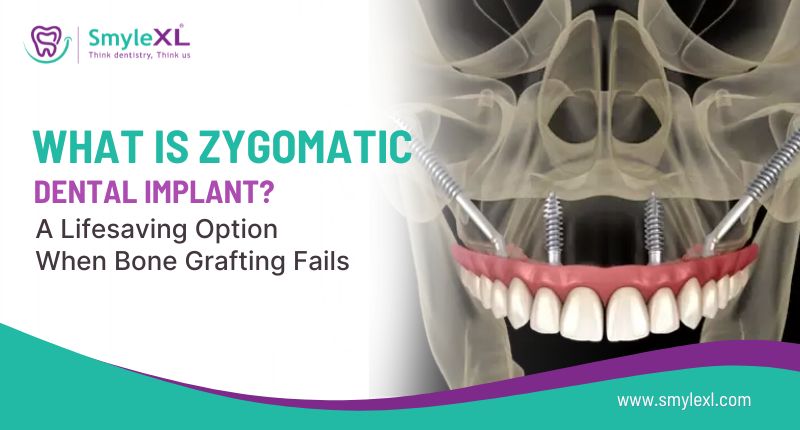
Zygomatic dental implant treatment is designed to anchor into this cheekbone, making fixed teeth possible even in severe bone loss cases. At SmyleXL Dental Clinic, we help patients discover options they may not have realized were available.
Table of Contents
ToggleWhat Exactly Is a Zygomatic Implant?
A zygomatic implant is not your average dental implant. It is longer, stronger, and placed in a completely different location.
- Anchored into the cheekbone called the zygoma instead of the upper jaw
- Made of titanium just like regular implants
- Typically 30 to 55 millimeters long, much longer than standard implants
- Designed for patients with severe bone loss in the upper jaw
- Bypasses the need for bone grafting or sinus lifts entirely
Why the Cheekbone?
You might wonder why the cheekbone works when the jawbone does not.
- The zygoma is one of the densest bones in your face
- It stays strong even when the upper jaw has shrunk away
- Years of tooth loss or denture wear do not affect it
- It provides a rock-solid foundation for permanent teeth
Who Needs Zygomatic Implants?
This option is not for everyone, but for the right person, it is life-changing.
- Severe bone loss in the upper jaw from years of missing teeth
- Failed bone grafts that did not take properly
- Congenital conditions that affected jaw development
- Tumor removal that left large gaps in the bone
- Long-term denture wearers whose jawbone has shrunk too much
This is where dental implant treatment using zygomatic implants becomes the best choice.
How Zygomatic Implants Differ from Regular Implants
The differences go beyond just where they are placed.
Regular implants:
- Go into the upper or lower jawbone
- Need enough bone height and width
- May require grafting if bone is thin
- Usually 8 to 15 millimeters long
Zygomatic implants:
- Go into the dense cheekbone
- Work even when the upper jaw is almost gone
- Eliminate the need for any grafting
- Range from 30 to 55 millimeters long
When you need dental implant treatment but lack jawbone, zygomatic implants offer a path forward that regular implants cannot.
The Step-by-Step Process
Understanding what happens takes away the fear of the unknown.
Your First Visit
- Comprehensive exam with 3D scans to map your anatomy
- Review of your medical history and previous surgeries
- Discussion about what went wrong with past attempts
- A clear plan made just for you
Digital Planning
- Advanced software maps exactly where each implant will go
- Critical structures like nerves and sinuses are avoided
- The surgical plan is perfected before you ever enter the room
The Surgery Day
- Performed under anesthesia so you feel nothing
- The implants are placed through the upper jaw into the cheekbone
- Because the zygoma is so dense, the grip is immediate
- The procedure typically takes two to four hours
The Healing Phase
- The bone grows around the implants over several months
- This process is called osseointegration
- You wear a temporary restoration so your smile looks normal
Your Final Teeth
- Once healed, your permanent bridge is crafted
- Designed to match your face and existing teeth
- Attached securely to your implants
At SmyleXL Dental Clinic, we guide you through every stage of your dental implant treatment with care and clear communication.
Is It Painful?
This question matters, and the answer is reassuring.
- The surgery itself is done under anesthesia
- You feel no pain during the procedure
- Afterward, mild discomfort is normal but manageable
- Most patients report recovery is easier than with bone grafting
Possible Complications to Know
Every surgery has risks, and being informed helps you make good choices.
- Sinusitis is the most common issue, affecting about 14 percent of patients
- Some temporary numbness or tingling can occur
- Soft tissue problems around the implant are possible
- Implant failure happens in a small percentage of cases
Maintenance After Your Implants
Once you have your new smile, a little care keeps it going for decades.
- Brush twice daily around all implant areas
- Special cleaning tools help reach angled implants
- Regular dental visits allow your team to check everything
- With good care, your implants can last a lifetime
When to Consider This Option
The best time to explore zygomatic implants is when other paths have closed.
- After one or more failed bone grafts
- When your dentist says you do not have enough bone for regular implants
- If you are tired of uncomfortable dentures
- When you want a permanent solution without months of grafting
Zygomatic implants change that story. Patients who receive them often describe it as getting their life back. This is the true power of advanced dental implant treatment.
FAQs
Q1. How long do zygomatic implants last?
With proper care, zygomatic implants can last for decades. Studies show survival rates above 96 percent over more than six years of follow-up, and many patients enjoy their implants for 10 to 15 years or longer.
Q2. Am I a candidate if I smoke?
Smoking does increase the risk of complications and implant failure. Your surgeon will discuss this with you honestly and may recommend quitting or cutting back significantly before and after surgery.
Q3. How long is the recovery after surgery?
Most patients return to normal activities within a few days. Swelling and mild discomfort typically peak at two to three days, then gradually subside. Soft foods are recommended for the first week.
Q4. Can I get teeth the same day as my implants?
In many cases, yes. This is called immediate loading. Temporary teeth can often be placed within 24 to 72 hours after surgery, so you leave with a functional smile right away.
Q5. What happens if a zygomatic implant fails?
Implant failure is rare but possible. If it occurs, your surgeon will evaluate why it happened and discuss options. Sometimes another implant can be placed, or adjustments made to your prosthesis.
A Second Chance at a Confident Smile
Zygomatic implants represent hope for people who thought they had run out of options. When bone grafting fails, when the jawbone is too thin, when conventional implants are not possible, this advanced technique offers a way forward. The cheekbone, that strong and dependable structure nature placed in your face, becomes the anchor for a new smile that looks, feels, and functions like the real thing. With success rates above 96 percent and decades of research supporting their use, zygomatic implants are not experimental. They are established, reliable, and life-changing.
At SmyleXL Dental Clinic, we have seen the relief in a patient’s eyes when they learn that yes, something can be done. If you have been living with failed grafts or been told your case is hopeless, we invite you to come in for a conversation about dental implant treatment that actually works for you.