
You finally did it.
After months of thinking about that missing tooth, adjusting your smile in photos, chewing carefully on one side, wondering if people notice, you chose a dental implant. The surgery is done. Healing is complete. And now, the crown is in place.
It looks real. It feels stable. You can chew comfortably again.
But then a practical question comes up:
Table of Contents
ToggleHow long is this going to last?
If you’re considering or already have a dental crown in India, understanding its lifespan isn’t just about numbers. It’s about knowing what affects durability, what most patients overlook, and how small habits quietly decide whether your crown lasts 8 years or 20.
At SmyleXL Dental Clinic, this is one of the most common long-term questions patients ask, not about the procedure, but about longevity.
Let’s talk about it properly.
What Exactly Is an Implant Crown?
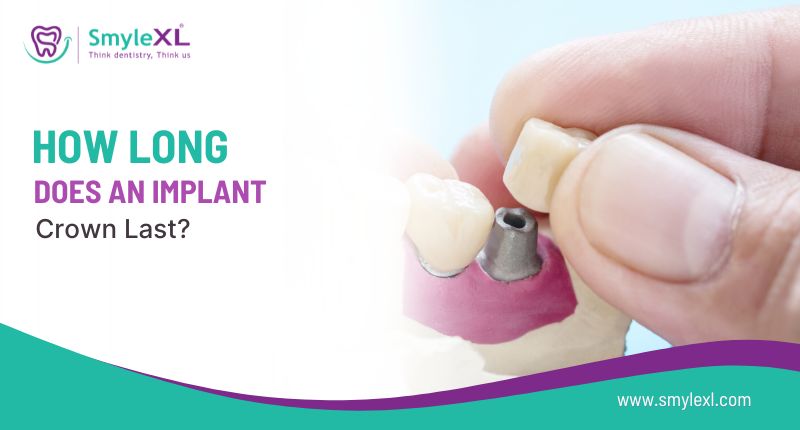
An implant crown is the visible tooth-like cap that sits on top of a dental implant. The implant itself is a titanium post placed inside the jawbone. Once it integrates with the bone (a process called osseointegration), the crown is attached on top.
So technically, there are two parts:
- The implant (inside the bone)
- The crown (the visible tooth)
When people ask how long an implant lasts, they often confuse the two.
Here’s the important distinction:
- The implant post can last 20+ years, often a lifetime.
- The crown may need replacement earlier.
Why? Because the crown takes the daily chewing load.
How Long Does a Dental Crown in India Last on an Implant?
This is the question most patients really want answered before committing to treatment.
On average, an implant crown lasts 10 to 15 years. That’s the commonly quoted clinical range. It’s based on long-term studies and practical dental experience.
But here’s what that number doesn’t tell you.
Many implant crowns last 18 to 20 years, sometimes even longer, when they are well-made and properly maintained. On the other hand, some need replacement in 7–8 years, not because implants “fail,” but because certain risk factors quietly shorten their lifespan.
The truth is, longevity is rarely accidental.
It depends far less on where you get it done and far more on how it is planned, designed, placed, and maintained. When evaluating a dental crown in India, it’s important to understand what actually determines durability.
Let’s look at the real deciding factors:
1. Material Quality
The strength and wear resistance of the crown material matter significantly.
Zirconia crowns, for example, are known for high fracture resistance and long-term stability, especially for back teeth that endure heavy chewing pressure.
Lower-grade ceramics may look good initially, but may chip or wear faster over time.
The internal structure of the crown, not just the outer shine, determines how well it withstands daily stress.
2. Bite Pressure and Alignment
Every person’s bite is different. Some people naturally exert more chewing force. Others may have slight imbalances where one side takes more pressure than the other.
Even a small misalignment can create repeated micro-stress on the crown.
Over years, this pressure can lead to:
- Chipping at the edges
- Loosening of the screw
- Hairline cracks
A well-adjusted bite dramatically increases the crown’s survival rate.
3. Oral Hygiene
This is where many people misunderstand implant care.
The crown cannot decay. However, plaque can accumulate around the gum margin.
If not cleaned properly, it can lead to gum inflammation and eventually bone loss around the implant. Once bone support reduces, the stability of the entire structure is affected.
Regular brushing, flossing, and professional cleaning are not optional, they directly influence lifespan.
4. Night Grinding (Bruxism)
Teeth grinding during sleep puts intense pressure on crowns. Unlike natural teeth, implants lack a cushioning ligament.
This means force transfers more directly to the crown and implant.
Without protection like a night guard, grinding can shorten the crown’s longevity significantly.
5. Regular Dental Follow-Ups
Small problems become large ones when ignored. A slightly loose screw or minor gum inflammation can be corrected easily if detected early.
Left unattended, they may compromise the entire restoration.
Routine check-ups help extend life expectancy beyond the average range.
So when considering a dental crown in India, focusing only on cost can be misleading. Longevity depends on craftsmanship, material selection, bite evaluation, and aftercare guidance.
Crowns don’t fail randomly.
They fail for identifiable, preventable reasons.
When those factors are managed well, an implant crown can remain stable, functional, and natural-looking for well over a decade, sometimes close to two.
Can an Implant Crown Break?
Yes, it can, but it doesn’t happen without a reason.
Implant crowns are built to handle daily chewing and temperature changes. When properly designed and fitted, they are strong and dependable. Still, they are not indestructible.
Common causes of breakage include:
- Trauma or accidents such as falls or sports injuries
- Severe teeth grinding (bruxism) that puts repeated pressure on the crown
- Biting very hard objects like ice or nuts
- Improper fitting or bite imbalance that creates uneven stress over time
Unlike natural teeth, implants don’t have a cushioning ligament. They are fixed directly into the bone, so chewing forces transfer more directly to the crown.
That’s why correct bite adjustment and material choice are important.
What Makes Implant Crowns More Reliable Today?
Modern dentistry has improved significantly.
Today’s crowns benefit from:
- Digital scanning instead of messy impressions
- CAD/CAM precision
- Stronger ceramic materials
- Better bonding systems
These advancements increase accuracy and durability.
At SmyleXL Dental Clinic, digital planning ensures the crown fits naturally within your bite rather than being forced into position.
That small difference changes longevity.
When Should You Replace an Implant Crown?
Replace it if:
- It cracks or chips visibly
- It becomes loose
- Gum infection affects support
- Aesthetic changes are noticeable
- Bite changes over time
Sometimes replacement is cosmetic rather than functional.
And that’s okay too.
Thinking About Getting One?
If you’re exploring options for a dental crown in India, focus on long-term thinking rather than immediate cost alone.
At SmyleXL Dental Clinic, treatment planning includes discussing:
- Expected lifespan
- Maintenance responsibilities
- Material choices
- Bite evaluation
- Follow-up protocol
Because a crown isn’t just a cap.
It’s part of your daily life, your meals, conversations, confidence.
And when done well, it quietly works for years without drawing attention to itself.
FAQs
1. Can an implant crown fall off?
It can loosen if the screw becomes unstable or if cement weakens. This is usually fixable without replacing the implant.
2. Does an implant crown feel different from a real tooth?
Initially, yes. Over time, most patients adapt and forget it’s not natural.
3. Can cavities form under an implant crown?
No, the crown itself cannot decay. However, gum infections can affect the surrounding area.
4. Is replacing the crown painful?
No. If the implant is stable, replacing only the crown is a straightforward procedure.
5. How do I know if my implant crown is failing?
Look for mobility, discomfort, gum swelling, or changes in bite. Regular dental reviews detect issues early.