
You have decided dental implants are the right choice. That’s great! It is one of the best decisions you can make for your smile. But now comes the confusing part. You start reading about them, and suddenly, there are multiple types. Endosteal, subperiosteal, zygomatic, mini implants. Each one sounds different. Each has its own purpose. How are you supposed to know which is best? The answer is simpler than you might think. The best implant is not the newest or the most expensive. It is the one that fits your specific bone, your health, and your goals. What works perfectly for one person may be wrong for another. That is why a thorough examination matters so much.
In a place like Kalyan West, where you have plenty of dental options but not always clear guidance, it’s easy to feel overwhelmed by all this information. Most people don’t just want “an implant”; they want clarity, comfort, and a solution that actually works long-term. That’s where understanding your choices becomes important before you commit to anything.
If you are considering dental implant treatment in Kalyan West, understanding the options helps you have an informed conversation with your dentist. At SmyleXL Dental Clinic, we take time to match each patient with the right solution.
Table of Contents
ToggleEndosteal Implants: The Most Common Choice
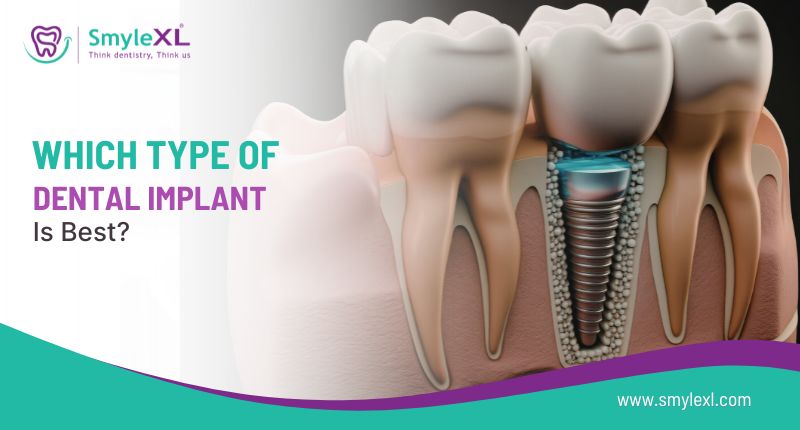
These are what most people picture when they hear dental implants.
- Small screws made of titanium are placed directly into the jawbone
- Shaped like small cylinders or screws
- Act as artificial roots for replacement teeth
- Require enough healthy bone to support them
- Most widely used implant type worldwide
Endosteal means “in the bone,” which tells you exactly where it goes. Once placed, the bone grows around it and locks it in place. This process is called osseointegration and is what makes implants so strong.
For the vast majority of patients, this is the best choice. It has decades of research behind it and success rates over 95 percent. When you visit us for dental implant treatment in Kalyan West, this is likely what we will recommend if your bone is healthy.
Subperiosteal Implants: For Thin Bones
Some people do not have enough jawbone for endosteal implants.
- A metal framework is placed under the gum, but on top of the bone
- Posts attached to the frame stick through the gums to hold teeth
- Designed for patients with insufficient bone height
- Avoids the need for bone grafting surgery
- Less common today, but still useful in certain cases
Instead of going into the bone, this implant rests on it. Modern technology using 3D printing has made these implants much more predictable.
If you have been told your bone is too thin for regular implants, this option might be best for you. Your consultation with us for dental implant treatment in Kalyan West will determine which path fits your situation.
Zygomatic Implants: For Severe Upper Jaw Loss
The upper jaw can be tricky. Years of missing teeth can cause dramatic bone loss.
- The longest type of implant, usually 30 to 55 millimeters
- Anchored into the cheekbone (called the zygoma)
- Bypasses the upper jaw completely
- Eliminates the need for sinus lifts or bone grafting
- Used when the upper jaw is too thin for anything else
The cheekbone is one of the densest bones in your face. It stays strong even when the upper jaw has lost bone. For patients with severe bone loss, this is often the preferred option.
Mini Dental Implants: Smaller and Less Invasive
These are narrower than standard implants and are used in specific situations.
- About half the diameter of regular implants
- Often used to stabilize lower dentures
- Can be placed with less invasive surgery
- Healing time is often shorter
- Not as strong as standard implants
Mini implants work well for patients with narrow bones who need denture stabilization. They are not usually the best choice for replacing single teeth because they are less durable.
Which Type Is Best for You
The answer depends on several factors your dentist evaluates.
Your Bone Health
- Good bone density and volume means endosteal implants work best
- Thin bone may need subperiosteal or grafting with endosteal implants
- Severe upper jaw loss points to zygomatic implants
- Narrow ridges might suit mini implants
Which Jaw Needs Treatment
- The lower jaw usually has better bone than the upper
- Upper back teeth near the sinuses need special planning
- Front teeth have different requirements than molars
Your Overall Health
- Conditions like diabetes affect healing
- Smoking reduces success rates for all types of implants
- Medications may influence bone healing
Your Goals
- Replacing a single tooth is different from full-arch implants
- Denture stabilization needs different solutions
- Aesthetic demands vary by patient
At SmyleXL Dental Clinic, we evaluate all these factors before recommending your specific dental implant treatment in Kalyan West.
Cost Differences Between Types
Money matters in any medical decision.
- Endosteal implants are the most affordable option
- Mini implants cost less but are less versatile
- Subperiosteal implants cost more due to custom design
- Zygomatic implants are the most expensive because of their complexity
- Bone grafting adds cost regardless of type
When comparing options, look at long-term value, not just upfront price. The cheapest implant that fails costs more than the right implant that lasts.
The Consultation Determines Everything
You cannot know which type is best without being examined.
- 3D scans reveal bone you cannot see
- Medical history affects healing and success
- Previous dental work changes what is possible
- Personal goals shape the treatment plan
- Time spent in consultation saves years of regret
A good dentist does not push one type over another. They present what is possible for you personally.
FAQs
How do I know which implant type I need?
Only a thorough examination with 3D imaging can determine that. Your dentist measures bone density, evaluates your health, and discusses your goals. From there, a clear recommendation emerges based on your unique anatomy.
Can I choose my implant type?
You can express preferences, but the final recommendation depends on what your jawbone and health allow. A good dentist explains why one type suits you better than another and involves you in the decision.
Which implant type lasts the longest?
All types can last decades with proper care. Endosteal implants have the longest track record. Zygomatic and modern subperiosteal implants show excellent long-term results but have been studied for less time.
What if I have bone loss in some areas?
Modern implant dentistry has solutions for every scenario. Grafting can rebuild bone for endosteal implants. Subperiosteal implants work without grafting. Zygomatic implants bypass the upper jaw entirely. Your dentist will recommend it based on your specific bone distribution.
Your Perfect Match Is Out There
The best dental implant is not a brand or a style. It is the one that fits your body, your bones, and your life. For most people, that means endosteal implants placed directly into a healthy jawbone. For others with thin bones, subperiosteal implants offer a grafting-free solution. For severe upper jaw loss, zygomatic implants anchor in the cheekbone and change everything. And for denture wearers needing stability, mini implants provide a simpler path. Each type has its place. Each works beautifully for the right patient. The key is finding a dental team that takes time to figure out which one you are.
At SmyleXL Dental Clinic, we do exactly that. We scan, we measure, we listen, and we recommend. If you are ready to explore dental implant treatment in Kalyan West, come talk to us. Let us find the implant that was made for you.