
Sometimes, the problem with teeth is not just about brushing or eating sweets.
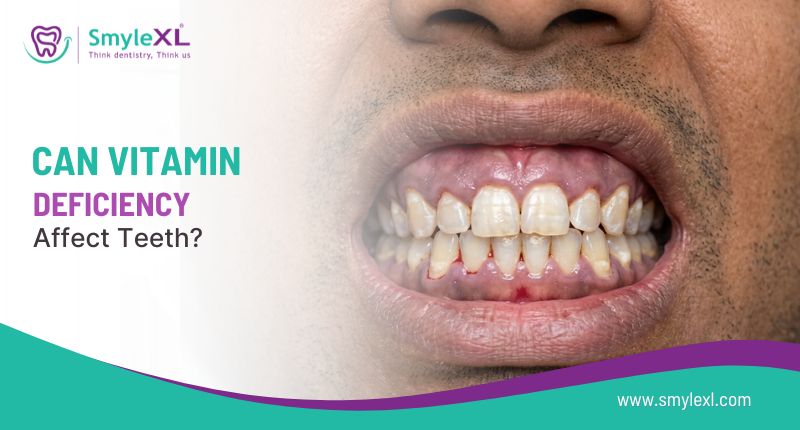
You may be brushing daily, avoiding junk food, and still notice bleeding gums, weak teeth, or sensitivity that doesn’t go away easily. That’s when we start looking a little deeper, and one common reason that often gets ignored is nutrition.
At SmyleXL Dental Clinic, a trusted dental clinic in Davanagere, we often see cases where the teeth and gums are affected not because of poor cleaning habits, but because the body is not getting the right vitamins.
Your teeth are not separate from your body. What you eat and what your body absorbs directly affect your oral health.
Let’s understand this in a simple way.
Table of Contents
ToggleCan Vitamin Deficiency Affect Teeth?
Yes, it can, and more than most people expect.
Think of vitamins as support for your teeth and gums. They help in keeping your enamel strong, your gums healthy, and your mouth resistant to infections.
When your body lacks certain vitamins:
- Gums may become weak or bleed easily
- Teeth may lose strength over time
- Healing becomes slower
- Sensitivity or discomfort may increase
It may not happen overnight, but slowly, the effects start showing.
So even if your brushing routine is good, your teeth can still suffer if your nutrition is not balanced.
Which Vitamin Deficiency Affects Teeth and How?
This is the most important part to understand, because each vitamin plays a different role in maintaining oral health.
Let’s go step by step.
1. Vitamin D Deficiency
Vitamin D plays a very important role because it helps your body absorb calcium properly, which is essential for keeping your teeth and bones strong.
If your body does not get enough Vitamin D:
- Teeth may start becoming weak over time
- Enamel may wear down faster than normal
- Risk of cavities and decay increases
- Jawbone strength may slowly reduce
Many people today have low Vitamin D levels due to less sunlight exposure and indoor lifestyles, and this quietly affects dental health without showing immediate symptoms.
2. Vitamin C Deficiency
Vitamin C is essential for keeping your gums healthy and strong, as it supports the tissues that hold your teeth in place.
If your body lacks Vitamin C:
- Gums may bleed while brushing or eating
- Swelling, tenderness, or redness in gums may occur
- Risk of gum infections increases
- In more severe cases, teeth may start feeling slightly loose
This condition is often linked with weak gum support, which can affect how firmly your teeth stay in place over time.
3. Calcium Deficiency
Calcium is one of the most important minerals for your teeth, as it forms the main structure of enamel and dentin.
If calcium levels are low:
- Teeth may become brittle and less strong
- Enamel can weaken, making teeth more sensitive
- Sensitivity to hot and cold foods may increase
- Risk of cracks, wear, or damage becomes higher
Even if your brushing habits are good, low calcium can make your teeth more prone to problems.
4. Vitamin A Deficiency
Vitamin A helps maintain the soft tissues inside your mouth and also supports healthy saliva production.
If there is a deficiency:
- Mouth may feel unusually dry
- Saliva production reduces, which increases cavity risk
- Healing of oral tissues becomes slower
Since saliva helps wash away bacteria and protect teeth, a lack of it can make your mouth more vulnerable to decay.
5. Vitamin B Complex Deficiency
Vitamin B group plays an important role in maintaining the health of oral tissues, including your tongue, lips, and inner cheeks.
If your body lacks these vitamins:
- You may develop frequent mouth ulcers
- Cracks or soreness at the corners of the lips may appear
- Burning sensation inside the mouth can occur
- Tongue may look red, swollen, or slightly inflamed
These symptoms may seem small or temporary, but they often indicate that your body is not getting enough essential nutrients.
6. Vitamin K Deficiency
Vitamin K is important for proper blood clotting and healing, especially when it comes to gum health.
If it is low:
- Gums may bleed more easily than usual
- Healing after dental treatments or injuries may take longer
Although this deficiency is not very common, it can still affect how well your gums recover and stay healthy.
How Can This Be Taken Care Of?
The good part is that vitamin-related dental issues can be managed with the right approach.
At SmyleXL Dental Clinic, a reliable dental clinic in Davanagere, we focus on understanding the root cause instead of just treating the symptoms.
Here’s how you can take care of it:
- Maintain a balanced diet with fruits, vegetables, and dairy
- Get proper sunlight exposure for Vitamin D
- Do not ignore early signs like bleeding gums or sensitivity
- Visit a dentist for proper evaluation if problems continue
- Follow the treatment plan suggested after diagnosis
Sometimes, small corrections in diet along with dental care can make a big difference.
Why Ignoring Vitamin Deficiency Can Worsen Dental Problems?
Many people think bleeding gums or sensitivity is a small issue and delay visiting a dentist.
But if the cause is nutritional, the problem may slowly become worse.
For example:
- Weak gums can lead to gum disease
- Low calcium can increase tooth damage
- Poor healing can make minor issues serious
So, early attention helps in avoiding bigger treatments later.
A Healthy Smile Starts From Within
“Strong teeth are not just cleaned, they are nourished.”
At SmyleXL Dental Clinic, we don’t just look at your teeth; we look at the reasons behind the problem.
If you are facing ongoing dental issues, it might be time to check if your body is getting the right nutrients.
Visit a trusted dental clinic in Davanagere and let us help you understand what your teeth actually need.
Book your consultation today at SmyleXL Dental Clinic and take a simple step toward healthier teeth.
FAQs
1. Can vitamin deficiency really cause tooth problems?
Yes, certain vitamin deficiencies can weaken teeth and gums, leading to issues like bleeding, sensitivity, and infections over time.
2. Which vitamin is most important for teeth?
Vitamin D and calcium are very important because they help keep teeth strong and reduce the risk of damage.
3. Can I fix dental problems just by taking vitamins?
Vitamins help, but if damage has already occurred, dental treatment may also be required along with proper nutrition.
4. How do I know if my dental issue is due to deficiency?
A proper dental check-up can help identify the cause, and sometimes additional tests may be suggested.
5. When should I visit a dentist for this?
If you notice repeated gum bleeding, sensitivity, or mouth issues that do not improve, it is better to get it checked early.