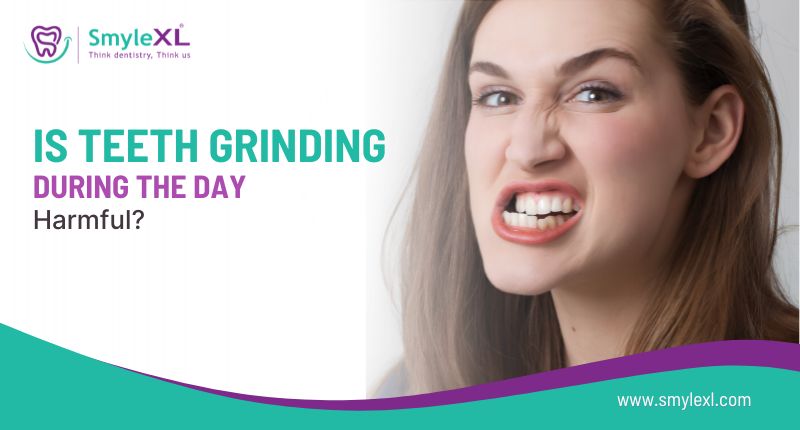

Before you read another word, stop and notice your jaw right now. Are your upper and lower teeth touching? Unless you are eating or speaking, they should not be. If they are, and if that happens more often than you realize, your jaw is under a strain your dentist can see long before you feel it.
Most people who clench during the day have no idea they are doing it. They blame the soreness on stress, the headaches on too much screen time, and the jaw clicking on getting older. Those explanations are not entirely wrong, but they all miss what is actually driving the problem.
At SmyleXL Dental Clinic, some of the most common jaw pain treatment in Davanagere cases involve something patients had never considered: daytime bruxism, otherwise known as awake teeth clenching. It is quieter than sleep grinding, more habitual, and harder to catch because it happens when you are fully conscious and focused on everything else.
Table of Contents
ToggleThe Real Answer Before We Go Any Further
Daytime teeth grinding and clenching cause real, cumulative damage to your enamel, your jaw joint, and the muscles around it. The reason it often goes unnoticed for years is not that it is harmless. It is because the damage builds slowly and the symptoms disguise themselves as something else entirely.
A headache that feels like stress. A sore jaw that feels like tension. A clicking sound that feels like nothing worth mentioning. By the time patients connect these dots, months or years of low-grade strain have already done their work.
The good news is that, caught early, almost all of it is manageable. Caught late, some of it is not reversible. That gap is exactly why this is worth understanding properly and promptly acting upon it. At SmyleXL Dental Clinic, we provide effective solutions, including jaw pain treatment in Davanagere.
Why Do People Grind Their Teeth During the Day? What Causes It?
Most people associate teeth grinding with sleep. But awake bruxism is its own distinct pattern, and far more common than most people realize. It connects directly to what you are doing and feeling in the moment.
The most common triggers:
- Stress clenching during work, deadlines, or difficult conversations
- Concentration clenching while driving or working on a screen
- Underlying anxiety is one of the biggest contributors we see in practice
- Postural habits like resting your chin on your hand
Because clenching happens during moments of focus, your attention is elsewhere, and your jaw simply goes unnoticed.
How Does Teeth Grinding Damage Teeth Over Time?
Grinding and clenching apply forces far greater than those of normal chewing. The damage adds up in ways that are difficult to reverse.
| What Happens | What It Looks Like |
| Tooth wear: enamel erosion | Teeth appear shorter, and edges look flat |
| Enamel fractures | Tiny cracks, increasing sensitivity |
| Joint jaw pain on one side | Uneven clenching strains one TMJ more |
| Ear pain | Referred pain from the jaw joint into the ear |
| Gum recession | Clenching pressure accelerates gum pulling away |
Grinding vs clenching produces different damage. Grinding wears the biting surfaces. Clenching applies more force and tends to fracture teeth and stress the jaw joint. Over time, patients often first seek jaw pain treatment in Davanagere when jaw joint clicking treatment becomes a priority.
“Why Do I Clench Without Even Realizing It?”
This is the question we hear most. Bruxism awareness is genuinely low, even in people who have been doing this for years. The masseter muscles, the ones that run along your cheekbone, can hold significant tension without ever sending a sharp pain signal. What you notice instead is jaw muscle soreness that starts to feel normal, morning jaw stiffness you blame on sleeping badly, or a dull headache you assume is just a long day.
It usually is a long day. The clenching is just the middleman nobody spotted.
The 30-Second Jaw Check That Reveals Whether You Are a Teeth Clencher
You can do this right now, wherever you are reading this. It takes thirty seconds, and it is surprisingly revealing.
A 30-Second Self-Diagnostic Exercise
Step 1: Check tooth contact at rest: Close your lips gently. Are your teeth touching? They should be 2 to 3 mm apart. If they are pressed together, your jaw is already under load.
Step 2: Check masseter muscle tension: Place two fingers just in front of your ear. Clench for two seconds, then release. Is that muscle already tight before you clench? If yes, you are carrying habitual tension.
Step 3: Check morning jaw stiffness: Did your jaw feel tight or slow to open this morning? Stiffness past the first hour of waking is worth taking seriously.
Step 4: Check headache pattern: Do headaches start at the temples in the morning or after stress? That points to jaw-related headaches. If two or more of these apply, a clinical assessment is the right next step. Jaw pain treatment in Davanagere at SmyleXL begins with exactly this kind of structured evaluation.
How Does One Stop Clenching Their Teeth During the Day?
Awareness itself is already part of the solution. The simple act of noticing and releasing into jaw relaxation several times a day reduces joint load significantly. Many patients who come to us for jaw pain treatment in Davanagere notice improvement from awareness alone within two weeks, even before teeth clenching treatment formally begins. Unlike sleep bruxism, you can intervene in real time. Many patients who come for teeth clenching treatment are surprised by how much it changes once they start catching the habit.
What we do for jaw pain treatment in Davanagere at SmyleXL:
- Splint or night guard for overnight protection as the first line of teeth clenching treatment
- Teeth grinding therapy through behavioral techniques, including habit reversal training, where we help patients create a conscious pause before clenching begins
- Jaw exercises for TMJ relief to reduce muscle tightness and improve mobility
- Stress jaw clenching management and anxiety teeth grinding treatment through referral when anxiety is clearly driving the habit
- Jaw pain bruxism treatment with anti-inflammatory measures and trigger point therapy for patients with existing muscle pain
- Botox to the masseter muscle in cases where muscle hyperactivity is severe, and other options have not been sufficient
TMJ disorder management takes a layered approach because the causes are layered. Jaw pain treatment in Davanagere at SmyleXL combines physical and behavioral approaches.
5 Things You Can Do Today to Reduce Jaw Clenching
You do not have to wait for a clinic appointment to start feeling better. These are practical steps we share with every patient starting jaw pain treatment in Davanagere with us.
- Set a jaw check reminder on your phone: Every two hours, ask: ” Are my teeth touching? This single habit builds bruxism awareness faster than most treatments.
- Practice deliberate jaw relaxation: Lips closed, teeth separated by a few millimeters, tongue resting lightly on the roof of the mouth. This correct resting position reduces jaw muscle soreness over time.
- Correct your screen posture: Focusing deeply often tightens the jaw through habit. Sitting back and relaxing your shoulders reduces the tension that follows.
- Warm compress before bed: A warm cloth against your jaw for five minutes reduces stress clenching tension accumulated through the day.
- Note your triggers for one week: Pattern recognition is the foundation of TMD therapy cost-effective self-management, and it is what we build on during jaw pain treatment in Davanagere. Most people find that clenching happens at the same time of day or in the same situations.
Frequently Asked Questions
Is daytime teeth grinding more harmful than night grinding?
Both cause damage. Daytime bruxism is harder to treat because it is tied to habits and emotional states. Awake bruxism requires a behavioral component in teeth clenching treatment.
How do I know if I need professional jaw pain bruxism treatment?
If you have morning jaw stiffness, regular headache from grinding, jaw joint clicking treatment needs, or visible enamel flattening, it is time for a proper assessment. Jaw pain bruxism treatment is most effective when started early.
What does TMJ disorder management actually involve?
TMJ disorder management combines a protective splint, jaw exercises for TMJ relief, and addressing the underlying cause, whether stress jaw clenching management, posture, or dental work. The plan depends on how advanced the damage is.
Does teeth grinding therapy actually work?
Yes. Teeth grinding therapy, combining awareness training, splinting, and anxiety teeth grinding treatment, has strong evidence behind it. Most patients improve meaningfully within six to eight weeks. Different patterns respond differently, making an accurate diagnosis important.
When Awareness Becomes Action
Most people who clench during the day have been doing it for years before it becomes a topic of conversation with a dentist. The jaw is remarkably good at compensating until it can no longer. By the time tooth wear is visible on an X-ray or joint pain in one side of the jaw becomes hard to ignore, some of that damage is already permanent.
At SmyleXL Dental Clinic, jaw pain treatment in Davanagere begins long before things reach that stage. We ask about jaw habits at every check-up because we know the signs.
Our jaw pain treatment starts with awareness, and early intervention genuinely changes the outcome. We have seen this consistently. If anything in this blog describes your daily experience, a conversation with us costs nothing and could save you years of discomfort.