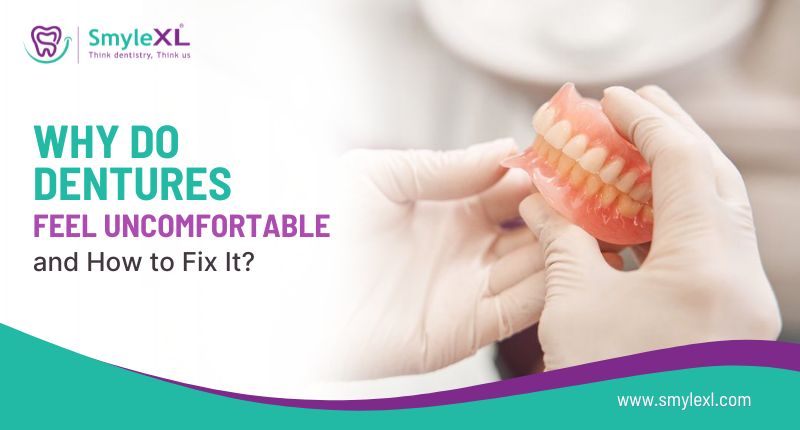

There’s a quiet moment most people don’t talk about, the first time you wear dentures and something doesn’t feel right. It’s not always pain. Sometimes it’s a slight shift when you speak, a hesitation when you chew, or a constant awareness that something in your mouth doesn’t feel like “you.”
When you begin your journey with denture treatment, you expect comfort, confidence, and ease. But when that doesn’t happen immediately, it can feel disappointing. You may start questioning if something went wrong or if this discomfort is something you simply have to live with.
At SmyleXL Dental Clinic, we see this phase often. And the truth is, discomfort is not something you have to accept. It’s something you can understand and fix.
This guide walks you through why dentures may feel uncomfortable and what actually helps you adjust better, whether you are considering removable teeth replacement or exploring long-term artificial teeth solutions.
Table of Contents
ToggleWhy Do Dentures Feel Uncomfortable in the First Place?
Dentures, whether you choose full sets or go with partial denture options, are not natural teeth. They are a form of removable teeth replacement, which means your mouth needs time to adjust to something new sitting inside it every day.
Think of it like wearing a new pair of shoes. Even if they fit well, they may feel tight or slightly uncomfortable in the beginning. The same happens during denture treatment. Your mouth is learning how to adapt.
Here’s what is usually happening:
- Your gums are adjusting to pressure
Natural teeth are fixed into your jawbone. Dentures sit on your gums. So, when you chew, the pressure goes directly onto soft tissue. This can cause mild soreness at first. - Your jaw shape changes over time
After tooth loss, your jawbone slowly shrinks. This is a natural part of tooth loss replacement. Because of this, dentures that once fit well may start feeling loose after a few months. - Your tongue and cheeks are adapting
Your mouth muscles have worked in the same way for years. With artificial teeth solutions, they now have to move differently. This can feel strange in the beginning but improves with time. - The fit may need small corrections
Even with a proper denture fitting process, minor adjustments are common. A small uneven area can cause discomfort, which is why follow-ups are important.
The Most Common Discomfort Problems – And What They Mean
1. Sore Spots and Ulcers
These usually happen when one part of the denture presses more on the gums. Even a small pressure point can cause pain over time.
This is where denture adjustment sessions help. We smooth out the area so the pressure spreads evenly. Most people need a few adjustments in the early phase of denture treatment, and that is completely normal.
2. Loose or Slipping Dentures
If your dentures move while eating or speaking, it can feel uncomfortable. This often happens because your jaw shape has changed after tooth loss.
Even if you invested in good-quality dentures, changes in the bone can affect the fit. While adhesives may help for a short time, a proper correction through a dentures treatment review is more effective.
3. Difficulty Speaking
Speaking clearly takes coordination between your tongue, lips, and teeth. When dentures are introduced, this balance changes.
You may notice difficulty with certain sounds in the beginning. This improves as your mouth adapts. Reading out loud daily can help speed up this adjustment.
4. Trouble Chewing Certain Foods
Dentures do not give the same biting strength as natural teeth. This means harder foods can feel difficult initially.
Even with affordable denture options, this is something you should expect. Starting with softer foods and slowly moving to harder ones makes the transition easier.
5. Gag Reflex or Discomfort in Upper Dentures
Some people feel a gag reflex, especially with upper dentures. This happens because the denture covers part of the roof of your mouth.
This can usually be corrected during a follow-up visit. Small design changes or adjustments during the denture procedure can make a big difference.
Understanding the Fit: Where It Often Goes Wrong
Most denture discomfort isn’t random. It usually comes down to the fit. Even a tiny gap or uneven spot can create pressure, and that’s what starts to feel annoying over time.
During denture treatment, getting the fit right is everything. It all begins with impressions for dentures, where we take a mould of your gums. If this step isn’t super accurate, the final dentures may feel slightly off, like they don’t sit the way they should.
That’s why follow-ups matter more than people think. A proper oral examination for dentures helps us catch small issues early before they turn into bigger discomfort.
What we usually check:
- Whether the dentures feel stable when you talk or eat
- How are your gums reacting to the fit
- If there are any pressure points causing soreness
At SmyleXL Dental Clinic, we keep things simple during your dentures treatment. We fix the small things early. Because honestly, a tiny adjustment now can save you from a lot of irritation later.
How to Fix Denture Discomfort?
Fixing discomfort after denture treatment is not complicated when you follow the right steps. Most issues can be managed with small changes and a bit of consistency.
1. Regular Adjustments
Small corrections during denture adjustment sessions can make a big difference in how your dentures feel. These sessions help refine the fit, remove pressure points, and improve overall comfort. Even a tiny uneven area can cause irritation, so getting it corrected early helps you avoid bigger problems later.
2. Follow Proper Cleaning
Maintaining good hygiene is important for both your dentures and your gums. Cleaning them regularly prevents buildup and reduces the chances of irritation or infection. Proper care also supports better tooth loss replacement results and helps your dentures last longer.
3. Give It Time
Your mouth needs time to adapt to something new. In the beginning, it may feel slightly awkward while eating or speaking, but this improves gradually. Even the best affordable denture options require a short adjustment period before they start feeling natural.
4. Choose the Right Option
Sometimes discomfort happens because the type of denture is not the best fit for your needs. Comparing options like fixed vs removable teeth helps you understand what works better for your lifestyle. Making the right choice from the start can reduce long-term discomfort and improve overall ease of use.
FAQs
1. How long does it take to get used to dentures?
Most people take a few weeks to adjust, but the exact time can vary from person to person. In the beginning, it may feel slightly uncomfortable while eating or speaking, which is normal. With proper dentures treatment and a little practice, your mouth gradually adapts and things start feeling more natural.
2. Why do my dentures feel loose?
This can happen due to changes in your gums or jaw shape over time. Since dentures sit on soft tissue, even small changes can affect the fit. A quick check and minor adjustment usually fix the issue and improve stability.
3. Can dentures damage my gums?
Dentures themselves don’t damage your gums, but if they don’t fit properly, they can cause irritation or sore spots. Regular oral examination for dentures helps identify these issues early and keeps your gums healthy.
4. Should I wear dentures all the time?
It’s usually advised to remove them at night. This gives your gums time to rest and reduces the chances of irritation. Keeping them clean and stored properly also helps maintain their shape and hygiene.
5. Are dentures better than implants?
It depends on your dental condition, comfort, and long-term goals. Dentures are a common and simple option, while implants offer more stability. Comparing implants vs dentures with your dentist can help you decide what suits you better.
6. What if my dentures hurt even after weeks?
If discomfort continues, it usually means the fit needs correction. You may need a few denture adjustment sessions or a detailed review of how your dentures are sitting. Fixing small issues early can make a big difference in comfort.
Comfort is not optional. It’s part of the treatment.
At SmyleXL Dental Clinic, our approach to denture treatment focuses on making your dentures feel natural, stable, and easy to live with, not just on the first day, but in your everyday routine. From the initial fit to follow-up care, we pay attention to the small details that make a big difference in how you feel.
If something doesn’t feel right, it’s not something you have to adjust to on your own. With the right dentures treatment, we’re here to check, guide, and fix it, step by step, so your dentures feel as close to natural as possible.