
“Doctor… दात काढावाच लागणार का?”
That one question comes with full panic mode. Usually, after someone spends two weeks chewing on only one side and pretending the pain will magically disappear on its own. Classic.
One day it’s “थोडंसं लागतंय.”
The next day, you complain about the cold water hurting.
Then suddenly, at midnight, when the pain gets unbearable, you’re googling symptoms while holding your cheek dramatically like a Bollywood breakup scene.
However, not every badly damaged tooth needs extraction.
In many cases, modern root canal treatment can actually help save teeth that look completely hopeless from the outside. What feels like “बस्स आता दात गेला” may still be treatable with the right care.
At SmyleXL Dental Clinic, Ahmednagar, many patients walk in assuming extraction is the only option, only to discover that saving the natural tooth is still possible.
Because honestly? Dentists today focus much more on saving teeth than on removing them immediately.
Table of Contents
ToggleSo… What Exactly Is Deep Tooth Decay?
A cavity does not become severe overnight.
Tooth decay usually starts small:
- mild sensitivity
- occasional pain
- food getting stuck
- discomfort while eating sweets
Easy to ignore.
But when the cavity keeps growing deeper, bacteria eventually reach the inner nerve area called the dental pulp.
That’s when things become serious.
At this stage, patients may experience:
- severe pain
- swelling
- bad breath
- sensitivity to hot and cold
- pain while chewing
These are common severe cavity symptoms that may indicate deeper infection inside the tooth.
Can Deep Decay Be Treated Without Extraction?
Short answer?
Yes, many times it can.
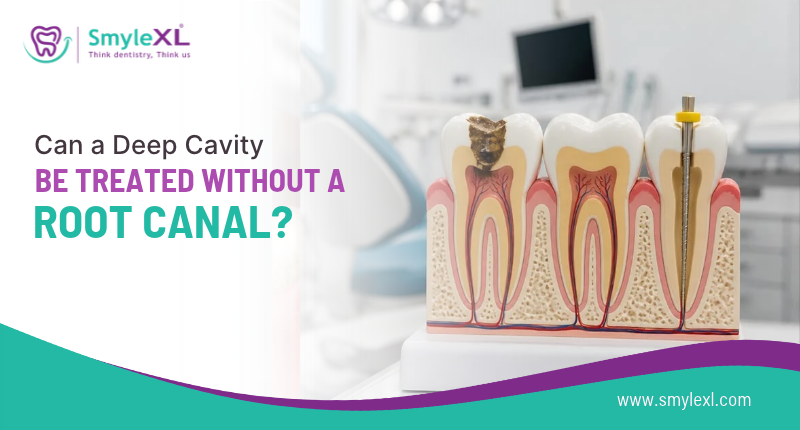
Modern RCT is specifically designed to remove infection from inside the tooth while preserving the outer tooth structure whenever possible.
That means dentists focus on:
- cleaning the infected area
- removing damaged nerve tissue
- disinfecting the canals
- restoring the tooth
This approach is often considered one of the best options for tooth decay treatment without extraction.
Because preserving natural teeth whenever possible is usually preferred over immediate removal.
What Happens If the Infection Reaches the Nerve?
Once bacteria infect the nerve tissue, the tooth may develop:
- inflammation
- infection
- abscess formation
- intense pain
This condition is commonly linked to tooth nerve infection affecting the inner portion of the tooth.
At this stage, regular fillings alone are usually not enough.
The tooth may require:
- endodontic treatment
- infection treatment
- proper internal cleaning
- structural restoration
Without the treatment, the infection may continue to spread deeper into the surrounding tissues.
The Biggest Myth: “Pain Means Extraction”
Not always.
Many people assume that severe pain automatically means the tooth cannot be saved.
But modern advanced cavity treatment has changed the way dentists manage deep decay.
Even teeth with significant infection may sometimes be restored through:
- deep tooth decay treatment
- restorative dental treatment
- dental abscess treatment
- painless RCT
The decision depends on:
- how much healthy tooth structure remains
- infection severity
- bone support
- crack extent
- overall tooth condition
What Is Root Canal Treatment Actually Doing?
Think of the tooth like a house with damaged wiring inside.
The outside walls may still be standing, but the inside has become infected.
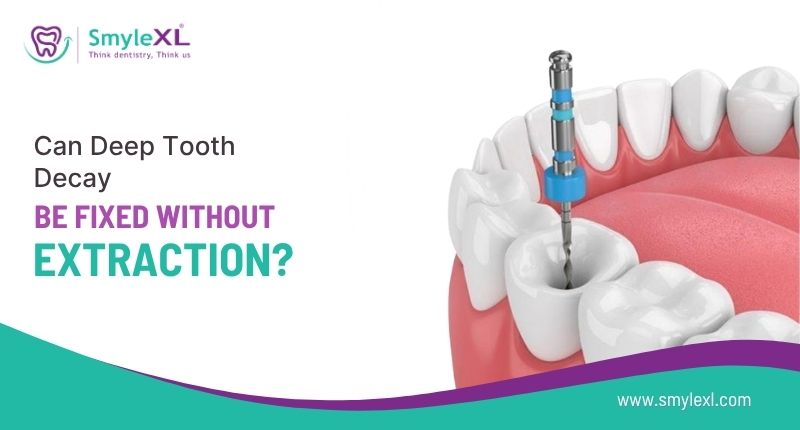
During root canal treatment in Ahmednagar, our dentist at SmyleXL:
- removes infected tissue
- cleans the canals
- disinfects bacteria
- seals the tooth
- rebuilds strength
The goal is simple:
Save the natural tooth whenever safely possible.
This is why many people choose alternatives to tooth extraction before deciding on removal.
What About Molars With Deep Decay?
Molars are especially important because they handle most chewing forces.
Unfortunately, they are also more likely to develop large cavities because of their grooves and position.
When decay reaches deeper layers, patients may require:
- decayed molar treatment
- advanced cavity treatment
- tooth pain relief treatment
At SmyleXL Dental Clinic, Ahmednagar, dentists often evaluate whether enough structure remains for proper damaged tooth repair before recommending extraction.
Because saving a natural molar is usually better than losing it prematurely.
Can a Severely Decayed Tooth Really Be Saved?
Sometimes yes, surprisingly.
Many patients assume the tooth is “gone” just because it looks dark, broken, or painful.
But dentists evaluate several factors before deciding:
- root condition
- bone support
- crack severity
- infection spread
- restorability
If enough healthy structure remains, procedures to save a severely decayed tooth may still work successfully.
That’s where RCT often becomes an important solution.
What Happens After Root Canal Treatment?
Once the infection is removed, the tooth usually needs protection and reinforcement.
This often includes:
- fillings
- buildup material
- crowns
A dental crown after root canal is placed to protect the tooth from cracking or weakening later.
Especially in molars, crowns are extremely important because chewing pressure remains high.
The final goal is proper tooth restoration after decay while maintaining strength and function.
Why Dentists Prefer Preserving Natural Teeth
Natural teeth are always valuable.
Even advanced replacements cannot completely replicate the exact function of a healthy natural tooth.
That’s why modern dentistry focuses heavily on:
- preserving natural teeth
- conservative treatment
- long-term function
- structural preservation
Whenever safely possible, dentists usually explore alternatives to tooth extraction first before recommending removal.
What If There’s Swelling or Pus?
Swelling may indicate deeper infection or abscess formation.
This may happen when bacteria spread beyond the tooth root.
Patients may notice:
- gum swelling
- pus discharge
- facial swelling
- throbbing pain
- fever
These situations may require:
- dental abscess treatment
- immediate infection treatment
- antibiotics
- emergency drainage
- endodontic treatment
Delaying treatment can increase complications significantly.
Root Canal vs Extraction: Which Is Better?
This is one of the most common questions patients ask, and honestly, the answer depends on the condition of the tooth.
| Factor | RCT | Extraction |
| Goal | Saves the natural tooth | Removes the tooth |
| Chewing | Maintains chewing function | May affect chewing later |
| Recovery | Focuses on saving the tooth | Healing after removal is needed |
| Future Needs | Usually restored with a crown | May need implants or bridges |
| Jaw Support | Helps preserve jaw stability | Bone loss may occur over time |
When possible, saving the natural tooth through RCT is often preferred for better long-term function.
Is Root Canal Treatment Painful?
Modern dentistry has changed this experience dramatically.
Most procedures today are performed using local anesthesia and advanced techniques designed for comfort.
In fact, many patients seeking tooth pain relief treatment actually feel better once the infection is removed.
That’s why procedures like painless RCT are becoming increasingly common with modern equipment and proper anesthesia.
What Causes Deep Decay in the First Place?
Usually:
- delayed treatment
- sugary foods
- poor oral hygiene
- skipped dental visits
- untreated cavities
Small cavities rarely stay small forever.
Over time, untreated decay may progress into:
- cavity causing tooth infection
- deeper nerve involvement
- abscess formation
- structural damage
Early treatment almost always reduces complications later.
Can Cracked Teeth Also Need Root Canal Treatment?
Yes.
A cracked or decayed tooth may expose the inner nerve tissue to bacteria, leading to infection.
Symptoms may include:
- sharp pain while chewing
- sensitivity
- pressure discomfort
- swelling
In many cases, endodontic treatment becomes necessary to manage internal infection and preserve the tooth.
What Is the Cavity Removal Procedure Like?
During the cavity removal procedure, dentists carefully remove decayed portions while preserving as much healthy tooth structure as possible.
If infection has already reached deeper tissues, additional treatment such as root canal treatment may be required.
The earlier the cavity is treated, the simpler the procedure usually becomes.
When Does Extraction Become Necessary?
Sometimes, extraction is still the safest option.
This may happen if:
- the tooth is severely fractured
- decay extends too deeply below the gums
- bone support is lost
- infection is extremely extensive
In such cases, dentists may discuss tooth replacement options separately.
But importantly, extraction is not automatically the first answer for every painful tooth.
FAQs
How much does root canal treatment usually cost in Ahmednagar?
The cost of root canal treatment in Ahmednagar usually ranges between ₹3,500 and ₹12,000+ per tooth, depending on the tooth type, infection severity, and treatment complexity. Front teeth generally cost less, while molars may cost more because they have multiple canals. A dental crown is usually recommended afterward for proper tooth restoration after decay and long-term protection.
What happens if you leave a cavity untreated for 2 years?
If a cavity is ignored for a long time, the decay may eventually reach the inner nerve area of the tooth and cause a tooth nerve infection. This can lead to severe pain, swelling, abscess formation, or difficulty chewing. In many cases, treatment becomes more complicated later and may require root canal therapy or extraction.
Is it normal for a 20-year-old to have cavities?
Yes, cavities are actually very common in young adults. Poor oral hygiene, sugary foods, irregular dental visits, stress eating, and frequent snacking can all contribute to tooth decay, even in people in their 20s. Early damaged tooth repair and timely treatment usually help prevent bigger dental problems later.
Can a tooth with severe bone loss still be saved?
It depends on how much bone support remains and the overall condition of the tooth. In some cases, advanced treatments like bone grafting or regenerative procedures may help save a cracked or decayed tooth. However, if the damage becomes extremely severe, saving the tooth may not always be possible.
The Key To Saving Your Tooth: Early Diagnosis
Deep decay does not automatically mean losing your tooth.
With modern root canal treatment, many severely damaged teeth can still be cleaned, restored, and preserved successfully without immediate extraction.
The key is timely diagnosis before the infection spreads too extensively.
At SmyleXL Dental Clinic, the focus remains on preserving natural teeth whenever safely possible through personalized, evidence-based root canal treatment in Ahmednagar, designed for long-term oral health and comfort.