
Losing one tooth feels annoying.
Losing multiple teeth?
That starts affecting everything:
- chewing
- confidence
- speaking
- smiling
- even eating simple food comfortably
Many people initially assume the only solution is removable dentures.
But modern dentistry has changed a lot.
Today, options like dental implant treatment allow dentists to replace multiple missing teeth with solutions that feel far more stable, functional, and natural-looking.
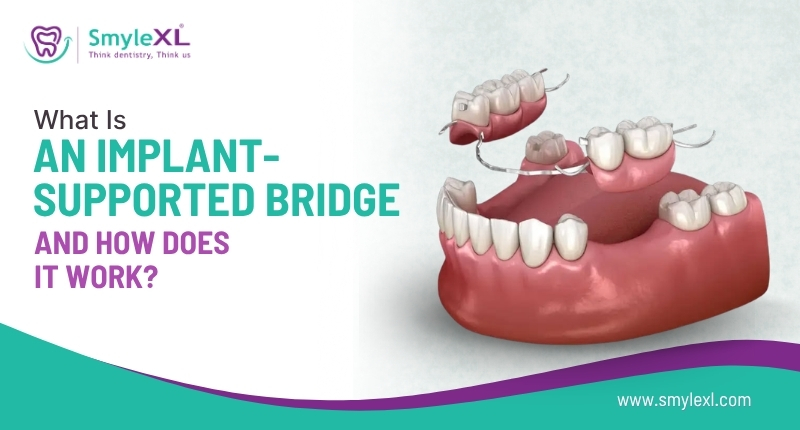
One of the most commonly recommended options for multiple missing teeth is an implant-supported bridge.
At SmyleXL Dental Clinic, Rahuri, Dr. Mahesh Gavhane often explains that implant-supported bridges are designed not only to replace teeth aesthetically but also to restore chewing strength, bite stability, and long-term oral comfort.
Because replacing teeth is not only about filling empty spaces.
It is about restoring function, too.
Table of Contents
ToggleFirst Things First: What Is an Implant-Supported Bridge?
An implant supported bridge treatment is a method of replacing multiple missing teeth using dental implants as support anchors.
Instead of relying on natural teeth for support, the bridge is attached to implants placed inside the jawbone.
This creates:
- stronger support
- better stability
- improved chewing comfort
- long-term durability
A dental implant bridge is commonly recommended when several teeth are missing side by side.
How Is It Different From a Traditional Bridge?
A traditional bridge usually depends on neighboring natural teeth for support.
That means healthy teeth often need to be reshaped to hold the bridge.
But during dental implant treatment, the implants themselves support the bridge structure.
This means:
- surrounding healthy teeth remain untouched
- support becomes stronger
- jawbone stimulation improves
That is one major reason implant-supported bridges have become increasingly popular.
Who Usually Needs an Implant-Supported Bridge?
This type of treatment may help patients with:
- several missing teeth together
- unstable dentures
- chewing difficulty
- worn-out bridges
- missing back teeth
Patients looking for:
- missing teeth replacement
- stable chewing
- fixed teeth
- long-term comfort
often consider implant-supported solutions.
How Does the Procedure Actually Work?
At SmyleXL Dental Clinic, the implant bridge procedure usually happens in stages.
Step 1: Consultation and Evaluation
The dentist first evaluates:
- gums
- bone support
- bite
- number of missing teeth
Scans and imaging help determine whether implants can be placed safely.
Step 2: Implant Placement
At our clinic, during dental implant treatment in Rahuri, titanium implants are placed into the jawbone surgically.
These implants act like artificial tooth roots.
Step 3: Healing Phase
Over time, the implants gradually bond with the jawbone through something called the bone integration process.
This healing phase is extremely important because it creates strong long-term support.
Step 4: Bridge Placement
Once healing is complete, the custom bridge is attached to the implants.
The result is a stable, fixed replacement for multiple missing teeth.
Why Jawbone Support Matters So Much
One major problem after tooth loss is bone shrinkage.
When teeth are missing for long periods, the jawbone no longer receives stimulation from chewing forces.
This may gradually reduce bone volume over time.
Implants help provide:
- jawbone support for teeth
- chewing stimulation
- structural stability
This is one reason implant-supported options are often preferred for long-term oral health.
What Makes Implant Bridges Feel More Stable?
Traditional removable dentures may sometimes:
- shift while eating
- loosen while speaking
- reduce chewing confidence
An implant-supported bridge remains fixed in position.
That is why many patients describe it as a:
- stable alternative to dentures
- stronger chewing solution
- more natural-feeling replacement
The fixed support improves overall comfort significantly.
Can Implant Bridges Replace Many Teeth Together?
Yes.
A multiple teeth implant solution is specifically designed for replacing several missing teeth efficiently.
Instead of placing one implant for every single missing tooth, strategically placed implants may support multiple replacement teeth together.
This makes treatment more practical in many cases.
What Is a Fixed Implant Bridge?
A fixed implant bridge is a bridge attached securely to dental implants and designed to remain stable inside the mouth.
Unlike removable dentures:
- patients do not remove it daily
- movement is minimized
- chewing becomes more natural
Many patients prefer fixed solutions because they feel closer to natural teeth.
What About Full Arch Dental Implants?
Patients missing most or all teeth may sometimes require:
- full arch dental implants
- implant-supported full bridges
- advanced restorative planning
These solutions replace an entire arch of teeth using multiple implants for support.
This may help improve:
- chewing ability
- appearance
- stability
- confidence
Why Implant Bridges Look More Natural Today?
Modern implant dentistry focuses heavily on aesthetics, too.
Today’s bridges are designed for:
- better shape
- realistic color matching
- improved contours
This helps create:
- natural-looking replacement teeth
- more balanced smiles
- improved confidence
Most people usually cannot identify implant-supported bridges visually.
Can Implant Bridges Improve Chewing?
Absolutely.
One major benefit of dental implant treatment for multiple teeth is improved chewing strength.
Patients often notice better:
- Food choices
- bite balance
- eating comfort
This type of chewing function restoration may help patients enjoy food more comfortably again.
What Are Artificial Teeth Supported by Implants?
The bridge attached over implants essentially acts as:
- replacement of teeth
- functional chewing surface
- aesthetic smile support
These are commonly referred to as:
- artificial teeth supported by implants
- implant-supported prosthetics
The goal is restoring both appearance and function together.
Why Bone Integration Is Important
The success of implants depends heavily on the bone integration process.
This is when the jawbone gradually bonds around the implant surface during healing.
Good integration helps create:
- stability
- strength
- long-term support
Without proper healing, implants may not remain stable long-term.
Implant Bridges vs Dentures
Patients often compare:
- dentures
- bridges
- implants
The biggest difference usually comes down to:
- stability
- chewing comfort
- long-term support
An implant-supported bridge is often considered a more:
- secure
- fixed
- comfortable
solution compared to removable dentures.
Can Implant Bridges Last Long?
With proper care, implant-supported restorations may function successfully for many years.
Maintaining:
- oral hygiene
- regular checkups
- gum health
is extremely important for long-term success.
That is one reason implants are considered a:
- long-lasting tooth replacement
- durable restorative solution
What About Appearance?
Many patients worry:
“Will it look fake?”
Modern fixed tooth restorations focus heavily on:
- aesthetics
- smile symmetry
- natural tooth proportions
This helps create:
- restoring smile and bite
- natural appearance
- improved confidence
Good implant work usually blends naturally with surrounding teeth.
Is Dental Implant Treatment Painful?
Modern implant procedures are usually performed with anesthesia and careful planning.
Most patients describe the experience as ‘more manageable’ than they initially expected.
Post-treatment soreness is generally temporary and improves gradually during healing.
Who May Not Be an Ideal Candidate?
Some patients may require additional planning if they have:
- severe bone loss
- uncontrolled diabetes
- heavy smoking habits
- advanced gum disease
However, many cases can still be managed successfully with proper evaluation and planning.
Why Does Replacing Multiple Teeth Early Matter?
Leaving missing teeth untreated for long periods may contribute to:
- shifting teeth
- bite imbalance
- bone shrinkage
- chewing problems
That is why early missing teeth replacement often helps maintain better oral stability.
What Is an Implant-Supported Prosthesis?
An implant-supported prosthesis refers to a replacement structure attached securely over implants.
This may include:
- bridges
- full arch restorations
- implant-supported replacement teeth
The goal is rebuilding both function and aesthetics together.
Dental Implants and Bridges Work Together
People often think implants and bridges are completely separate treatments.
But implant-supported bridges combine both concepts:
- implants provide support
- bridges replace missing teeth
That is why modern dental implants and bridges often work hand-in-hand during full rehabilitation planning.
The Emotional Impact of Missing Teeth
Tooth loss affects more than appearance.
Many patients slowly begin avoiding:
- smiling
- social situations
- eating comfortably
- speaking confidently
That is why proper permanent tooth replacement solutions can improve not only oral function, but confidence and quality of life too.
Why Personalized Planning Matters?
Every patient has different:
- bone levels
- bite conditions
- missing teeth patterns
- oral goals
That is why successful dental implant treatment always depends on proper diagnosis and personalized planning rather than a “one-size-fits-all” approach.
FAQs
How many implants are needed for an implant-supported bridge?
The number depends on how many teeth are missing and the amount of bone support available.
Are implant-supported bridges removable?
Most fixed implant bridges remain securely attached and are not removed daily by patients.
How long does implant treatment take?
Treatment duration varies depending on healing time, bone condition, and overall treatment complexity.
Can implant bridges replace back teeth?
Yes. Implant-supported bridges are commonly used to replace missing back teeth and improve chewing function.
Do implant bridges look natural?
Modern fixed tooth restorations are designed to closely resemble natural teeth in shape, color, and appearance.
Bye, Missing Teeth & Hello Beautiful Smiles!
An implant-supported bridge is more than just a cosmetic replacement for missing teeth. It is designed to restore:
- better chewing comfort
- bite stability
- oral function
- confidence
- long-term support
Modern solutions like:
- implant supported bridge treatment
- fixed implant bridge
- multiple teeth implant solution
- full arch dental implants
allow patients to replace missing teeth with far more stable and natural-feeling results than traditional removable options.
At SmyleXL Dental Clinic, Dr. Mahesh Gavhane focuses on personalized planning for dental implant treatment in Rahuri to improve comfort during permanent tooth replacement procedures and enhance stability, aesthetics, and long-term oral health for patients with multiple missing teeth.