
Most people don’t think much about their teeth until one goes missing.
At first, you may try adjusting. You chew from one side, smile carefully in photos, or avoid certain foods completely. Some people even convince themselves:
“It’s just one missing tooth… I’ll manage.”
But over time, that small gap can slowly affect much more than appearance.
Your bite may feel uneven. Nearby teeth may shift. Chewing can become uncomfortable. And confidence? That changes, too.
That’s why more people today are choosing a modern dental implant solution instead of temporary replacements that keep slipping or needing adjustments.
At SmyleXL Dental Clinic in Sanpada, many people arrive thinking implants are only for older people or severe dental problems. But modern implant dentistry has become one of the most reliable ways to replace missing teeth naturally and comfortably.
Still, one question comes up almost every time: “What exactly is an artificial tooth implant, and how does it actually work?”
Table of Contents
ToggleWhat Is a Dental Implant?
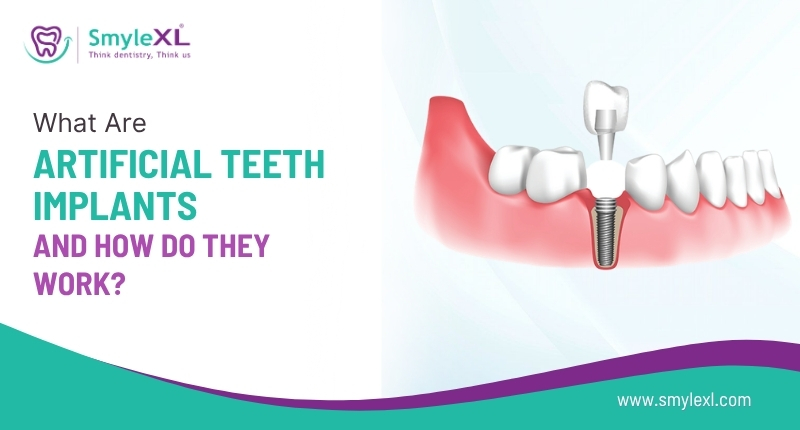
It is an artificial root placed inside your jawbone to support a replacement tooth.
Unlike removable dentures that sit on top of the gums, implants are fixed securely into the jaw itself.
A typical implant system usually includes:
- The implant screw
- A connecting piece
- The replacement tooth or crown
Once healing happens, the implant functions very similarly to a natural tooth root.
This makes implant treatment feel much more stable and natural compared to removable options.
What are the Different Types of Tooth Implants?
1. Single Tooth Implant
A single implant is used when only one tooth is missing. The implant replaces both the root and the visible tooth without affecting nearby healthy teeth. This option feels more natural and helps maintain proper chewing balance.
2. Implant-Supported Bridge
When multiple teeth are missing together, an implant-supported bridge may be recommended. Instead of placing an implant for every missing tooth, implants support a connected bridge of replacement teeth.
3. All-on-4 Implants
All-on-4 implants replace a full arch of teeth using four strategically placed implants. This option is commonly recommended for patients who have lost most or all teeth and want fixed replacement.
4. All-on-6 Implants
All-on-6 implants work similarly to All-on-4 but use six implants for additional support and stability. This option may be suitable for patients requiring stronger bite support.
5. Full Mouth Implants
Full mouth dental implants replace all upper teeth, lower teeth, or both arches completely. This treatment helps improve chewing ability, speech, smile appearance, and overall confidence.
6. Implant Supported Dentures
Implant supported dentures attach securely to implants placed in the jawbone. Unlike traditional removable dentures, they feel more stable while eating and speaking.
Materials Used
1. Titanium
Titanium is the most commonly used dental implant material worldwide. It is highly durable, biocompatible, and bonds naturally with the jawbone. They are trusted for their long-term strength and high success rates.
2. Zirconia
Zirconia implants are metal-free and tooth-colored, making them a popular option for patients looking for aesthetic or metal-free restorations. They provide a more natural appearance near the gums and are considered safe and strong.
Which Implant Material Is Better?
Both titanium and zirconia implants offer excellent results. The ideal choice usually depends on:
- Jawbone condition
- Cosmetic goals
- Gum thickness
- Bite pressure
- Overall oral health
Your dentist will recommend the most suitable implant material based on your individual treatment needs.
Why are Titanium Implants Are Commonly Used?
Most modern implants are made from titanium because it bonds very effectively with bone.
Titanium implants are popular because they are:
- Strong
- Durable
- Biocompatible
- Long-lasting
Titanium is commonly recommended because of its excellent success rates and stability.
Difference between implants and dentures/bridges
| Option | Dental Implants | Dentures | Bridges |
| Fixed or Removable | Fixed | Removable | Fixed |
| Stability | Very stable | Can move | Stable |
| Jawbone Support | Yes | No | Limited |
| Appearance | Natural-looking | Natural but removable | Natural |
| Comfort | High | Moderate | Comfortable |
| Longevity | Long-lasting | Needs replacement | Long-lasting |
Why Should Missing Teeth Not Be Ignored?
Many people think missing one tooth is mostly a cosmetic issue.
But missing teeth affects:
- Chewing balance
- Jawbone strength
- Speech clarity
- Facial structure
- Confidence
Without roots stimulating the jawbone, bone shrinkage can slowly begin underneath the missing tooth.
This is why many dentists recommend implants for long-term jawbone support after tooth loss.
How Does a Tooth Implant Actually Work?
An implant works by acting like an artificial tooth root.
During tooth implant surgery, the implant is placed inside the jawbone.
Over time, the surrounding bone naturally bonds around the implant in a process called osseointegration.
Once healing is complete:
- The implant becomes stable
- A connector is attached
- A crown is placed on top
This creates a secure and natural-looking tooth replacement that feels much more like a real tooth.
What Happens During Tooth Implant Surgery?
Many patients feel nervous hearing the word “surgery.”
But modern implant surgery is usually much simpler and more comfortable than people expect.
The process generally involves:
- Numbing the area
- Placing the implant carefully inside the bone
- Allowing healing time
- Attaching the final crown later
Most people experience only mild swelling or temporary soreness afterward.
What Technology Is Used for Dental Implant Treatment?
Modern treatment uses advanced technology to improve accuracy, comfort, healing, and long-term success. Today’s implant procedures are much safer and more precise than older traditional methods.
Digital Dental Scanning
Digital intraoral scanners create accurate 3D images of your teeth and gums without messy traditional impressions. This helps dentists plan implants more precisely.
CBCT Scan (3D Imaging)
CBCT scans provide detailed 3D images of the jawbone, nerves, and surrounding structures. This technology helps dentists evaluate bone support and place implants safely.
Computer-Guided Implant Surgery
Computer-guided implant technology allows dentists to place implants with higher precision using digital planning and surgical guides. This improves accuracy and reduces surgical errors.
CAD/CAM Technology
CAD/CAM systems help design and create highly accurate crowns and implant restorations that fit naturally and comfortably.
Digital Smile Design
Digital smile design technology helps patients preview expected smile results before treatment begins. It improves treatment planning and aesthetics.
Laser Dentistry
Some clinics use laser technology during implant procedures for gum contouring or soft tissue management, helping improve healing and comfort.
Titanium and Surface-Treated Implants
Modern implants use advanced titanium surfaces that help improve bone bonding and faster healing after implant placement.
Are Dental Implants Worth It?
For many patients, yes.
Although implants may initially cost more than temporary options, they often provide:
- Better comfort
- Improved stability
- More natural appearance
- Stronger chewing ability
- Long-term confidence
Most importantly, they help restore missing teeth in a way that feels much closer to natural teeth.
Choosing the Right Implant Dentist Matters
Successful implant treatment depends heavily on planning and experience.
An experienced implant specialist evaluates:
- Bone support
- Gum health
- Bite alignment
- Medical history
- Long-term treatment goals
If you are looking for trusted and advanced dental implants in Sanpada, Navi Mumbai, then visit us at SmyleXL Dental Clinic, where every patient receives a personalized evaluation from a trained implantologist before treatment begins.
So, Now You Know How They Work?
Missing teeth can affect much more than appearance. They can change your chewing comfort, confidence, jaw health, and even the way you speak or smile daily.
Modern dental implant treatment offers a stable and natural-feeling way to restore missing teeth while protecting long-term oral health.
From single tooth implant solutions to full mouth implants and implant supported dentures, today’s implant dentistry provides safer and more comfortable options than ever before.
At SmyleXL Dental Clinic in Sanpada, every plan of dental implants in Sanpada Navi Mumbai is designed carefully to create healthier smiles, better comfort, and long-lasting confidence.
If you’ve been adjusting to missing teeth for years, modern implants may finally help you stop “managing the problem” and start feeling comfortable with your smile again.
FAQs
Are dental implants permanent?
Implants are designed as a long lasting tooth replacement solution and can function for many years with proper care and regular dental visits.
Is tooth implant surgery painful?
Most patients experience only mild discomfort because tooth implant surgery is performed under anesthesia using modern techniques.
Can one implant replace a single missing tooth?
Yes, a single tooth implant can replace one missing tooth without affecting nearby healthy teeth.
How long does healing take after implant placement?
Healing time varies, but the jawbone usually needs a few months to bond properly with the implant before the final crown is placed.
Are dental implants better than removable dentures?
Many patients find implants more stable, comfortable, and natural-feeling compared to removable dentures because they stay fixed securely inside the mouth.
What is an implant supported crown?
An implant supported crown is a custom-made artificial tooth attached securely on top of a dental implant to replace a missing tooth naturally and comfortably.
What is a smile restoration treatment?
Smile restoration treatment focuses on improving damaged, missing, uneven, or worn teeth to restore both smile appearance and oral function.
What is full smile rehabilitation?
Full smile rehabilitation is a comprehensive dental treatment that combines multiple procedures to restore chewing ability, bite balance, comfort, and overall smile aesthetics.