
Talking is something most of us do without thinking. We chat with friends, answer phone calls, attend meetings, and laugh at jokes.
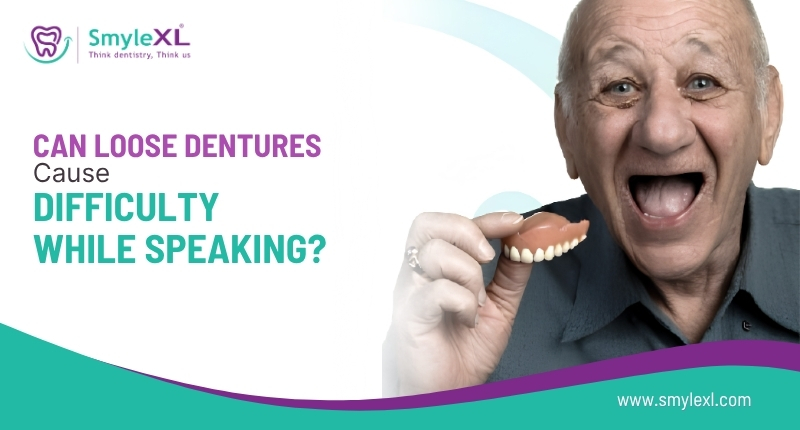
But when dentures start feeling loose, even saying a simple sentence can become frustrating. Words may sound unclear, dentures may shift while talking, and confidence can take a hit.
At SmyleXL Dental Clinic in India, we often meet people who wonder whether their dentures are affecting their speech.
The short answer is yes, loose dentures can make speaking more difficult. The good news is that this issue can usually be improved with the right denture treatment and professional guidance.
Table of Contents
ToggleWhy Do Dentures Affect the Way We Speak?
Our tongue, lips, teeth, and jaw work together every time we speak. Certain sounds, such as “s,” “f,” “v,” and “th,” depend on precise contact between these structures.
When dentures become loose, they may move slightly while talking. Even a small shift can change how sounds are produced. This is why some people notice a lisp, slurred words, or difficulty pronouncing certain letters.
People who use removable dentures may especially notice these changes because the dentures are not permanently fixed in place. While many people adapt over time, speech can become challenging if the fit is no longer correct.
What Does Speaking With Loose Dentures Feel Like?
The experience can vary from person to person, but there are some common signs.
You may feel as though your dentures are about to slip while talking. Some people find themselves speaking more slowly because they are constantly thinking about keeping the dentures in place. Others avoid long conversations altogether.
In many cases, speaking with dentures feels different from speaking with natural teeth because the mouth is adjusting to an artificial structure. During the initial adjustment period, this is normal. However, if speech problems appear after months or years of comfortable use, ill-fitting dentures may be the reason.
Some people also experience clicking sounds when speaking. This happens when dentures move slightly against the gums during conversation.
How Loose Dentures Interfere With Clear Speech?
Speech difficulties caused by loose fitting dentures are not usually dramatic overnight changes. Instead, they often develop gradually.
Common problems include:
- Difficulty pronouncing “s” and “sh” sounds
- Words sounding muffled
- Unintentional whistling during speech
- Clicking noises while talking
- Needing to repeat words more often
- Feeling self-conscious during conversations
These issues often happen because poor denture stability affects the natural movement of the tongue and lips.
Think of it like trying to type on a keyboard that keeps moving. You can still type, but it takes more effort, and mistakes become more common.
Why Do Dentures Become Loose Over Time?
Many people assume that once dentures are made, they should fit perfectly forever. Unfortunately, our mouths continue to change.
The jawbone gradually shrinks after tooth loss. This process changes the shape of the gums that support dentures. As a result, dentures that once fit comfortably may begin to move.
This change affects both complete denture treatment and partial denture treatment users.
Other reasons dentures may loosen include:
- Natural bone changes
- Wear and tear over the years
- Damage to the denture base
- Changes in gum tissue
- Weight fluctuations
- Poor denture maintenance
When these changes occur, a professional evaluation may be needed to determine whether denture adjustment, denture repair, or denture replacement is the most suitable next step.
Can Loose Dentures Cause More Than Just Speech Problems?
Yes. While speaking difficulties are often the first thing people notice, loose fitting dentures can affect daily life in other ways, too.
For example, some people develop chewing and speaking difficulties at the same time. Food becomes harder to chew, and talking while eating may feel uncomfortable.
Ill- fitting dentures can also create pressure points on the gums. This may lead to denture discomfort, irritation, or sore spots.
When dentures move repeatedly throughout the day, they can place extra stress on the soft tissues of the mouth. Over time, this may reduce comfort and affect overall oral function restoration, which is one of the main goals of successful denture treatment.
Are Denture Adhesives Enough to Fix the Problem?
Many people reach for a denture adhesive when their dentures start feeling loose. Adhesives can help improve retention temporarily and may be useful in certain situations.
However, adhesives are not designed to replace proper denture fitting.
If dentures require excessive adhesive every day, it may indicate that the fit has changed significantly. In such cases, a professional examination is often the better option.
A well-planned denture treatment focuses on correcting the cause of looseness rather than simply masking it.
How Dentists Improve Denture Stability?
The right approach depends on why the dentures have become loose.
Sometimes a simple denture adjustment can improve comfort and fit. In other situations, relining the denture may help it match the current shape of the gums.
If the denture is damaged, denture repair may restore proper function. When the denture is very old or no longer fits the mouth correctly, denture replacement may be recommended.
Improving gum support for dentures is also an important part of long-term success. Healthy gums provide a better foundation and contribute to improved denture stability.
The goal is not only to help dentures stay in place but also to restore comfortable speaking and daily function.
Is It Normal to Need Time to Adjust to New Dentures?
Absolutely.
People receiving dentures for missing teeth often need a short adaptation period. During the first few weeks, speaking may feel slightly different because the tongue is learning to work around the new denture shape.
Reading aloud, speaking slowly, and practising difficult words can help speed up this process.
However, if speech continues to worsen instead of improve, the issue may be related to ill-fitting dentures rather than normal adjustment.
This is why regular follow-ups are an important part of ongoing denture treatment.
When Should We Consider Seeing a Dentist?
It may be time to schedule an evaluation if you notice:
- Dentures slipping while talking
- Frequent sore spots
- Ongoing denture discomfort
- Changes in pronunciation
- Difficulty speaking clearly
- Increased reliance on adhesives
- Signs of ill-fitting dentures
Early attention can often prevent small issues from becoming larger ones.
Whether you have undergone complete denture treatment or partial denture treatment, regular reviews help maintain comfort and function.
Can Better Denture Fitting Improve Confidence?
For many people, yes.
Speech is closely connected to confidence. When dentures move unexpectedly, people may avoid conversations, social events, or public speaking situations.
Improved denture fitting often helps restore confidence because people can focus on what they want to say instead of worrying about their dentures.
Good denture treatment is not only about replacing teeth. It is also about helping you eat, smile, and communicate comfortably.
For some individuals exploring long-term tooth replacement options, discussing different treatment approaches with a dentist may help identify the most suitable choice for their needs.
FAQs
How long does it take to talk normally after getting dentures?
Most people adapt within a few weeks. Reading aloud and practising everyday conversations can help the mouth adjust faster.
What problems can loose dentures cause?
Loose fitting dentures can make speaking and eating difficult. They may also cause slipping, sore spots, irritation, and reduced confidence while talking.
Can loose dentures make speech unclear?
Yes. If dentures move while you speak, certain sounds may become unclear, leading to a lisp, muffled speech, or difficulty pronouncing some words.
Is denture adhesive enough to fix ill-fitting dentures?
A denture adhesive may provide temporary support, but it cannot correct a poor fit. If dentures feel consistently loose, a dental check-up is recommended.
When should I see a dentist for loose dentures?
If your dentures slip while speaking, feel uncomfortable, or affect daily activities, it is a good idea to have them assessed by a dentist.
A Small Change in Fit Can Make a Big Difference
Loose dentures can affect more than just comfort. They can make everyday conversations harder and leave you second-guessing your speech.
Often, the problem isn’t the dentures. It’s the changes in your gums and jaw over time. A simple denture adjustment, denture repair, or denture replacement may help improve the fit.
Dentures should help you speak with ease, not make you worry about every word.
If your dentures feel loose while talking, visit SmyleXL Dental Clinic in India. We can check the fit and help you understand whether further denture treatment may be needed.