
You brush, rinse, and try to maintain your oral hygiene. But one day, you notice a little blood while brushing. You ignore it, thinking it happened by mistake, but it keeps coming back.
While occasional bleeding may seem harmless, repeated bleeding can indicate problems like plaque buildup, gum inflammation, or early gum disease.
This is where teeth cleaning for bleeding gums becomes important. Professional cleaning helps remove harmful buildup, reduce gum irritation, and support healthier gums.
At SmyleXL Dental Clinic, patients receive proper cleaning and preventive care to maintain better gum health.
Table of Contents
ToggleWhy Do Gums Bleed?
Healthy gums usually do not bleed during normal brushing or eating.
When bleeding occurs, it often means your gums are reacting to irritation.
Some common reasons include:
- plaque buildup
- hardened tartar
- poor brushing technique
- irregular dental cleaning
- gum infection
- early gum disease
Plaque is a sticky layer of bacteria that constantly forms on teeth. When it is not removed properly, it can harden into tartar.
Unlike plaque, tartar cannot be removed through regular brushing.
Over time, this buildup irritates the gums and may lead to redness, swelling, and bleeding.
This is why teeth cleaning for bleeding gums focuses on removing the actual cause instead of only managing symptoms.
Is Bleeding While Brushing Normal?
Many people believe bleeding while brushing is common and harmless.
But frequent bleeding is your body’s way of showing that something needs attention.
Healthy gums should not regularly bleed during brushing.
If you notice:
- bleeding while brushing
- swollen gums
- tenderness
- bad breath
- discomfort while eating
it may indicate early gum problems.
The earlier you address these signs, the easier it is to manage them.
Professional evaluation and dental cleaning for gum health can help identify the reason behind recurring bleeding and prevent further damage.
The Connection Between Plaque, Tartar, and Bleeding Gums
Your mouth naturally contains bacteria.
When bacteria combine with food particles, they create plaque.
If plaque is not removed, it becomes hardened tartar.
This buildup creates the perfect environment for bacteria to irritate your gums.
Over time, it may contribute to:
- gum inflammation
- gum infection
- gingivitis
- periodontitis
This is why tartar removal and plaque removal are important parts of maintaining healthy gums.
Regular brushing helps control plaque, but professional cleaning reaches areas that are difficult to clean at home.
How Does Professional Teeth Cleaning Help Bleeding Gums?
Many people think cleaning is only about removing stains.
But professional cleaning does much more.
During professional teeth cleaning, dentists remove:
- plaque deposits
- hardened tartar
- bacteria buildup around gums
This reduces irritation and allows gums to heal naturally.
For patients dealing with bleeding gums, gum cleaning treatment helps create a healthier environment where gums can recover.
It is not just about cleaning teeth.
It is about restoring balance between your teeth and gums.
What Is Teeth Scaling for Bleeding Gums?
One of the most common treatments recommended for gum problems is scaling.
Teeth scaling for bleeding gums involves removing plaque and tartar buildup from the tooth surface and gumline.
During scaling:
- tartar deposits are carefully removed
- bacterial buildup is reduced
- gum irritation decreases
This treatment is especially helpful for patients experiencing early gum problems.
When combined with good home care, scaling can significantly improve gum health.
When Is Deep Cleaning Needed?
Sometimes, regular cleaning is not enough.
If bacteria and tartar have moved deeper below the gumline, a dentist may recommend deep cleaning for gums.
Deep cleaning usually involves cleaning areas around the tooth roots where regular brushing cannot reach.
It is commonly recommended for patients with:
- advanced gum buildup
- persistent bleeding
- gum pockets
- signs of periodontitis
This type of gum disease treatment focuses on controlling infection and protecting the supporting structures around teeth.
Gum Disease: From Early Signs to Advanced Problems
Gum problems usually develop gradually.
Understanding the stages can help you take action earlier.
Gingivitis
This is the earliest stage of gum problems.
Common signs include:
- red gums
- mild swelling
- bleeding while brushing
At this stage, proper cleaning and improved oral hygiene can often reverse the condition.
Periodontitis
If gingivitis is ignored, it may progress into periodontitis.
This is a more advanced form of gum disease.
It can affect:
- gum support
- bone around teeth
- tooth stability
Regular checkups and timely gum disease treatment can help prevent progression.
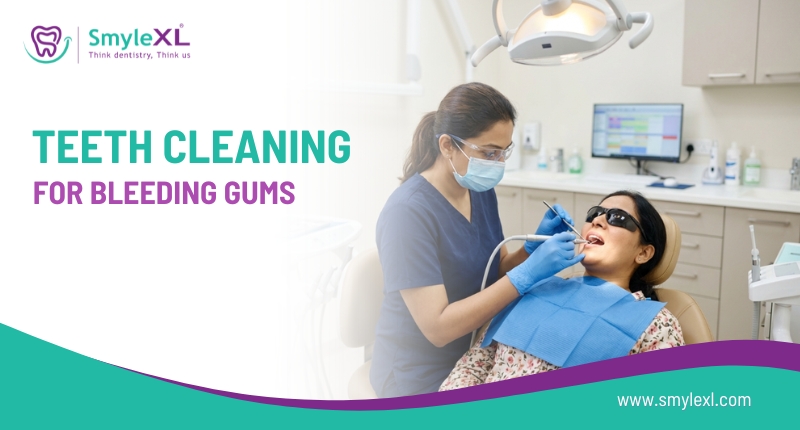
What Happens During Professional Teeth Cleaning?
Many patients feel nervous before cleaning because they do not know what to expect.
The process is usually simple.
Step 1: Oral Examination
The dentist checks:
- gum condition
- plaque levels
- tartar buildup
- signs of infection
Step 2: Scaling
The hardened deposits are removed using specialized instruments.
This is the main part of professional teeth cleaning.
Step 3: Polishing
After removal of deposits, teeth are polished to create a smoother surface that makes it harder for plaque to stick.
The entire process is designed to improve comfort and support long-term oral health.
Benefits of Teeth Cleaning for Bleeding Gums
Choosing teeth cleaning for bleeding gums can provide several benefits:
Healthier Gums
Removing bacteria and buildup helps reduce gum irritation and inflammation.
Fresher Breath
Plaque and bacteria are common contributors to bad breath.
Cleaning helps control these sources.
Lower Risk of Gum Problems
Regular cleaning reduces the chances of developing severe gum issues.
Better Oral Hygiene Routine
Professional cleaning also helps patients understand where they need to improve their daily care.
Can Teeth Cleaning Make Gums Bleed More?
Some patients worry that cleaning will increase bleeding.
Actually, bleeding during cleaning often happens because inflamed gums are already sensitive.
As the buildup is removed and gums become healthier, bleeding usually reduces over time.
Temporary sensitivity may occur after cleaning, especially if there was significant tartar buildup.
However, this generally improves as the gums heal.
How Often Should You Get Professional Cleaning?
The ideal frequency depends on your oral health.
Some people may need cleaning every few months, while others may require less frequent visits.
Factors include:
- gum condition
- plaque buildup
- previous gum problems
- daily oral hygiene habits
Regular visits help detect problems before they become complicated.
Simple Habits to Prevent Bleeding Gums
Professional treatment works best when combined with good daily habits.
Follow these steps:
- brush twice daily
- clean between teeth
- avoid skipping dental visits
- maintain balanced oral hygiene
- drink enough water
Small habits can make a big difference in preventing future gum problems.
FAQs
Can gum disease be reversed?
Early gum problems like gingivitis can often improve with proper cleaning and better oral care. Advanced gum disease requires professional management.
Why do my gums bleed even after brushing regularly?
Bleeding may occur due to hidden tartar buildup, gum inflammation, or infection that brushing alone cannot remove.
Why do my gums bleed during teeth cleaning?
Bleeding during teeth cleaning usually happens because the gums are already inflamed due to plaque buildup, tartar, or early gum problems. When these deposits are removed, sensitive gums may bleed slightly as they are being cleaned. This is not usually a sign that the cleaning is harming your gums. In fact, teeth cleaning for bleeding gums helps remove the buildup responsible for irritation and supports healthier gums over time.
Can teeth cleaning stop bleeding gums permanently?
Teeth cleaning for bleeding gums can significantly reduce bleeding when the main cause is plaque, tartar, or poor gum hygiene. However, maintaining healthy gums requires consistent care after treatment. Regular brushing, flossing, and dental checkups are important to prevent buildup from returning and support long-term gum health.
How often should I get teeth cleaning for gum health?
The frequency of teeth cleaning depends on your gum condition, oral hygiene habits, and buildup levels. Many people benefit from professional cleaning every six months, while those with gum concerns may require more frequent visits. Regular teeth cleaning for bleeding gums can help control plaque buildup and maintain healthier gums when recommended by your dentist.
What happens if bleeding gums are left untreated?
Ignoring bleeding gums can allow the underlying problem to progress. Plaque and tartar buildup may increase, leading to worsening gum inflammation, infection, bad breath, and advanced gum problems. Timely teeth cleaning for bleeding gums can help address the cause early and protect your gums and teeth from further damage.
Does teeth cleaning remove gum infection?
Professional teeth cleaning can help control gum infections caused by plaque and tartar buildup by removing bacteria responsible for irritation. However, advanced gum infections may require additional treatments along with cleaning. A dental evaluation helps determine the right approach based on the severity of the condition.
How long does it take for gums to heal after deep cleaning?
Healing time after deep cleaning varies from person to person. Many patients notice improvement in gum swelling and bleeding within a few days to weeks. Complete healing depends on the severity of gum problems and how well you maintain oral hygiene after treatment. Regular follow-ups help ensure proper recovery.
Give Your Gums the Care They Need
Bleeding gums are not something you should simply ignore.
They are often an early warning sign that your gums need better care.
With proper evaluation and teeth cleaning for bleeding gums, you can remove harmful buildup, improve gum health, and prevent future complications.
At SmyleXL Dental Clinic, patients receive personalized guidance for professional cleaning, gum care, and maintaining long-term oral health.
Because healthy gums are not just about avoiding problems. They are the foundation of a healthier smile.