
There’s a particular kind of hesitation that comes with cosmetic dental treatment. Not fear of the procedure, but fear of the outcome. What if it doesn’t suit my face? What if it looks too perfect, too uniform, too obviously done? What if I spend a significant amount of money and walk out looking like someone else?
That hesitation is exactly what digital smile designing in India was built to address. For the first time in the history of cosmetic dentistry, patients can see a realistic simulation of their result, on their own face, with their own teeth as the starting point, before a single tooth is touched. The guesswork is gone. The anxiety about the unknown is replaced with a conversation about something you can actually see and respond to.
Here’s how it works, what it costs, and why it’s changing the way smile transformations are planned across India.
Table of Contents
ToggleWhat Is Digital Smile Design?
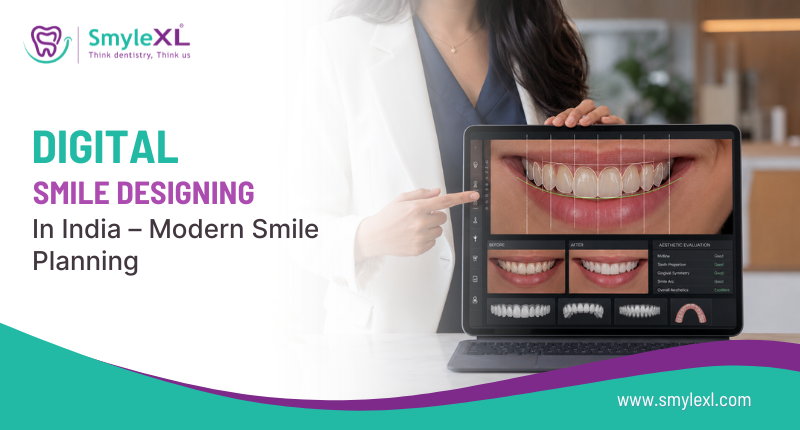
Digital smile designing in India, commonly called DSD, is a technology-driven planning process that uses smile simulation software, photographs, and video of the patient’s face to design a customized smile outcome before treatment begins.
It’s not a filter. It’s not a rough sketch. Computer-aided smile design maps the proportions of the face, the position of the lips, the gumline, and the existing teeth, and uses this data to create a precise visual simulation of what the result could look like.
The patient reviews the simulation, requests changes, and approves the design before any cosmetic dental planning translates into actual treatment. It’s collaborative, transparent, and significantly more predictable than the traditional approach of describing what you want and hoping it matches what the dentist understood.
DSD vs Traditional Smile Makeover
DSD versus traditional smile makeover is less a competition and more an evolution. Traditional aesthetic smile planning relied on the dentist’s experience, some photographs, and a verbal discussion of goals. It worked, experienced clinicians produced excellent results, but the patient had limited visibility into the outcome until after treatment began.
Digital vs conventional dental planning changes the dynamic entirely:
| Digital Smile Design | Traditional Planning | |
| Patient preview | Yes, virtual smile preview before treatment | No, verbal description only |
| Accuracy | Mapped to facial proportions | Experience-dependent |
| Patient involvement | High, collaborative design process | Limited |
| Predictability | High | Variable |
| DSD vs traditional smile makeover outcome alignment | Very close | Depends on communication |
DSD versus composite bonding is a different comparison; DSD is a planning tool, not a treatment. It can be used to plan composite bonding, veneers, crowns, or any combination; the design drives the treatment, not the other way around.
How Does the Process Work?
Step 1: Photography and Video
High-resolution photographs and short video clips of the face while smiling, at rest, and speaking are taken. This captures how the smile looks dynamically, not just in a static photograph.
Step 2: Smile Simulation
Smile simulation software maps facial proportions, tooth dimensions, gumline position, and lip movement. The smile analysis and design process creates a digital mockup, adjusted for symmetry, proportion, and natural appearance.
Step 3: Patient Review and Approval
The virtual smile preview is shared with the patient. Changes are discussed and incorporated. The final design is approved before treatment is planned.
Step 4: Physical Mockup (Optional)
A physical mockup (temporary material placed directly on the teeth) allows the patient to see and feel the planned result in real life before permanent treatment begins. This is one of the most reassuring steps in the entire smile transformation procedure.
Step 5: Treatment Execution
The approved design guides the treatment, whether that’s cosmetic dental planning for veneers, crowns, aligners, gum contouring, or a combination. Every procedure is executed against a pre-approved blueprint.
What Treatments Does DSD Work With?
Digital dental aesthetics planning through DSD works across a wide range of cosmetic dental planning procedures:
- Dental veneers outcome planning: seeing how porcelain or composite veneers will look before any enamel is reduced
- Teeth whitening: shade selection guided by the overall design
- Gum contouring: visualizing gumline changes before laser reshaping
- Clear aligners: orthodontic movement planned within the smile design
- Dental crowns: shape and shade matched to the approved design
- Non-invasive smile design: composite bonding cases where minimally invasive cosmetic dentistry delivers results without tooth reduction
Natural-Looking Results: The Whole Point
The most consistent concern patients bring to a smile design treatment consultation is looking natural. Not overly white, not unnaturally uniform, not obviously veneered.
Natural-looking smile results are built into the DSD process, because the design is based on the patient’s own facial proportions, existing tooth characteristics, and how the smile moves dynamically. Biocompatible dental materials like ceramic, zirconia, and composite mimic the light-reflecting properties of natural enamel in ways that older materials didn’t.
Before and after smile correction comparisons from DSD-planned cases consistently show results that enhance rather than replace.
What Does Digital Smile Designing Cost in India?
At SmyleXL Dental Clinic, here’s what the cost of DSD treatment looks like across the full range of procedures:
| Procedure | What’s Included | Estimated Cost |
| Initial DSD Simulation | 3D scanning, digital planning & mockup | ₹10,000 – ₹20,000 |
| Porcelain/Ceramic Veneers (per tooth) | Thin shells for front teeth | ₹13,000 – ₹18,000 |
| Composite Veneers (per tooth) | Direct single-visit bonding | ₹4,000 – ₹6,000 |
| Teeth Whitening | Laser or chemical bleaching | ₹6,000 – ₹13,000 |
| Dental Crowns (per tooth) | Ceramic/Zirconia cap | ₹7,000 – ₹18,000 |
| Clear Aligners | Full orthodontic case | ₹45,000 – ₹1,20,000 |
| Gum Contouring | Cosmetic gum reshaping | ₹3,000 – ₹13,000 |
The cost of DSD treatment varies based on the number and type of procedures involved. The simulation cost is often offset against treatment, worth confirming at the initial consultation. A complete digital smile makeover combining veneers, whitening, and gum contouring sits at a different investment point than a single-procedure case.
Why Digital Smile Designing Is Growing Across India?
Digital Smile Designing in India has grown significantly over the last few years, and for good reason. Patients are better informed, more discerning about cosmetic outcomes, and increasingly unwilling to commit to irreversible treatment without seeing a preview first. Smile enhancement outcome visibility before treatment is no longer a luxury; it’s an expectation.
SmyleXL Dental Clinic brings Digital Smile Designing in India to patients who want the confidence of knowing exactly what they’re getting: a collaborative, transparent process from first simulation to final result.
Book your Digital Smile Design consultation at SmyleXL Dental Clinic today, and see your new smile before it exists.
Frequently Asked Questions
What is digital smile design?
Digital Smile Designing is a technology-driven planning process using smile simulation software, facial photographs, and video to design a customized smile outcome before treatment begins. Computer-aided smile design maps facial proportions and tooth dimensions to create a precise virtual smile preview, allowing patients to see and approve their result before any cosmetic dental planning translates into actual treatment.
How long does digital smile design take?
The initial smile analysis and design simulation, including photography, planning, and virtual smile preview, typically takes one appointment of 60–90 minutes. The overall smile transformation procedure timeline depends on which treatments are involved: composite veneers can be completed in a single visit, while porcelain veneers or clear aligners span multiple appointments over weeks or months. Digital dental aesthetics planning is done upfront; treatment follows at the patient’s pace.
Is digital smile design painful?
The DSD planning process itself, photography, and smile simulation software involve no clinical treatment and no discomfort whatsoever. The procedures that follow are performed under local anesthesia where needed. Non-invasive smile design options like composite bonding often require no anesthesia at all. Minimally invasive cosmetic dentistry approaches used in DSD-planned cases prioritize biocompatible dental materials and minimal tooth reduction, keeping the experience as comfortable as possible.
How accurate is digital smile design?
Computer-aided smile design is significantly more accurate than traditional verbal planning; the design is mapped to actual facial proportions and approved before treatment begins. Before and after smile correction comparisons from DSD cases consistently show close alignment between the planned simulation and the final result. The physical mockup step, where the design is temporarily placed on the teeth, further confirms accuracy before permanent treatment begins.
What is the difference between DSD and traditional smile makeover?
DSD vs traditional smile makeover comes down to visibility and predictability. Traditional aesthetic smile planning relied on the dentist’s experience and verbal discussion; there is no patient preview before treatment. Digital Smile Designing in India provides a virtual smile preview mapped to the patient’s own face, collaborative design approval, and a treatment blueprint the entire team works from. Digital vs conventional dental planning consistently produces outcomes that more closely match patient expectations, because expectations are established visually, not verbally.