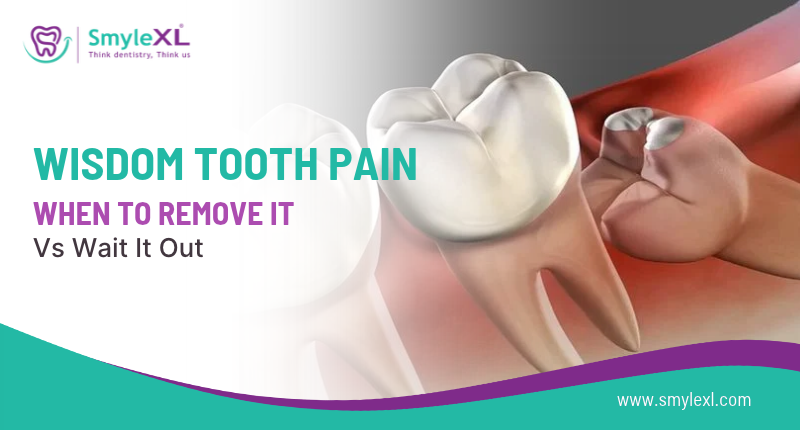

Your wisdom tooth is arriving… what do you think happens next?
- A) You suddenly become wiser 😄
B) Nothing changes; it quietly grows in
C) Your mouth starts feeling uncomfortable
D) You end up searching “Does my jaw pain from wisdom teeth?”
If you picked C or D, read further!
For some people, wisdom teeth appear without causing any trouble. They grow normally, stay healthy, and are barely noticed. But for others, they bring along pain, swollen gums, difficulty chewing, and sleepless nights.
The tricky part? Not every painful wisdom tooth needs immediate removal, and not every painless one should be ignored.
At SmyleXL Dental Clinic, patients often ask whether they should wait it out or consider wisdom teeth removal. Understanding how your tooth is growing and what problems it may create can help you make the right choice.
Table of Contents
ToggleQuick Summary: Should You Remove Your Wisdom Tooth or Wait?
- Mild discomfort during eruption may not always require removal.
- Repeated pain, swelling, infection, or difficulty cleaning the area may indicate a need for treatment.
- Impacted wisdom teeth often create problems because they do not grow properly into position.
- A dentist checks the tooth position, surrounding teeth, and jaw health before recommending removal.
- Delaying necessary wisdom tooth extraction may increase the chances of complications later.
Wisdom Tooth Pain? Here’s When to Remove It and When You Can Wait
| Situation | Wait and Monitor | Consider Removal |
| Mild discomfort while tooth is erupting | ✔ If it settles and the tooth grows normally | |
| Occasional pressure at the back of the mouth | ✔ With regular monitoring | |
| Repeated pain or swelling | ✔ Removal may be recommended | |
| Impacted wisdom tooth | ✔ Often needs evaluation | |
| Difficulty cleaning the area | ✔ Risk of cavities and infection increases | |
| Damage to nearby teeth | ✔ Treatment may be needed |
The decision is not only about pain. A wisdom tooth can look fine outside but still create problems underneath.
How to Know When It’s Time for Wisdom Teeth Removal
1. When the Pain Keeps Coming Back
A little discomfort while a wisdom tooth is coming in can be normal. But if you keep experiencing jaw pain from wisdom teeth, repeated soreness, or pain in or near your wisdom teeth, it may mean the tooth is not growing properly.
A wisdom tooth that pushes against nearby teeth or grows at an angle can create pressure in the jaw and make chewing uncomfortable.
If the same pain keeps returning, it is better to get it checked rather than relying on temporary relief every time.
2. When Your Gums Around the Tooth Become Swollen
A wisdom tooth that has only partly come out can leave a small area where food and bacteria get trapped.
This may lead to:
- Swollen gums
- Redness around the tooth
- Bad taste in the mouth
- Difficulty cleaning the area
A partially erupted tooth is harder to maintain and may increase the chances of infection. In such cases, your dentist may recommend extraction for wisdom teeth to prevent repeated problems.
3. When the Tooth Is Stuck or Growing in the Wrong Direction
Impacted wisdom teeth are teeth that do not have enough space to come out normally. They may remain under the gum, grow sideways, or push against the neighboring tooth.
Even if they are not painful right now, they can create problems later, such as infection, cysts, or damage to adjacent teeth.
This is why Third molar removal is often considered when the tooth position increases future risks.
4. When Cavities Start Affecting the Tooth
Wisdom teeth sit at the far end of your mouth, making them difficult to brush and clean properly.
Over time, trapped food and bacteria can increase the risk of cavities. In some cases, the nearby teeth may also get affected.
If it cannot be maintained properly, Wisdom Teeth Removal may be considered instead of repeatedly treating the same issue.
5. When You Feel Pressure Around Your Face or Sinus Area
Upper wisdom teeth are located close to the sinus region. Sometimes, problems with these teeth can create pressure or discomfort around the upper jaw.
If you notice facial pressure along with tooth discomfort, your dentist can check whether the wisdom tooth is contributing to the problem.
6. When Eating or Opening Your Mouth Becomes Difficult
A problematic wisdom tooth can make simple things like eating uncomfortable.
You may notice:
- Pain while chewing
Difficulty opening your mouth fully
- Avoiding chewing on one side
Ongoing discomfort can also cause jaw stiffness and pain because the surrounding muscles remain tense.
7. When There Is a Risk of Cyst Formation
In some cases, an impacted wisdom tooth can develop a cyst around it. These cysts may not always cause symptoms in the beginning but can affect the surrounding bone and teeth over time.
Regular dental check-ups and X-rays can help detect these problems before they become more complicated.
Why Do Wisdom Teeth Hurt?
Wisdom teeth hurt mainly because they often arrive when there is limited space at the back of the jaw.
Common reasons include:
- Not enough room for proper eruption
- Tooth growing at an incorrect angle
- Gum inflammation around the tooth
- Infection around a partially erupted tooth
- Pressure against nearby teeth
Modern diets and jaw size changes mean many people simply do not have enough space for these extra teeth.
This can contribute to tooth crowding issues and discomfort.
How Do We Make the Decision at SmyleXL?
At SmyleXL Dental Clinic, the decision for wisdom tooth removal in Kondhwa is not based only on pain.
The dentist evaluates:
- Tooth position
- Gum condition
- Nearby teeth health
- Signs of infection
- X-ray findings
Sometimes, a wisdom tooth can be monitored if it is healthy, fully erupted, and easy to maintain.
But when the tooth is repeatedly causing problems, removal of impacted teeth may prevent future complications.
Types of Wisdom Tooth Extraction
The type of third molar removal depends on how the tooth has grown.
Simple Extraction
This is done when the tooth is fully visible and can be removed easily.
Surgical Extraction
Surgical extraction for wisdom teeth may be needed when the tooth is impacted or partially hidden under gum or bone.
During wisdom tooth surgery, the dentist carefully removes the tooth while protecting surrounding structures.
The approach depends on the individual case, not just the age of the patient.
Why Do Dentists Often Recommend Early Removal?
Early removal of impacted teeth may be recommended when a wisdom tooth is already showing signs of problems.
Younger patients often have better healing ability, and the roots may not be as developed compared to later years.
Removing a problematic tooth earlier may help reduce chances of:
- Repeated infections
- Damage to neighboring teeth
- Ongoing dental pain and swelling
- More complex procedures later
However, wisdom teeth removal is always based on evaluation, not just age.
What Happens If You Wait Too Long?
Waiting is not always harmful if the tooth is healthy. But if a problematic wisdom tooth is ignored, it may lead to:
- Frequent pain episodes
- Gum infections
- Difficulty opening the mouth
- Increased risk of cavities
- Damage to nearby teeth
A small discomfort can sometimes become a bigger concern when ignored for a long time.
Is It Too Late to Remove Wisdom Teeth in Your 30s and 40s?
No, wisdom teeth can still be removed in your 30s and 40s if needed.
However, the procedure may require more careful planning because the roots are often more developed and the surrounding bone may be denser.
If you are experiencing persistent discomfort or symptoms, delaying only because of age is not always the best choice.
A proper evaluation helps determine whether wisdom teeth removal is necessary.
What Recovery Looks Like With SmyleXL Dental Clinic?
Recovery after Wisdom tooth extraction depends on the complexity of the procedure.
Most people experience some swelling and discomfort for a few days.
Following aftercare instructions can support smoother healing:
- Follow prescribed medications
- Avoid disturbing the extraction area
- Maintain gentle oral hygiene
- Prefer softer foods initially
The team at SmyleXL Dental Clinic guides patients through each step so they understand what to expect after treatment.
Don’t Let Wisdom Tooth Pain Decide Your Routine
A wisdom tooth does not always need immediate removal. Sometimes, monitoring is enough.
But repeated pain, swelling, infections, or difficulty maintaining the area are signs that it deserves attention.
Understanding your symptoms and getting a proper evaluation can help you decide whether waiting is safe or whether Wisdom Teeth Removal is the better option.
At SmyleXL Dental Clinic, patients looking for Wisdom Tooth Removal in Kondhwa can get their concerns evaluated and understand the right approach based on their dental condition.
FAQs
Is wisdom tooth extraction painful?
Wisdom tooth extraction is performed with local anesthesia, so you should not feel pain during the procedure. Some discomfort and swelling after removal are normal and can usually be managed with proper aftercare and prescribed medication.
How long does Wisdom Teeth Removal take?
The duration depends on whether the tooth is fully visible or impacted. Simple removals may take less time, while wisdom tooth surgery may require more planning.
Can I keep my wisdom tooth if it does not hurt?
Yes, a healthy wisdom tooth that is properly positioned and easy to clean may not need removal. Regular dental check-ups help monitor whether any changes occur.
What happens if I ignore wisdom tooth pain?
Ignoring repeated wisdom tooth pain may increase the risk of infection, gum problems, cavities, and damage to nearby teeth. Getting the cause checked helps prevent complications.
How do I know if my wisdom tooth is impacted?
An impacted wisdom tooth may cause pain, swelling, difficulty opening your mouth, or pressure in the jaw. An X-ray helps confirm the position of the tooth.

Dr. Ganesh C. Kulkarni
Principal Dentist & Dental Care Expert
Dr. Ganesh C. Kulkarni is a BDS-qualified dentist with 22+ years of experience, serving patients at SmyleXL Dental Clinic on Sinhgad Road, Pune. He completed his BDS from Bharati Vidyapeeth, Pune, and has extensive experience providing comprehensive dental care. Known for his caring and patient-focused approach, Dr. Kulkarni is committed to providing personalised treatment and comfortable dental experiences.
Professional Profile: Dr. Ganesh C. Kulkarni
Facebook: SmyleXL Facebook
Instagram: SmyleXL Instagram
YouTube: SmyleXL YouTube