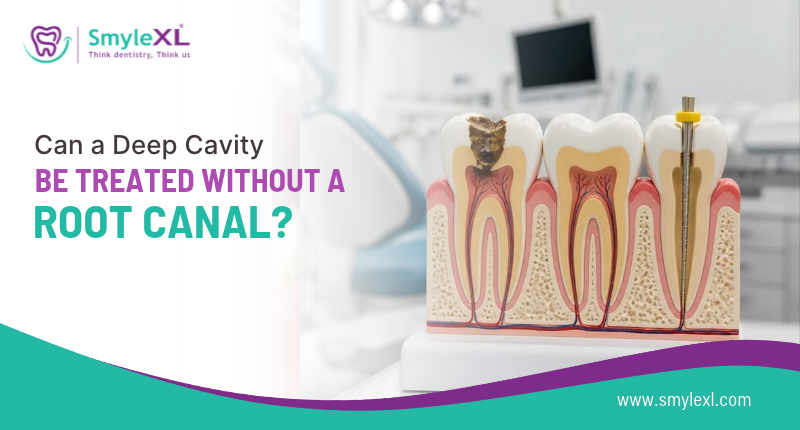

A deep cavity can sometimes be treated without a root canal treatment, but it depends on how far the decay has progressed and whether the tooth’s soft tissue can recover. In select cases, you may be able to treat a deep cavity without a root canal by carefully removing the decay and placing a filling or another pulp-preserving treatment. If the pulp is irreversibly inflamed or infected, you may need root canal treatment to save the tooth.
If you have a large cavity or toothache, it is natural to want the simplest possible solution. At SmyleXL Dental Clinic in Vanasthalipuram, the right approach starts with understanding the tooth’s condition—not just the size of the visible hole. This guide explains what affects the decision and when to seek a dental assessment.
Table of Contents
ToggleIs Root Canal Treatment Always Necessary for a Deep Cavity?
Some deep cavities can be managed without removing the pulp. The key question is whether the decay has affected the inner tissue beyond its ability to heal. A tooth may still be suitable for conservative care if the pulp remains healthy or inflammation can settle once you manage the source of irritation.
After assessing symptoms, the tooth, and X-ray findings, a dentist may recommend a deep cavity filling or a more protective procedure. The most suitable dental filling treatment depends on how much healthy structure remains. Techniques such as selective caries removal aim to remove decay while preserving as much healthy tooth structure as possible. Dentists then seal the area with an appropriate restoration.
However, there is no safe way to decide based on appearance or pain alone. Some teeth with deep decay cause few symptoms, while others become painful when the pulp is irritated. The final choice depends on clinical findings and whether the tooth can be restored. Prompt tooth decay treatment can help limit further damage.
How Does a Deep Cavity Affect the Inner Layers of a Tooth?
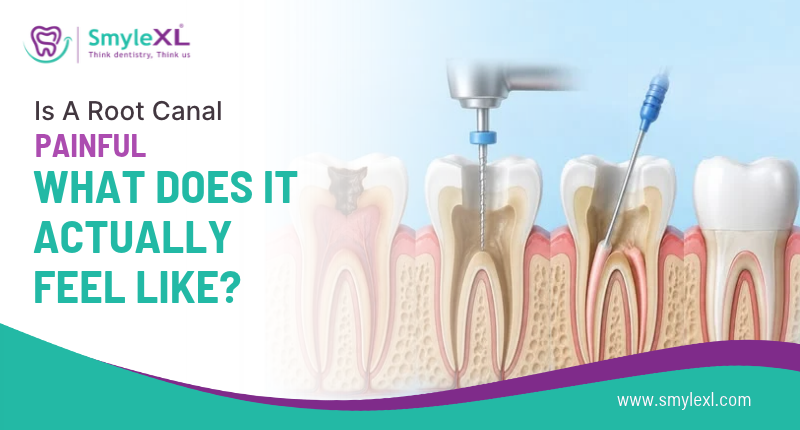
The outer surface, called tooth enamel, protects the tooth. Beneath it is the dentin layer, a less hard layer with tiny channels that transmit sensations. At the center is the dental pulp, living tissue containing nerves and blood vessels. Damage to the dental pulp can change which treatments are suitable, while the condition of the dentin layer helps determine how much tooth structure remains.
When decay passes through enamel and reaches dentin, enamel no longer provides enough protection, and the tooth may become sensitive to cold, sweets, or pressure. If bacteria and inflammation reach the pulp, the problem becomes more complex. Early treatment can sometimes preserve the pulp, but advanced damage may require endodontic care.
This is why care for a deep cavity should not be delayed until pain becomes severe. A dentist can assess how close the decay is to the pulp and decide whether the tooth can be repaired with a filling or needs a different procedure.
When Can a Deep Cavity Be Treated With a Filling Instead?
A filling may be suitable when the pulp is still healthy or when its irritation is reversible, and the tooth can be properly sealed and restored. In appropriate cases, a dentist may use selective caries removal, carefully removing decayed tissue while avoiding unnecessary pulp exposure.
Depending on the findings, dentists may also consider pulp-protective methods. These treatments aim to preserve living tissue when clinical conditions support them. A durable restoration is essential because it seals the tooth and helps prevent bacteria from entering again.
The aim of conservative care is tooth preservation: keeping as much of the natural tooth and its function as possible. It does not mean leaving a cavity untreated or simply covering decay. The dentist must choose a method that controls the disease and provides a reliable seal. This approach supports tooth preservation when the pulp and remaining tooth structure allow it.
When Is Root Canal Treatment Necessary for a Deep Cavity?
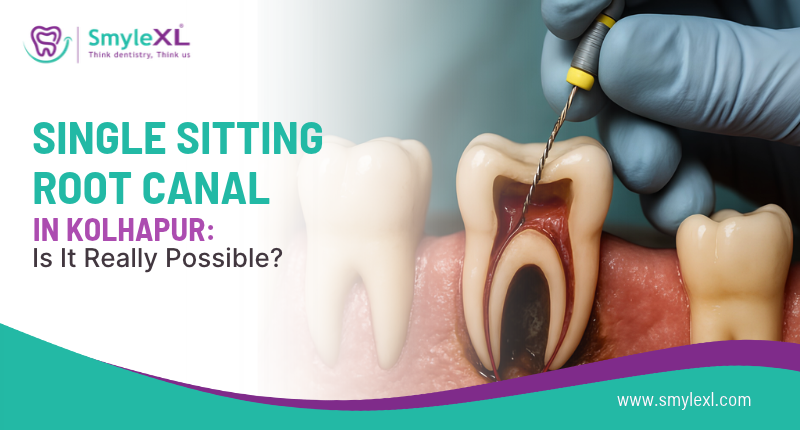
If the pulp becomes irreversibly inflamed, infected, or dies, a simple filling may not address the problem. In those cases, a dentist may recommend a root canal procedure. The dentist removes the affected pulp tissue, cleans and disinfects the canals, seals them, and then restores the tooth.
One condition a dentist may assess is irreversible pulpitis, inflammation of the pulp that is unlikely to resolve on its own. If a dentist diagnoses irreversible pulpitis, a simple filling may not be enough. Warning signs include persistent or spontaneous pain, pain that lingers after hot or cold exposure, tenderness when biting, swelling, or a gum pimple. These symptoms do not confirm a diagnosis on their own, so an examination is important.
A root canal is not automatically required just because a cavity is described as deep. Equally, avoiding treatment when the pulp is severely damaged can let infection worsen.
Root Canal vs Filling: What Is the Difference?
Both treatments aim to help preserve a tooth, but they address different conditions. The choice depends on the pulp’s health and whether the tooth can be restored.
| Consideration | Filling or pulp-preserving care | Root canal procedure |
| Main purpose | Repair decay while preserving healthy pulp when possible | Treat inflamed or infected pulp that needs removal |
| When it may be suitable | The pulp is healthy or can be preserved based on clinical findings | The pulp is irreversibly inflamed, infected, or non-vital |
| What happens | Decay is managed, and the tooth is sealed with a restoration | Pulp tissue is removed; canals are cleaned, disinfected, and sealed |
| Aftercare | The restoration needs routine care and monitoring | The tooth needs a suitable final restoration and ongoing care |
When comparing root canal vs filling, remember that neither option is universally better. A filling is more conservative when it is clinically appropriate, but it cannot resolve every problem affecting the pulp. A root canal treats the inner part of a tooth when that tissue cannot be saved.
What Symptoms Mean You Should See a Dentist?
Schedule a dental visit if you notice a visible cavity, repeated sensitivity, pain while chewing, or recurring discomfort. Tooth sensitivity that stops quickly may have several causes, but lingering or worsening symptoms need assessment. A lingering toothache, pain that wakes you at night, swelling, or a bad taste may indicate a more serious problem.
Do not wait for pain to become unbearable. A deep cavity can progress without obvious warning, and symptoms alone cannot tell you how much damage has occurred. Don’t self-diagnose persistent tooth sensitivity or a lingering toothache. If you develop facial swelling, fever, or difficulty swallowing or breathing, seek urgent medical or dental care.
How Does a Dentist Decide Which Treatment You Need?
A dental examination usually includes reviewing your symptoms, examining the tooth, and testing how it responds. A dental X-ray may show the depth of decay and surrounding tissues, but your dentist interprets the images alongside clinical findings. Your dentist considers both findings to guide the decision, and may repeat a dental X-ray if clinically necessary.
Your dentist may ask whether cold or heat triggers the pain, how long it lasts, whether it happens without a trigger, and whether chewing makes it worse. They will also consider whether enough healthy tooth structure remains to support a filling or other restoration.
For example, two patients may both have a large dark area on a molar, but their treatment needs may differ. One tooth may have decay close to the pulp without signs of irreversible damage; another may have persistent pain and evidence of pulp disease. The visible cavity alone cannot distinguish these situations.
At SmyleXL Dental Clinic, patients can discuss their symptoms and findings with the dental team before deciding on a treatment plan. The goal is to clearly explain available options and recommend care based on the individual tooth.
Where Can You Get Dental Care for a Deep Cavity in Vanasthalipuram?
If you are looking for root canal treatment in Vanasthalipuram, start with a dental assessment rather than assuming you need either a filling or a root canal. At SmyleXL Dental Clinic in Vanasthalipuram, we’ll evaluate the cavity, pulp, and remaining tooth structure, then discuss suitable options with you.
This option may be possible in selected cases, but we should never promise it before an examination. If the pulp is significantly damaged, a root canal may be the better way to manage the problem and retain the natural tooth. The goal is to treat the cause, protect the tooth, and help you make an informed decision.
If you have a cavity, sensitivity, or recurring tooth pain, book a consultation with SmyleXL Dental Clinic. Asking when root canal treatment is necessary is a useful starting point—but a proper assessment is what helps answer it for your tooth. If you are comparing options, ask whether a dental filling is suitable or if you need more extensive care.
Frequently Asked Questions
- Does every deep cavity need a root canal?
No. Some deep cavities can be treated with a filling or pulp-preserving care if the pulp can be maintained and the tooth can be sealed properly. If the pulp is irreversibly inflamed or infected, a dentist may recommend a root canal. - Can a deep cavity be painless?
Yes. A cavity can progress without obvious pain, so the absence of symptoms does not guarantee a healthy pulp. A dental examination can help identify the depth of decay and the appropriate treatment. - Is a filling enough if decay is close to the nerve?
Sometimes. The dentist considers the pulp’s condition, symptoms, examination findings, and X-rays before deciding. In selected cases, carefully managed decay and a well-sealed restoration may be suitable. - What happens if I delay treatment for a deep cavity?
Decay may progress, damage more tooth structure, and eventually affect the pulp. This can lead to pain, infection, or the need for more complex treatment, so schedule an assessment rather than waiting for symptoms to worsen. - Can deep cavity treatment without root canal work for everyone?
No. A deep cavity treatment without a root canal may be suitable when the pulp can be preserved, and the tooth can be restored reliably. A dentist must assess the symptoms, tooth structure, and pulp condition before recommending it.