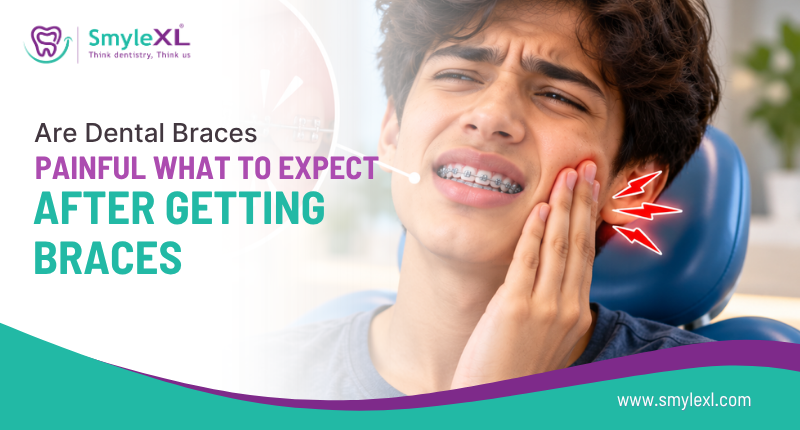

So, you’ve finally decided to fix those crooked teeth. You’ve imagined the results, considered your options, and might even have picked your favorite braces color. But there’s one question standing between you and the orthodontist’s chair: “Wait, how much is this going to hurt?”
If you’re considering braces treatment, you’ve probably heard everything from “It’s just a little pressure” to “I survived on khichdi for three days!” Not exactly helpful, right?
Here’s the thing. Braces can cause discomfort, especially in the beginning, but that doesn’t mean you’ll spend months dealing with a toothache.
So, what actually happens when you get braces? Why do your teeth feel sore? And how do you make those first few days easier?
Let’s talk about it.
Table of Contents
ToggleDoes Braces Treatment Actually Hurt?
Well, Sometimes Yes. But probably not in the way you’re imagining.
Getting braces fitted is generally not painful. During the appointment, your orthodontist attaches metal brackets to your teeth and connects them using a special wire.
There are no injections or drilling involved in routine bracket placement.
The discomfort usually begins afterward, when gentle archwire tension starts encouraging your teeth to move.
You might experience:
- A dull ache or pressure around your teeth
- Tenderness while chewing
- Mild gum irritation or soreness inside your cheeks
- A strange feeling because there’s suddenly something attached to your teeth
The good news? This discomfort generally settles as your mouth adjusts.
Remember, orthodontic treatment is a gradual process. Your teeth aren’t being pushed into position overnight.
Why Do Teeth Hurt During Braces Treatment?
Your teeth might seem firmly attached to your jaw, but they can move gradually through a biological process.
During teeth straightening, controlled pressure encourages changes in the tissues and bone supporting your teeth.
That’s how orthodontic correction works.
What Causes That Tight Feeling?
Your braces use wires and brackets to guide tooth movement.
The archwire tension produces pressure on the supporting tissues, which can make your teeth temporarily sensitive.
Think of it like starting a new workout. Your muscles might complain the following morning because they’re adjusting to unfamiliar activity.
Your teeth aren’t muscles, of course, but the comparison helps explain why some tenderness can occur during teeth realignment.
The amount of discomfort varies from person to person, and stronger pain doesn’t mean the treatment is working better.
What to Expect During Your First Week With Braces
The first week is when you and your new braces get properly acquainted.
And yes, the introduction can be a little awkward.
Here’s what the experience commonly looks like.
| Stage | What you might experience | What may help |
| Fitting day | Unfamiliar feeling, mild pressure | Eat comfortable, easy-to-chew foods |
| First few days | Tender teeth, discomfort when biting | Choose soft meals and avoid hard foods |
| Following days | Gradually decreasing soreness | Continue gentle cleaning and normal activities as comfortable |
| After settling in | Greater comfort with the braces | Maintain oral hygiene and follow dietary instructions |
These stages aren’t a fixed schedule. Some people adjust quickly, while others need additional time.
Your Lips and Cheeks Need Some Adjustment Too
With fixed braces, the inside of your mouth suddenly has to accommodate brackets and wires.
These orthodontic appliances may rub against your lips and cheeks, causing temporary gum irritation or small sore spots.
Orthodontic wax can help cover irritating areas.
Patients undergoing dental alignment therapy should also report persistent rubbing or sharp wires rather than simply tolerating the discomfort.
Does Every Braces Adjustment Hurt?
Just when you’ve become comfortable with your braces, it’s time for another appointment.
Sounds unfair, doesn’t it?
But a braces adjustment is an important part of keeping the movement progressing as planned.
Your orthodontist may change wires, modify elastic components, or make other adjustments depending on your teeth’s position.
This can temporarily increase pressure.
Is the Discomfort Like the First Week?
Sometimes, but not necessarily.
A braces adjustment may cause mild tenderness for a few days. Other appointments might produce very little discomfort.
The amount depends on what changes were made.
During orthodontic correction, regular appointments allow your orthodontist to monitor tooth movement and make necessary modifications.
It’s important not to miss scheduled reviews, even when your braces feel perfectly comfortable.
How Can You Manage Discomfort During Braces Treatment?
Nobody enjoys sore teeth, especially when their favorite snack suddenly requires too much chewing.
Fortunately, a few simple habits can make the adjustment period more comfortable.
1. Give Your Teeth a Break From Crunchy Foods
During the initial days, choose softer meals.
Think khichdi, dal, soft rice, idli, curd, or well-cooked vegetables.
They’re easier to chew when your teeth feel tender.
This makes everyday pain management during treatment much simpler.
2. Try a Cold Compress
A cold compress held against the outside of your cheek may temporarily soothe soreness.
Avoid applying ice directly to the gums or skin.
3. Keep Orthodontic Wax Handy
If the metal brackets rub against your cheeks, orthodontic wax can create a smoother surface.
However, persistent pain or a protruding wire needs professional attention.
4. Don’t Skip Brushing
Cleaning around braces takes extra patience, but it’s important.
Food can collect around brackets, increasing the risk of plaque buildup and gum irritation.
Brush gently and use the cleaning aids recommended by your orthodontist.
5. Speak Up About Unusual Pain
Effective pain management during treatment also means knowing when something isn’t normal.
Severe pain, significant swelling, broken components, or discomfort that doesn’t improve should be evaluated.
And no, trying to repair your braces with household tools isn’t a clever shortcut.
Are Some Types of Braces More Comfortable?
Not everyone undergoing teeth straightening uses the same appliances.
Your orthodontist may recommend different options based on your alignment concerns, bite, and preferences.
| Appliance | What to know about comfort |
| Traditional metal braces | May initially cause tenderness and cheek irritation |
| Ceramic braces | Similar pressure-related soreness to metal braces |
| Clear aligners | May cause temporary pressure when switching trays |
| Other fixed appliances | Comfort depends on their design and individual treatment needs |
Ceramic braces use tooth-colored or translucent brackets, making them less noticeable.
Meanwhile, clear aligners are removable trays that guide tooth movement without conventional brackets.
Neither option guarantees a completely discomfort-free experience.
The appropriate tooth alignment procedure depends on the complexity of your case, not simply which appliance sounds more comfortable.
How Long Does Braces Treatment Take?
Now for another popular question: when do the braces finally come off?
Unfortunately, your teeth don’t follow calendar reminders.
The treatment duration depends on how much movement is required, your bite, the appliance used, and how closely you follow instructions.
Mild spacing and more complex bite concerns may require different amounts of time.
What Happens After the Teeth Are Straight?
Completing teeth realignment doesn’t mean your orthodontic journey is entirely finished.
Retainers are generally recommended afterward to help maintain the new tooth positions.
They support the results of dental alignment therapy and reduce the likelihood of unwanted movement.
At SmyleXL Dental Clinic, the evaluation of tooth position and bite relationships helps guide the proposed treatment approach.
The goal of orthodontic treatment is not simply a straighter smile, but also an appropriately functioning bite.
FAQs
How Long Does Pain Last After Getting Braces?
Tenderness commonly improves within a few days, although individual experiences vary. During teeth straightening, temporary pressure is expected, but severe or persistent pain should be evaluated.
Can I Eat Normally After Getting Braces?
Yes, but softer foods are usually more comfortable initially. During orthodontic treatment, avoid hard, sticky, and very chewy foods that could damage brackets or wires.
Do Braces Hurt More Than Clear Aligners?
Both can cause temporary discomfort as teeth move. Clear aligners avoid fixed brackets, but neither option guarantees painless teeth realignment.
Can Braces Cause Headaches?Some people experience temporary headaches or jaw discomfort during orthodontic changes, although headaches have many possible causes. If symptoms persist during dental alignment therapy, discuss them with your orthodontist.
Will Braces Change My Bite?
Yes, when bite correction is part of the treatment plan. An improved bite can be an important goal of orthodontic correction, alongside achieving a straighter smile.
A Little Soreness, A Lot to Look Forward To
Getting braces treatment doesn’t mean signing up for endless toothaches.
You might experience some soreness when your braces are first fitted or adjusted, but discomfort usually becomes more manageable as your mouth adapts.
At SmyleXL Dental Clinic, understanding your alignment concerns and expected treatment duration is part of planning orthodontic care.
Whether your goal is an improved bite or a straighter smile, knowing what to expect makes the experience less intimidating.
Your favorite crunchy snacks might need a temporary break, but there’s no reason for braces to put your everyday life on hold.