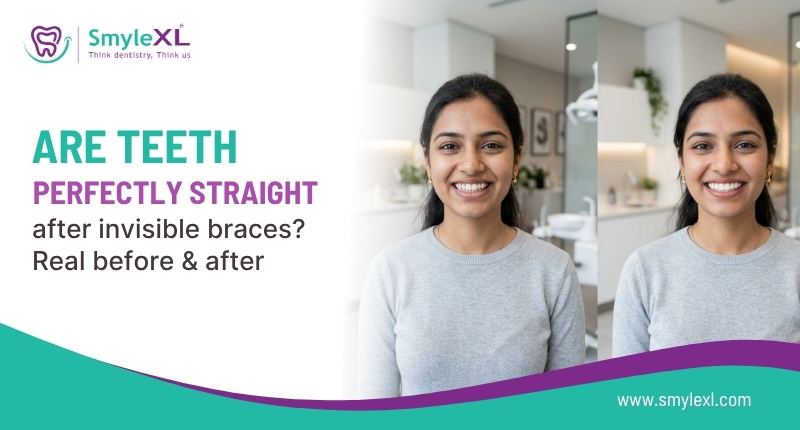

“It’s just a transparent tray. How can it straighten my teeth, let alone make them perfectly straight?”
That’s one of the first questions many people ask when they hear about invisible braces. Unlike traditional braces, there are no metal wires or brackets pulling your teeth into place. So when we at SmyleXL Dental Clinic talk about the amazing before-and-after stories of invisible braces treatment, many people don’t believe it. Instead, they start judging whether a simple transparent tray can really move teeth.
But in reality, invisible aligners are a great option for many people. The results, however, depend on your teeth, your bite, and what “perfectly straight” actually means to you.
So, if you have ever thought, “My teeth aren’t straight after invisible braces” or “Will invisible braces make my teeth perfectly straight?”, stay with us till the end. We will clear up the confusion and help you understand what results you can realistically expect
Table of Contents
ToggleWhat Are The Options For Teeth Straightening?
For years, metal braces were the face of teeth straightening. Whenever someone mentioned fixing crooked teeth, most of us immediately imagined shiny brackets and wires covering the teeth.
But in reality, things are different.
When it comes to teeth alignment, there are mainly two options:
1. Traditional Braces
Traditional braces use brackets and wires to gradually move teeth into better positions. They have been used for decades and are especially useful for complex orthodontic treatment cases.
2. Clear Aligners
Clear aligners are transparent trays that fit over your teeth and gently guide them into new positions over time. Unlike braces, they can be removed while eating, brushing, and flossing.
One common misconception is that clear braces are simply a modern replacement for traditional braces. That’s not entirely true. Invisible aligners and metal braces are not competitors fighting for the same trophy.
Both treatments aim to improve teeth alignment, but they work differently and are suitable for different situations. Some cases respond beautifully to teeth straightening with aligners, while others may need braces for better control.
That is why the results of invisible braces can vary from one person to another.
The goal is not to decide which treatment is “better.” The goal is to find the treatment that matches your smile.
Do Teeth Become Perfectly Straight After Invisible Braces Treatment?
Not every smile is the same. That’s why invisible braces treatment works exceptionally well in some situations and may not be the first choice in others.
Case 1: Small Gaps Between Teeth
If you have noticeable spaces between your teeth, dental aligners can often close them very effectively.
The controlled pressure applied by the aligners gradually brings the teeth closer together, improving both appearance and function. Many people seeking smile correction for spacing concerns are excellent candidates for aligners.
Case 2: Mild to Moderate Crowding
When teeth overlap slightly or appear crowded, clear braces can create room by gradually shifting teeth into more aligned positions.
Since every tray is designed specifically for the next stage of movement, treatment can be highly predictable when crowding is not severe.
Case 3: Adults Who Want a Discreet Treatment
Many working professionals avoid treatment because they do not want visible metal braces.
This is where Invisalign-style systems and other clear braces options become popular. They offer a subtle way to improve teeth alignment without drawing attention during meetings, presentations, or social events.
Case 4: Mild Bite Problems
Certain types of bite correction can be achieved successfully using aligners.
With proper planning and monitoring, invisible braces treatment can improve mild overbites, underbites, and crossbites while creating a healthier and more balanced smile.
Before starting treatment, we use digital treatment planning to understand how your teeth are expected to move throughout the process. This allows us to create a more predictable roadmap for treatment.
Not Seeing Results From Invisible Braces Treatment? You Might Be Doing These Things Wrong
If your teeth are not moving as expected, don’t panic just yet. In many cases, the issue is not the aligners themselves but small habits that can slow down progress.
You Are Not Wearing Them Long Enough
Most aligners need to be worn for 20–22 hours a day. Taking them out frequently gives your teeth less time to respond to the gentle pressure being applied.
Signs this may be affecting your treatment:
- Your aligners feel extremely tight every time you put them back in.
- The next set of aligners doesn’t fit properly.
- Treatment is taking longer than originally planned.
What you can do:
- Remove aligners only for meals and drinks (except water).
- Set reminders if you often forget to put them back in.
- Track your daily wear time using an aligner app.
You Skip Aligner Changes or Change Them Too Early
Every set of custom aligners is designed to move your teeth by a very small amount. Wearing a tray longer than recommended or switching too soon can affect progress.
Common mistakes include:
- Forgetting when the next tray change is due.
- Switching to the next aligner because the current one feels loose.
- Extending wear time without consulting your dentist.
What you can do:
- Follow the schedule provided by your dentist.
- Keep aligners labeled in order.
- Contact your clinic if you’re unsure about changing trays.
You Frequently Forget Your Aligners
Wearing aligners only at night may sound like enough, but it usually isn’t. Teeth need consistent pressure throughout the day to move efficiently.
This often happens when:
- Aligners are removed during work or college and forgotten.
- They are left wrapped in tissues and accidentally thrown away.
- Social events lead to extended periods without wearing them.
What you can do:
- Always carry your aligner case.
- Make wearing aligners part of your daily routine.
- Put them back immediately after eating.
You Miss Review Appointments
Even though the treatment requires fewer visits than braces, regular reviews are still important.
During these appointments, we check:
- Whether teeth are tracking properly.
- If any teeth are lagging behind.
- Whether attachments are working as planned.
- If refinements may be needed.
Missing appointments can delay important adjustments and affect the overall outcome.
Your Expectations Are Unrealistic
One of the biggest misconceptions is that aligners can create a celebrity-style smile in just a few months.
In reality:
- Every smile starts from a different position.
- Some teeth move faster than others.
- Complex movements may require additional refinement of aligners.
- Bite correction often takes longer than simply straightening visible teeth.
A successful result is not always about achieving absolute perfection. It’s about creating healthier alignment and a more balanced smile.
You Ignored Retention Advice After Treatment
Many people believe treatment ends when the last aligner comes off. That’s not completely true.
After your teeth have moved, they need time to stabilize in their new positions. This is where retainers become important.
Without proper post-aligner care:
- Teeth can slowly drift back.
- Small gaps may reappear.
- Minor crowding can return over time.
What you can do:
- Wear retainers exactly as instructed.
- Attend follow-up appointments.
- Replace damaged retainers promptly.
Cost Difference: Metal Braces vs Clear Aligners
One of the most common questions we hear is:
“Why do clear aligners cost more than braces?”
The answer lies in the technology and planning involved.
| Treatment | Approximate Cost in India |
| Metal Braces | ₹25,000 – ₹60,000 |
| Ceramic Braces | ₹40,000 – ₹90,000 |
| Transparent Aligners | ₹1,00,000 – ₹3,50,000+ |
The cost of invisible braces treatment depends on:
- Complexity of the case
- Number of aligners required
- Duration of treatment
- Type of aligner system used
- Additional refinement stages
While braces may cost less initially, many people choose aligners because of the comfort, convenience, and appearance they offer.
The right choice should depend on your clinical needs rather than price alone.
FAQs
Can Invisible Braces Fix Severely Crooked Teeth?
Some severe cases can be treated with aligners, but others may require traditional braces or a combination treatment approach. A clinical assessment is always necessary.
Are Invisible Braces as Effective as Traditional Braces?
For many mild and moderate cases, yes. However, certain complex tooth movements may still be managed more effectively with braces.
Why Are My Teeth Not Perfectly Straight After Aligners?
Possible reasons include severe starting conditions, inconsistent wear, missed appointments, incomplete treatment stages, or small refinements that may still be needed.
Do I Need Retainers After Invisible Braces Treatment?
Yes. Retainers help maintain the new tooth positions and reduce the chances of relapse.
How Long Do Invisible Braces Results Last?
With proper retainer use and good oral care, results can last for many years.
What Happens After Invisible Braces Treatment Ends?
Once treatment is complete, retainers are usually provided. Regular follow-ups may also be recommended to monitor long-term stability.
Ready to Find Out if Invisible Braces Are Right for You?
A transparent tray may look simple, but behind it is a carefully planned process designed to improve your smile safely and predictably.
At SmyleXL Dental Clinic, we evaluate your teeth, bite, and treatment goals before recommending the right approach for invisible braces treatment. Whether you are considering aligners for the first time or wondering why your previous treatment did not meet expectations, we’re here to help.
Straight Smiles Start With the Right Plan, Not Just the Right Tray.