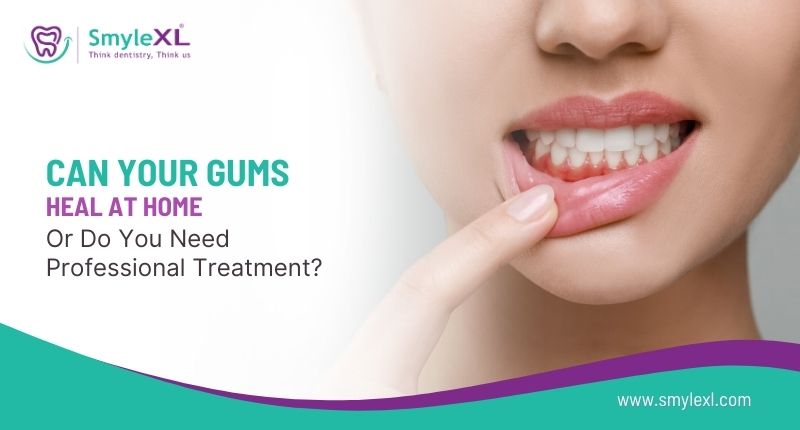

When your gums start bleeding while brushing, feel sore, or look swollen, the first thought that often crosses your mind is: “Will this heal on its own?” Gum health is frequently overlooked until discomfort arises. Some early gum issues can be improved with home care, while others require professional help. The tricky part is knowing when to try home remedies and when to book an appointment with the dentist . Leaving gum problems unattended may seem harmless at first, but what begins as minor irritation can silently progress into infections, gum recession, or even tooth loss. Early diagnosis for gum treatment in Phaltan at SmyleXL dental clinic can help to prevent you from those gum issues.
Healthy gums not only hold your teeth in place but also protect you from infections and systemic problems. Ignoring gum disease can ultimately lead to tooth loss or more severe health complications. In this blog, we’ll break down the gum problem areas, explore practical solutions, and give you clear recommendations on what you can do at home and when to seek professional care.
Table of Contents
ToggleUnderstanding Gum Problem Area
Why Do Gums Get Infected or Damaged?
Your gums are soft tissues designed to cover and protect the roots of your teeth. When bacteria from plaque and tartar accumulate, they irritate the gums, leading to inflammation. This condition is known as gingivitis in its early stage and periodontitis in advanced stages.
Common causes include:
- Poor oral hygiene
- Skipping professional cleanings
- Smoking or tobacco use
- Vitamin deficiencies
- Misaligned teeth that trap food
- Systemic issues like diabetes
Early Signs You Shouldn’t Ignore
- Bleeding when brushing or flossing
- Puffy, red gums
- Persistent bad breath
- Receding gum line
- Tooth sensitivity around gum margins
These signs may seem minor, but they can progress into more serious issues if left untreated. While mild inflammation can sometimes be managed with good home care, advanced gum disease does not typically resolve without professional dental intervention.
At SmyleXL Dental Clinic, patients often share how they ignored bleeding gums for months, only to realize later that early professional care could have saved them from discomfort and higher costs.
Possible Solutions: Can Gums Heal at Home?
1. Home Remedies That Can Help Mild Gum Problems
If you notice early signs of gingivitis, such as slight redness or bleeding while brushing, you can try improving your oral routine:
- Daily Brushing & Flossing: Brush your teeth twice a day with a soft-bristle brush and floss at least once a day to remove trapped food particles.
- Salt Water Rinse: Using warm salt water can temporarily reduce swelling and kill bacteria.
- Antimicrobial Mouthwash: Rinses with chlorhexidine can reduce bacterial growth.
- Balanced Diet: Include foods rich in vitamin C and calcium to strengthen gum tissue.
- Avoid Tobacco: Smoking restricts blood flow, making it harder for gums to heal naturally.
2. When Home Care is Not Enough
Unfortunately, once tartar (hardened plaque) forms on your teeth, brushing at home won’t remove it. You need professional scaling and polishing to clean below the gumline. If gum pockets have already formed, advanced procedures such as deep cleaning, flap surgery, or laser gum therapy may be necessary.
3. Professional Gum Treatment in Phaltan At SmyleXL
When gums are beyond the healing capacity of home remedies, visiting a dentist is the safest option. Professional treatments include:
- Scaling and Root Planing: A deep cleaning that removes tartar and smoothens the tooth roots.
- Laser Gum Therapy: Minimally invasive treatment that kills bacteria and promotes healing.
- Flap Surgery: For severe gum pockets, where gums are lifted to clean deeper areas.
- Bone or Tissue Grafts: In cases of advanced gum recession or bone loss.
Recommendations: How to Decide Between Home Care and Professional Help
Step 1: Evaluate Your Symptoms
- If it’s mild bleeding and occasional swelling, start with home remedies and improved hygiene.
- If symptoms persist for more than two weeks, consult a dentist.
- If you see recession, loose teeth, or pus, don’t wait—seek immediate care.
Step 2: Think Long-Term Health, Not Short-Term Relief
Gum infections may not always cause pain initially, which is why many people delay care. But untreated gum disease can spread silently, causing bone loss around the teeth. Professional gum care ensures that your problem doesn’t progress into irreversible damage.
Think of it like maintaining your car, regular cleaning and check-ups prevent breakdowns. Ignoring gums because “they don’t hurt right now” is like ignoring a blinking warning light. By the time pain arrives, damage is already advanced.
Step 3: Consider Cost vs. Risk
People often avoid visiting the dentist because they worry about the costs of treatment. But here’s the reality:
- Professional gum cleaning costs are affordable compared to the high expense of treating advanced gum disease later.
- Early scaling is less costly than surgery or implants.
- Preventive visits save both your teeth and your wallet.
Your gums have an incredible ability to heal, but only in the earliest stages of disease. Once bacteria harden into tartar and gum tissue starts pulling away from the teeth, professional gum treatment in Phaltan becomes necessary. Ignoring gum issues might save time now, but it risks much higher treatment costs and complications later.
The bottom line is that if you catch gum problems early, consistent home care and preventive check-ups are enough. However, if symptoms persist, don’t risk compromising your oral health; instead, visit a trusted dental professional.
SmyleXL Dental Clinic is here to guide you with personalized gum care, whether it’s routine cleaning or advanced periodontal treatment. Please book your appointment today and give your gums the care they deserve.
FAQs
- Can gums grow back naturally once they recede?
Gum tissue that has receded does not grow back on its own. However, professional treatments like grafting or laser therapy can restore gum coverage and protect exposed roots. Early care can prevent further recession. That’s why noticing recession early and seeking help quickly can make all the difference in protecting your smile.
- What is the cost of gum treatment in Phaltan?
The cost depends on the severity of your condition. Basic scaling and polishing are typically affordable, while advanced treatments, such as flap surgery or grafting, may increase the cost. Investing early in treatment saves you from more expensive procedures later. Think of it as an investment not just in your teeth, but in your long-term health and confidence.
- Are bleeding gums always a sign of gum disease?
Not always. Bleeding gums may occur if you brush too hard or start flossing after a long period of time. However, persistent bleeding is usually a sign of gingivitis or periodontitis, which requires attention. When in doubt, it’s always safer to consult a dentist rather than ignore ongoing symptoms.
- How often should I get my gums checked?
Dentists recommend a check-up every six months, even if you don’t have visible issues. For individuals with a history of gum disease, more frequent visits may be recommended to maintain control of infections. Regular visits act as a preventive shield, catching issues before they turn into costly treatments.