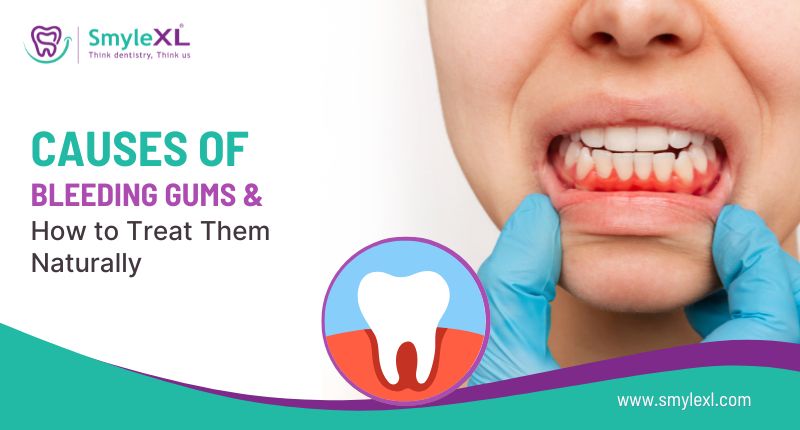

You’re brushing your teeth like any regular morning, already planning breakfast (maybe a quick bite near Lal Darwaja before the crowds kick in). Then suddenly…
You see it.
A streak of red in the sink.
It’s small, subtle, and easy to ignore, until it starts happening again. And again.
Bleeding gums are one of those oral issues that manage to stay quiet for years, then suddenly ask for attention without warning. But here’s the interesting part: gums don’t bleed “just because.” They bleed for a reason.
If this has been happening to you, this blog will help you understand why, and more importantly, how to treat it naturally, using scientifically supported habits, not home-made potions.
And if you ever find yourself needing specialized care, professional gum treatment in Lal Darwaja Surat at SmyleXL Dental Clinic is always just around the corner.
But first… let’s play detective.
Table of Contents
ToggleThe Real Culprits Behind Bleeding Gums
Bleeding gums aren’t random.
They’re responses. Signals. Little nudges from your mouth trying to tell you something.
Let’s meet the main players.
1. Plaque Buildup (The Sticky Mastermind)
Plaque is that transparent, sticky layer that forms on your teeth right after eating. It’s loaded with bacteria, and if it sits too long near your gums, it irritates the tissue.
Your gums become red, inflamed, and ready to bleed at the slightest touch.
2. Gingivitis (The Early Red Flag)
Gingivitis is the earliest stage of gum disease. And guess what?
It’s 100% reversible if caught early.
Common symptoms:
- Swelling
- Redness
- Tenderness
- Bleeding
It’s like your gums whispering, “Please pay attention.”
3. Overenthusiastic Brushing
A lot of people treat teeth like dirty tiles: scrubbing them with all their strength.
However, your gums are not made for hard brushing. Gums are delicate.
Hard bristles + force = gum injury → bleeding → receding gums.
Your gums prefer gentle brushing. Think “massaging,” not “scraping.”
4. The Flossing Problem
Raise your hand if you floss only the day before a dental appointment.
Skipping flossing allows food particles and bacteria to accumulate between teeth, the spots your brush can’t reach.
This leads to irritation and, yes… bleeding.
5. Hormonal Changes
Hormones can make gums extra sensitive, especially in:
- Pregnancy
- Puberty
- Monthly cycles
This isn’t something you’re doing wrong; it’s just your body reacting in its own way.
6. Health Factors: Medications & Vitamin Deficiencies
Bleeding gums can be caused by:
- Blood thinners
- Anti-hypertensive drugs
- Anti-seizure medications
- Low Vitamin C
- Low Vitamin K
Your gums tell stories about your overall health, too.
“Can I Treat It Naturally?” Yes, But Let’s Redefine Natural
Natural does not mean applying turmeric paste or random oils onto your gums.
It means supporting your gums with scientifically backed, healthy everyday habits that help them heal the way nature intended.
Here’s your upgraded Gum Wellness Ritual:
1. Be Gentle, Not Aggressive (Brushing 2.0)
Soft bristles are your gums’ best friends.
Use delicate pressure, slow circular motions, and take your time.
This alone can drastically reduce bleeding within a week.
2. Flossing Matters
Flossing removes plaque that brushing misses.
It improves gum health almost instantly.
If traditional floss feels tricky, try:
- Water flossers
- Interdental brushes
- Floss picks
Consistency matters more than technique perfection.
3. Rinse Smartly
Mouthwash helps remove leftover bacteria.
Choose alcohol-free formulas as alcohol dries your gums and irritates them.
Your dentist can recommend a good mouthwash/rinse for short-term use.
4. Hydrate Generously
A hydrated mouth has better saliva flow…
…and saliva is your body’s natural antibacterial system.
Dehydration accelerates plaque growth, so drink water throughout the day.
5. Eat Foods That Support Gum Tissue
Your gums love:
- Vitamin C (guava, oranges, capsicum)
- Vitamin K (spinach, methi, broccoli)
- Omega-3 (walnuts, flaxseeds)
- Minerals (whole grains, pulses)
Good food = good gums.
6. Reduce or Quit Smoking
Even reducing smoking frequency dramatically improves gum health.
Nicotine restricts blood flow, slows healing, and worsens gum inflammation.
Your gums recover much faster when nicotine steps out of the picture.
7. Get Professional Cleaning (The Most Important Natural Step)
Tartar cannot be removed at home, no matter how hard you brush.
Only dental tools can safely remove it.
If you haven’t had a cleaning in a long time, visiting a dental clinic in Lal Darwaja, Surat can make a huge difference.
Patients often report less bleeding within 24–48 hours of professional cleaning.
When Home Care Isn’t Enough
Sometimes, the bleeding is not just from irritation; it’s a sign that the gums need professional care.
You might need:
- Scaling (professional cleaning)
- Deep cleaning (root planing)
- Gum infection treatment
- Laser gum therapy
- Medication-assisted gum care
Professional gum treatment in Lal Darwaja Surat at SmyleXL Dental Clinic focuses on treating the root cause, not just the symptoms.
Early intervention prevents:
- Gum recession
- Bone loss
- Loose teeth
- Persistent gum infections
Your gums deserve proper care, not temporary relief.
Your 10-Day “Better Gums” Reset Plan
Want your gums to heal quickly?
Here’s a simple, workable 10-day plan:
Day 1–2
- Switch to a soft-bristle brush
- Avoid aggressive brushing
- Drink plenty of water
Day 3–4
- Start flossing gently
- Add Vitamin C foods
- Rinse with warm salt water
Day 5–6
- Reduce sugary snacks
- Add leafy greens for Vitamin K
- Use alcohol-free mouthwash
Day 7–8
- Improve brushing technique
- Avoid smoking for 48 hours
Day 9–10
- Book a dental cleaning
- Assess improvement
Within 10 days, bleeding usually reduces dramatically.
FAQs
Q1. Why do my gums bleed even if I brush regularly?
Bleeding gums usually mean plaque has built up in areas that brushing alone cannot reach. Even if you brush every day, missing the gumline or not flossing allows bacteria to irritate the gums. Gentle brushing + flossing + professional cleaning is the winning trio.
Q2. Can bleeding gums be reversed naturally?
Yes, especially when bleeding is due to gingivitis or irritation. Improving daily oral hygiene can show positive results in one to two weeks. But if tartar is present or gum pockets have developed, natural care won’t be enough; you’ll need professional cleaning.
Q3. How do dentists treat bleeding gums?
Dentists examine your gums and remove plaque and tartar through scaling. If inflammation is deeper, root planing smoothens the roots so the gums can reattach. Medication or antimicrobial rinses may be recommended. At SmyleXL Dental Clinic, treatment is customized based on your gum condition, sensitivity, and oral habits.
Q4. Should I avoid flossing if my gums bleed?
Actually, bleeding is a sign that you need to floss more.
When gum tissues are inflamed, even light flossing triggers bleeding, but this improves as plaque reduces. If bleeding persists after a week of daily flossing, it’s time for a professional evaluation.
Q5. When is it time to visit a dental clinic in Lal Darwaja, Surat?
Visit a dentist if you experience:
- Persistent bleeding
- Swollen or tender gums
- Bad breath
- Gum recession
- Loose teeth
- Bleeding even without brushing
These symptoms indicate deeper inflammation that requires dental care.
Strong Gums, Strong Smile
Bleeding gums are not just an inconvenience; they’re a sign your gums need attention. But here’s the great part: with the right habits and timely care, gum health improves quickly and naturally.
If you’re struggling with persistent bleeding or discomfort, SmyleXL Dental Clinic offers expert gum treatment in Lal Darwaja Surat that restores gum health safely, gently, and scientifically.
Your gums protect your teeth; give them the care they deserve. Book your appointment today!