
We’ve all been there. You walk into a dentist’s office with that irritating feeling that something’s not quite right in your mouth. Maybe it’s a dull ache or a new sensitivity, but you can’t quite pinpoint where it’s coming from. After a quick check-up and an X-ray, everything looks okay on the surface, but your dentist needs more information. What if there was a way to take a closer, more detailed look into your teeth and jaw, catching issues that are hiding beneath the surface? Well, that’s where CBCT scans come in, and by 2026, they could be the standard in dental care.
CBCT, or Cone Beam Computed Tomography, is a game-changer for dentistry. Think of it like upgrading from a regular flashlight to a high-tech laser when you’re trying to find something in the dark. It’s not just about getting a clearer picture of what’s going on inside your mouth; it’s about taking control of your dental health in ways that were once unimaginable.
In this blog, we’ll explore why CBCT scans will become an essential tool in dental practices, why they’re already gaining traction at places like our CBCT Scan Center in Sinhagad Road, and what this means for your oral health in the near future.
Table of Contents
ToggleWhat Exactly Is CBCT and How Does It Work?
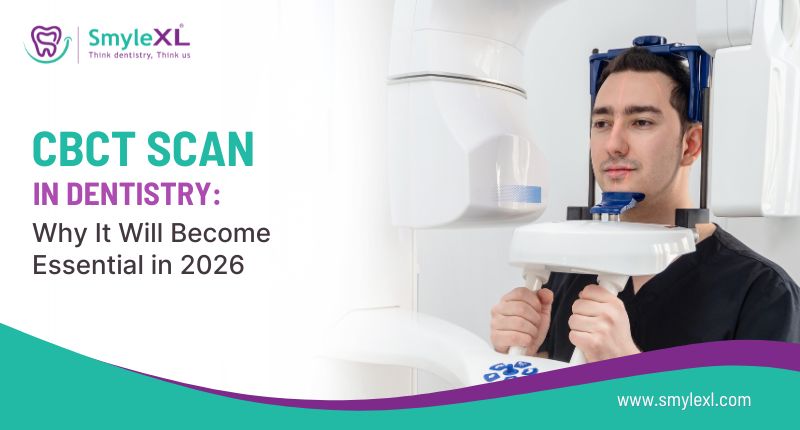
Picture yourself at a routine dental appointment. You’ve had your cleaning, and now it’s time for an X-ray. But the X-ray only shows a 2D image of your teeth. It’s like looking at a flat map of a city; you get the general layout, but not much in terms of the three-dimensional details. Enter the CBCT scan, which is like taking a 3D tour of that city, giving the dentist a far more detailed, in-depth view of your teeth, jaw, and even your airways.
CBCT uses a cone-shaped X-ray beam to capture images in multiple angles, which are then processed by computer software to create a 3D representation of your mouth. This technology gives your dentist a clear view of not just the teeth themselves but also the surrounding bone structure, nerves, and tissues. The result? A much more comprehensive diagnosis and treatment plan.
Why CBCT is a Game-Changer for Dental Diagnosis
Now, you might be wondering, “What makes CBCT so special? Aren’t regular X-rays enough?” Well, regular X-rays are limited; they give a 2D view of your teeth and jaw, which means there’s a chance of missing certain issues. CBCT, on the other hand, offers a full 3D perspective that’s particularly useful for identifying problems that traditional X-rays might miss, such as:
- Hidden dental infections that could be hiding under the gum line or deep within the tooth.
- Jawbone issues that may not be apparent on regular X-rays but could affect tooth extraction or implant placement.
- Sinus problems that might be mistaken for tooth pain, especially in the upper jaw.
- Impacted teeth, especially wisdom teeth, which can cause complications later on.
In short, CBCT allows your dentist to spot potential issues before they become full-blown problems, leading to more precise and less invasive treatments.
The Growing Importance of CBCT in Complex Dental Procedures
Certain dental procedures require a high level of precision. Whether it’s placing dental implants, diagnosing TMJ (temporomandibular joint) disorders, or planning for orthodontic treatments, having a 3D view of your teeth and jaw can make all the difference. CBCT technology is already proving invaluable in these areas, offering numerous benefits:
- Dental Implants: One of the most common uses for CBCT in modern dentistry is dental implant placement. The 3D images it provides allow the dentist to plan the implant placement with precision, taking into account the exact positioning of nerves, sinuses, and bone structure. This helps avoid complications and ensures a smooth recovery.
- Orthodontics: CBCT scans give orthodontists a better understanding of tooth positioning and how teeth relate to the underlying bone structure. This is crucial for creating personalized treatment plans, especially when it comes to patients with complex cases.
- TMJ Disorders: For patients suffering from jaw pain or clicking, CBCT provides an in-depth view of the temporomandibular joint (TMJ), helping dentists pinpoint the cause of discomfort and plan the most effective treatment.
- Oral Surgery: When undergoing any form of oral surgery, CBCT scans help guide the surgeon by providing a 3D map of the entire area being treated. This reduces the risk of errors and enhances overall surgical outcomes.
At our CBCT Scan Center in Sinhagad Road, patients benefit from the latest CBCT technology, which improves diagnostic accuracy and streamlines treatment planning.
The Future of CBCT in Everyday Dentistry
So why is CBCT set to become essential in dentistry by 2026? It all comes down to the growing demand for more precise, less invasive dental treatments. Patients have become more informed about their health and the potential risks of various dental issues, and they deserve higher standards of care. CBCT scans meet these expectations by offering:
Faster Diagnoses: With the ability to capture a wealth of information in a single scan, CBCT reduces the need for multiple visits and follow-up X-rays. This means quicker diagnoses and faster treatments for patients.
Less Radiation Exposure: While CBCT does involve some radiation, it typically uses less than traditional CT scans, making it a safer option for patients. This is especially important for those who may need repeated scans, such as patients undergoing orthodontic treatments.
Non-Invasive Treatment Planning: By having a clear 3D view of a patient’s dental structure, CBCT allows for more conservative treatment planning. This reduces the need for unnecessary procedures and minimizes the chances of complications.
How Will CBCT Impact Your Dental Care in 2026?
Looking ahead to 2026, it’s safe to say that CBCT will be more common in dental clinics across India. As the technology continues to improve and become more affordable, it will be increasingly accessible to patients at all levels of care.
What does this mean for you as a patient?
- Better understanding of your dental health: With clearer, more accurate scans, you’ll have a much better understanding of what’s going on inside your mouth. This leads to more informed decision-making about your treatments.
- Fewer surprises: CBCT scans allow your dentist to identify potential problems early, reducing the chances of unexpected issues down the line.
- Peace of mind: Knowing that your dentist has the most advanced tools to diagnose and treat your dental health will give you greater confidence in your care.
The CBCT Advantage: More Than Just a Trend
It’s easy to dismiss CBCT as just another high-tech gadget, but it’s much more than that. It’s a crucial step forward in providing more accurate, efficient, and patient-friendly dental care. If you’re looking for a dental clinic that embraces this technology and provides top-notch care, you might want to check out our CBCT Scan Center in Sinhagad Road for the most accurate diagnoses and effective treatments.
More Than A Cool-looking Tech Gadget
The future of dentistry is already here, and it’s looking clearer (and more precise) than ever. With CBCT technology, dental professionals can offer faster, more accurate diagnoses and treatments, ensuring that patients receive the best care possible. As this technology becomes more widespread and accessible, expect it to become an essential tool in dental clinics everywhere by 2026.
So, the next time you’re in for a check-up, don’t be surprised if your dentist recommends a CBCT scan. It’s the smart, efficient, and forward-thinking way to take care of your dental health, and it’s only going to become more essential in the years ahead.
Looking for the best care with cutting-edge technology? Visit the CBCT Scan Center in Sinhagad Road and experience the future of dental care today.