
If you’re thinking long-term, dental implants often provide better value over a 10-year period because they are designed to replace the tooth root and can last for many years with proper care. However, that doesn’t automatically make them the right choice for everyone.
When comparing treatments, many people focus only on the bill they see today. But when it comes to replacing a missing tooth, the smarter question is often: “What will this choice cost me over the next 10 years?”
While a dental bridge usually has a lower upfront expense, it may require repairs or replacement over time. In contrast, the dental implant cost is generally a one-time investment for many patients, making it a cost-effective option in the long run.
That’s where the conversation becomes much more interesting.
Table of Contents
ToggleDental Implant vs Bridge: Which Option Usually Saves More Money Over 10 Years?
In many situations, dental implants may save more money over time because they are built as a standalone replacement and often require fewer future modifications. Bridges can be an excellent option, too, but they may need replacement or additional treatment as the years go by.
The key thing to understand is that cost and value are not always the same thing.
Imagine buying two pairs of shoes.
One pair costs less today but needs replacing every few years.
The other costs more initially but stays comfortable and durable for much longer.
Tooth replacement options work in a similar way.
The goal isn’t simply to find the treatment with the lowest starting cost. The goal is to understand which treatment can continue serving you well for years to come.
Why Looking Only at Today’s Cost Can Be Misleading?
The biggest mistake people make is comparing only the first bill. The real cost of a treatment includes maintenance, repairs, replacements, and long-term oral health.
When evaluating the dental bridge or dental implant cost, it helps to think beyond the treatment day.
Questions worth asking include:
- Will the restoration need replacement later?
- How much maintenance is involved?
- Will surrounding teeth be affected?
- Could additional treatments be required in the future?
- How long is the restoration expected to last?
A treatment that appears affordable today may involve additional work later. Likewise, a treatment with a higher initial investment may continue functioning effectively for many years.
That’s why a proper bridge vs implant comparison should always include long-term considerations.
What Happens When You Choose a Dental Bridge?
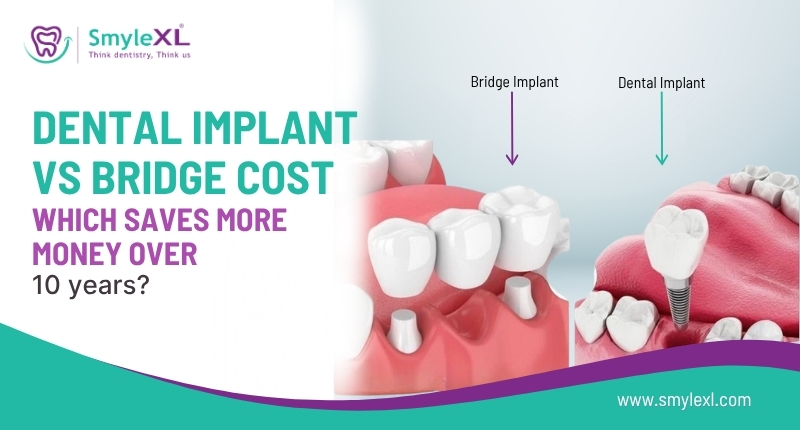
A dental bridge replaces a missing tooth by using the neighboring teeth for support. It is a well-established treatment and remains a reliable option for many people.
A typical dental bridge treatment works by placing crowns on the teeth next to the gap and attaching an artificial tooth between them.
Benefits of a dental bridge include:
- Faster treatment completion
- Fixed replacement that does not need removal
- Suitable for many cases of missing tooth replacement
- Predictable results when supporting teeth are healthy
However, there are some long-term considerations.
Since the bridge depends on neighboring teeth, those teeth play an important role in supporting the restoration.
Over time, factors such as wear, gum health, and changes in the supporting teeth can influence the lifespan of the bridge.
This doesn’t mean bridges are a poor choice. In fact, many people enjoy successful results for years. It simply means that the cost of dental bridge treatment should be viewed in the context of long-term maintenance as well.
What Happens When You Choose Dental Implants?
Dental implant treatment replaces both the visible tooth and the root beneath it. Because they function independently, they often offer advantages that support long-term oral health.
Unlike a bridge, dental implants do not rely on neighboring teeth for support.
An implant is placed into the jawbone, and once healing is complete, a crown is attached to restore appearance and function.
Many people choose implant supported tooth replacement because it offers:
- A stable chewing experience
- A natural appearance
- Independent support
- Preservation of surrounding teeth
- Long-term support for jawbone structure
When discussing dental implant costs, it is important to remember that the treatment involves more than just replacing a visible tooth.
The implant also helps support the bone underneath, which plays an important role in maintaining facial structure and oral function.
This is one reason many people view implants as a long-term investment rather than simply another dental procedure.
Bridge vs Implant Comparison: 5 Factors That Affect Long-Term Value
1. Lifespan
The expected lifespan of a restoration plays a major role in long-term value.
While both treatments can last many years, dental implants are often known for their durability when properly maintained.
A longer-lasting restoration may reduce the likelihood of future replacement procedures.
2. Maintenance Requirements
Every restoration requires care, but the type of care may differ.
A dental bridge requires cleaning underneath the artificial tooth and around the supporting teeth.
Dental implant treatment also requires excellent oral hygiene, but they are cleaned similarly to natural teeth.
Regular check-ups remain important regardless of the treatment chosen.
3. Impact on Neighboring Teeth
One of the biggest differences between the two options is how they interact with surrounding teeth.
A bridge uses neighboring teeth as anchors.
An implant stands independently.
For some people, preserving healthy adjacent teeth can be an important factor when comparing dental implant vs bridge options.
4. Jawbone Health
When a tooth is lost, the jawbone underneath may gradually shrink over time.
Because implants are placed into the bone, they help stimulate the jawbone in that area.
Bridges replace the visible tooth but do not replace the root beneath it.
This factor often becomes important when discussing long-term oral health rather than immediate treatment outcomes.
5. Future Dental Work
Future treatment needs can influence overall value.
If supporting teeth develop problems, additional procedures may be required around a bridge.
With implants, future care is usually focused on maintaining the implant and surrounding tissues.
Every case is unique, which is why a professional evaluation remains important before making a decision.
When a Dental Bridge May Make More Sense?
A bridge can be a practical choice when the surrounding teeth already need crowns or when certain health factors make implants less suitable.
A dental bridge may be recommended when:
- Adjacent teeth already require restoration
- Faster treatment is preferred
- Bone volume is limited
- Specific medical considerations exist
In these situations, the dental bridge cost may align well with the overall treatment plan.
The best treatment is not always the newest one. It’s the one that suits your smile and oral health needs.
When Dental Implants May Be the Better Long-Term Investment?
Dental implants are often preferred when preserving surrounding teeth and supporting long-term function are top priorities.
Implants may be particularly beneficial when:
- The neighboring teeth are healthy
- Long-term durability is important
- Jawbone preservation is a priority
- You want a standalone replacement
For many people, this makes the dental implant cost easier to justify over the years because the treatment is designed to function independently.
FAQs
Are dental implants always better than bridges?
No. Both treatments have advantages. The right choice depends on your oral health, bone condition, surrounding teeth, and treatment goals.
Do bridges need replacement?
Many bridges last for years, but they may eventually require repair or replacement depending on wear, oral hygiene, and the condition of supporting teeth.
Can dental implants last longer than 10 years?
Yes. With proper care and regular dental visits, many implants continue functioning successfully well beyond 10 years.
Which option feels more like a natural tooth?
Many people feel that dental implants closely mimic the function of a natural tooth because they are anchored within the jawbone.
Which treatment requires less maintenance?
Both require good oral hygiene. The difference lies more in the type of cleaning and long-term monitoring rather than the amount of care.
Looking Beyond Cost Starts With the Right Conversation
Choosing between a bridge and an implant isn’t just about today’s bill. It’s about understanding how that choice may affect your smile, comfort, and oral health years from now.
While the dental implant cost may be higher initially, it’s important to consider the long-term benefits, durability, and potential savings that come with a treatment designed to last for many years.
At SmyleXL Dental Clinic, we help you evaluate all aspects of your treatment, not just the immediate cost, but the long-term value as well. Together, we can determine which option fits your needs today and continues to support your smile in the future.
A Smart Smile Choice Isn’t About Spending Less Today, It’s About Needing Less Tomorrow.