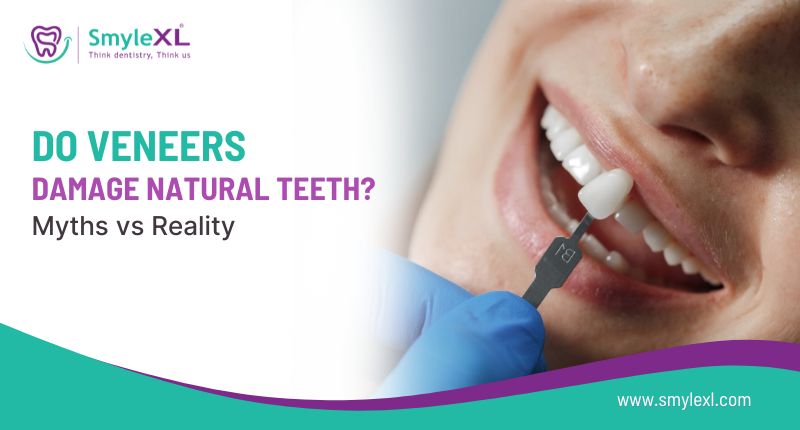

Imagine your teeth are like the walls of a well-loved home. Over time, they collect small marks, chips, stains, and uneven edges that don’t affect the structure but do affect how you feel about the space. Dental veneers are often described as a fresh coat of paint. But somewhere along the way, a rumour spread that this “paint work” damages the walls underneath.
And that’s where the confusion begins.
If you’ve been considering dental veneers treatment but keep stopping short because you’ve heard phrases like “they ruin your teeth” or “there’s no going back,” you’re not being dramatic; you’re being cautious. That’s a good thing.
At SmyleXL Dental Clinic in Nallagandla, Hyderabad, this is one of the most common concerns patients bring up. So instead of brushing it off, let’s unpack it properly, with facts, not fear.
Table of Contents
ToggleFirst Things First: What Exactly Are Dental Veneers?
Before we tackle myths, let’s get clear on what veneers actually are.
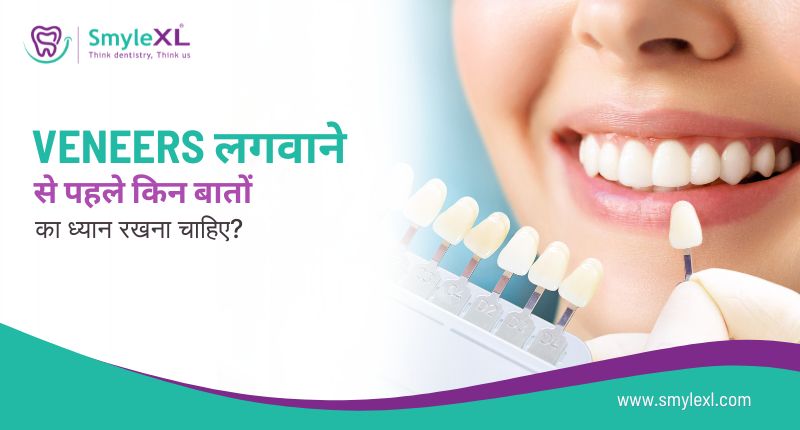
Dental veneers are thin, custom-made shells, usually made of porcelain or composite resin, that are bonded to the front surface of teeth. They’re designed to improve appearance, not function alone. People usually opt for veneers to address:
- Deep stains that don’t respond to whitening
- Chipped or cracked teeth
- Uneven tooth shape or size
- Small gaps between teeth
- Mild alignment concerns
A well-planned dental veneers treatment doesn’t aim to change who you are, it simply refines what’s already there.
Why Veneers Have Such a Bad Reputation (Hint: It’s Not the Veneers)
Veneers don’t wake up one day and decide to damage teeth. Most of the fear around veneers comes from outdated techniques, poor planning, or rushed cosmetic work done years ago.
Modern dentistry has evolved. The veneers people are worried about today are often based on stories from:
- Over-prepared teeth in the past
- “One-size-fits-all” smile makeovers
- Clinics prioritising speed over precision
When done correctly, veneers are conservative, predictable, and safe.
Now, let’s bust some myths.
Myth vs Reality: What’s True and What’s Not?
Myth 1: Veneers Require Shaving Teeth Down to Nubs
Reality:
This is one of the biggest misconceptions, and also the most asked.
Modern dental veneers treatment usually involves minimal enamel removal, and in some cases, none at all. The goal is to create space for the veneer so it sits naturally, not bulky. Dentists today aim to preserve as much natural tooth structure as possible.
Think of it like smoothing a surface before applying a laminate, not tearing the whole thing down.
Myth 2: Veneers Weaken Natural Teeth
Reality:
Veneers don’t weaken teeth when they’re placed correctly. In fact, porcelain veneers can add a layer of protection to the tooth surface.
Problems arise only when veneers are poorly designed, improperly bonded, or placed on teeth that weren’t suitable candidates in the first place.
At SmyleXL Dental Clinic, veneer planning includes evaluating bite force, enamel thickness, and gum health, because veneers should work with your teeth, not against them.
Myth 3: Once You Get Veneers, Your Teeth Will Always Be Sensitive
Reality:
Temporary sensitivity can happen, especially right after placement, but it usually fades within days or weeks.
Long-term sensitivity is uncommon and often linked to aggressive tooth preparation or pre-existing sensitivity that wasn’t addressed beforehand.
When veneers are planned conservatively, most patients report no ongoing discomfort, just a lot more smiling.
Myth 4: Veneers Fall Off Easily
Reality:
A properly bonded veneer is surprisingly strong. They’re designed to handle normal biting and chewing.
That said, veneers aren’t meant for opening bottle caps, crunching ice, or treating pens like snacks. (Yes, dentists see this more than you’d expect.)
Good habits + good dentistry = long-lasting veneers.
Myth 5: Veneers Look Fake and Obvious
Reality:
Bad veneers look fake. Well-designed veneers look like teeth, just better rested.
Modern veneers are customized in shape, shade, and translucency to match your facial features, skin tone, and natural teeth. The best compliment isn’t “Nice veneers,” it’s “Something’s different… did you do something?”
So… Do Veneers Damage Natural Teeth?
Here’s the honest answer:
Veneers don’t damage teeth. Poor planning does.
A thoughtfully executed dental veneers treatment focuses on preservation, balance, and long-term health. The tooth underneath remains alive, functional, and supported.
The key lies in:
- Proper case selection
- Conservative enamel preparation
- High-quality materials
- Skilled bonding techniques
This is why choosing the right clinic matters as much as choosing veneers themselves.
Who Is (and Isn’t) a Good Candidate for Veneers?
Veneers aren’t a universal solution, and that’s a good thing.
You may be a good candidate if:
- Your teeth are healthy but cosmetically imperfect
- You want a long-term aesthetic solution
- Your bite is stable
- You maintain good oral hygiene
Veneers may not be ideal if:
- You have untreated gum disease
- You grind your teeth severely (without protection)
- You have large fillings or weakened enamel
- You’re looking for a reversible, temporary option
A responsible dentist will always explain alternatives before recommending veneers.
The Role of the Dentist: Why Expertise Matters More Than Ever
Veneers sit at the intersection of science and artistry.
A dentist must consider:
- Facial symmetry
- Lip movement
- Bite alignment
- Gum contours
- Tooth proportion
At SmyleXL Dental Clinic, veneer planning isn’t rushed. It’s collaborative, detailed, and personalized, because cosmetic dentistry should feel thoughtful, not transactional.
Living With Veneers: What Changes (and What Doesn’t)
Here’s the good news: veneers don’t require a new lifestyle.
You can:
- Eat normally
- Brush and floss as usual
- Smile without overthinking angles
You should:
- Avoid using teeth as tools
- Wear a night guard if you grind
- Keep up with regular dental check-ups
Veneers fit into your life; they don’t take it over.
FAQs
Q1. Do veneers permanently alter natural teeth?
Veneers may involve minimal enamel removal, which means the process is not fully reversible. However, this doesn’t mean the teeth are damaged. The structure remains healthy and functional, and the veneer becomes part of the tooth’s long-term protection and aesthetics.
Q2. Can veneers get cavities underneath?
Yes, the tooth beneath a veneer can still develop decay if oral hygiene is neglected. Veneers don’t make teeth immune to cavities, which is why brushing, flossing, and professional check-ups remain essential.
Q3. Are veneers better than crowns?
Veneers and crowns serve different purposes. Veneers are conservative and cosmetic, covering only the front surface of the tooth. Crowns are more extensive and used when teeth are structurally compromised. Your dentist will recommend the option that best suits your tooth’s condition.
Veneers Aren’t the Villain They’re Made Out to Be
Veneers have been misunderstood for years, often judged by outdated techniques or rushed cosmetic work. In reality, modern dental veneers treatment is conservative, safe, and designed to enhance, not harm, your natural teeth.
If you’ve been curious but cautious, that’s perfectly reasonable. The smartest next step isn’t deciding yes or no, it’s getting the right information from the right professionals.
At SmyleXL Dental Clinic in Nallagandla, Hyderabad, the focus is always on clarity, comfort, and care. No pressure. No shortcuts. Just honest dentistry.
If you’re exploring smile enhancement and want to separate myths from reality, a conversation is a great place to start. After all, good decisions are made with facts, not fear.
And your smile deserves that much.