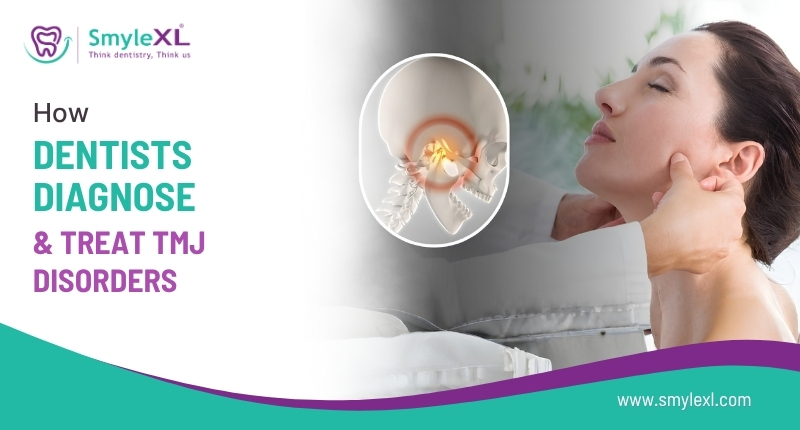

You wake up one morning, and your jaw feels tight. While eating pakoda, you hear a small “click” near your ear. A few days later, chewing starts feeling uncomfortable. Then, headaches begin showing up regularly, especially near the temples.
At first, you may think:
“Maybe I slept wrong.”
“Maybe it’s stress.”
“Maybe it’s just tooth pain.”
But sometimes, these symptoms point toward a problem involving the jaw joint itself.
At SmyleXL Dental Clinic in Ashiyana, Lucknow, many patients come in complaining about tooth pain or headaches, only to discover the actual issue is related to the TMJ, the joint connecting your jaw to your skull.
We offer modern and advanced jaw treatment in Ashiyana to help identify and manage these problems much earlier than before.
Table of Contents
ToggleWhat Is TMJ?
TMJ stands for temporomandibular joint.
This joint acts like a sliding hinge connecting your lower jaw to the skull. You use it constantly while:
- Talking
- Eating
- Chewing
- Yawning
- Smiling
When this joint or the surrounding muscles stop functioning properly, it may lead to TMD (temporomandibular disorder).
If you are looking for jaw treatment in Ashiyana, visiting us at SmyleXL Dental Clinic can help you receive effective, trusted care.
Common Causes of TMJ Disorders
There is rarely one single cause behind TMD. In many cases, multiple factors combine together.
Common triggers include:
- Grinding teeth (bruxism)
- Stress-related jaw clenching
- Bite imbalance
- Accidental trauma
- Arthritis affecting the joint
- Jaw injury
- Misaligned teeth
Some patients develop symptoms gradually, while others notice problems suddenly after injury or stress.
Grinding Teeth During Sleep
Many people grind or clench their teeth without realizing it. Teeth grinding creates extra pressure on the jaw muscles and TMJ joint.
Over time, this may lead to:
- Jaw stiffness
- Headaches
- Tooth wear
- Muscle soreness
- Jaw clicking
At SmyleXL Dental Clinic, we offer grinding-related jaw treatment in Ashiyana that often includes bite protection and muscle relief approaches.
What Does TMD Actually Feel Like?
TMD symptoms vary from person to person.
Some people mainly experience jaw pain, while others notice clicking sounds or headaches first.
Common symptoms include:
- Stiffness in the jaw
- Pain while chewing
- Difficulty opening the mouth
- Jaw locking
- Clicking or popping sounds
- Facial soreness
- Ear discomfort
- Headache caused by jaw problems
Some patients even mistake TMD discomfort for a toothache or sinus pressure.
Why Are TMJ Problems Often Confusing?
One reason TMJ disorders are difficult to identify is that the symptoms overlap with other conditions.
For example:
- Toothache may mimic jaw pain
- Sinus infection may create facial pressure
- Arthritis may affect the jaw joints
- Abscessed tooth pain may spread near the jaw
Proper jaw treatment begins with careful diagnosis because many jaw symptoms are connected to multiple possible causes.
Note: if you are suffering from any of these symptoms, reach out to us at SmyleXL Dental Clinic for effective jaw treatment in Ashiyana.
How Dentists Diagnose TMJ Disorders?
Diagnosis usually begins with a detailed examination.
Your dentist may check:
- Jaw movement
- Clicking sounds
- Muscle tenderness
- Bite alignment
- Range of mouth opening
You may also be asked:
- Do you wake up with jaw tightness?
- Do headaches occur frequently?
- Is chewing uncomfortable?
- Does your jaw lock occasionally?
At SmyleXL Dental Clinic, get advanced jaw treatment in Ashiyana that focuses on identifying the exact cause before recommending a treatment plan.
Diagnosis Also Includes Dental Imaging
Sometimes, physical examination alone is not enough.
Dentists may recommend:
- Digital X-rays
- CBCT scans
- MRI imaging
These help evaluate:
- Joint position
- Bone structure
- Inflammation
- Dislocated jaw issues
- Joint degeneration
This improves the accuracy of temporomandibular joint treatment planning.
1. Digital X-Rays
Digital X-rays are one of the first tools dentists use while diagnosing TMJ and jaw-related problems. They help examine the teeth, jawbone, joint alignment, and surrounding structures quickly and with lower radiation compared to traditional X-rays. Digital X-rays can help detect hidden dental infections, impacted teeth, bone changes, tooth damage, or bite-related problems that may contribute to jaw pain or TMD symptoms.
2. CBCT Scans
CBCT (Cone Beam Computed Tomography) scans provide highly detailed 3D images of the jaw, teeth, bones, and temporomandibular joint. Unlike regular X-rays, CBCT scans help dentists see the exact position of the jaw joint, bone structure, joint wear, dislocated jaw conditions, and bite alignment more clearly. This technology is especially useful for advanced jaw disorder treatment and planning complex dental or TMJ procedures with greater precision.
3. MRI Imaging
MRI (Magnetic Resonance Imaging) is mainly used to evaluate the soft tissues around the jaw joint. It helps dentists and specialists examine the joint disc, muscles, inflammation, and internal joint movement more accurately. MRI imaging is often recommended when patients experience severe jaw locking, persistent pain, clicking sounds, or difficulty opening the mouth because it shows soft tissue problems that X-rays and CBCT scans may not fully reveal.
When Advanced Treatment Is Needed For TMD?
Some severe cases may require:
Joint injections : These injections may help relax the surrounding muscles, improve jaw movement, and reduce discomfort caused by chronic joint irritation. Joint injections are usually considered when basic treatments like night guards, exercises, or medications are not providing enough relief.
Orthodontic correction: Sometimes TMJ problems develop because the teeth and bite do not align properly. Orthodontic correction helps improve the way the upper and lower teeth meet, reducing extra pressure on the jaw joint and muscles. Treatments like braces or clear aligners may help improve bite balance, chewing comfort, and jaw stability over time.
Advanced bite therapy : Advanced bite therapy focuses on correcting uneven bite pressure that may strain the jaw muscles and TMJ joint. Dentists carefully evaluate how your teeth come together while chewing and speaking. Bite adjustments, customized splints, or special appliances may be used to reduce stress on the jaw and improve overall comfort.
Surgical evaluation: Surgery is usually considered only in severe TMJ cases where the joint is badly damaged, dislocated, or not responding to conservative treatment. Surgical evaluation helps determine whether procedures are needed to repair or reposition the jaw joint. Most patients improve without surgery, but in advanced conditions, surgical treatment may help restore proper jaw function and reduce long-term pain.
However, surgery is usually considered only when conservative treatments fail.
Conservative TMJ Treatments Usually Come First…
Most TMD cases improve without surgery. Initial temporomandibular joint treatment may include:
- Jaw exercises
- Soft diet recommendations
- Warm compresses
- Stress management
- Bite guards
Other Treatment Options…
1. Night Guards Help Reduce Clenching
Patients with grinding teeth (bruxism) often benefit from custom night guards.
These appliances help:
- Reduce jaw pressure
- Protect teeth from wear
- Relax jaw muscles
- Minimize headaches
While recommending jaw treatment in Ashiyana, we commonly suggest night guards to patients with clenching-related symptoms.
2. Physiotherapy for Jaw Muscles
Some patients develop muscle tightness around the jaw and neck. Jaw exercises and physiotherapy may improve:
- Muscle flexibility
- Jaw movement
- Pain reduction
- Joint function
This is especially useful for patients experiencing stiffness in the jaw and limited mouth opening.
3. Jaw Clicking Treatment
A clicking sound alone may not always require aggressive treatment.
But if jaw clicking treatment becomes necessary because of:
- Pain
- Locking
- Difficulty chewing
- Reduced mouth opening
The dentist may recommend therapies to improve joint movement and reduce stress on the joint.
Your Jaw Shouldn’t Hurt Every Time You Eat, Speak, or Smile
TMJ disorders can affect much more than your jaw. They may influence chewing comfort, headaches, speaking, sleep quality, and even daily confidence.
From jaw stiffness and jaw clicking treatment to bite correction and advanced temporomandibular joint treatment, modern dentistry now offers safer and more personalized ways to manage jaw problems.
If you want advanced and effective jaw treatment in Ashiyana, visit us at SmyleXL Dental Clinic.
If your jaw clicks, hurts, locks, or feels stiff regularly, your body may already be telling you something important, and early treatment can make a huge difference.
FAQs
1. What causes TMJ disorders?
TMJ disorders may develop because of grinding teeth, stress-related clenching, bite imbalance, arthritis, jaw injury, or muscle strain.
2. Can TMJ pain feel like tooth pain?
Yes, TMJ disorders can sometimes create referred pain that feels similar to a toothache or dental infection.
3. Can stress worsen jaw problems?
Yes, stress often increases jaw clenching and grinding teeth (bruxism), which can worsen TMJ symptoms.
4. Is surgery always needed for TMJ treatment?
No, most TMJ cases improve with conservative treatments like night guards, exercises, bite correction treatment, and jaw muscle therapy.
What is the best treatment for TMJ?
Some improve with night guards, jaw exercises, stress management, or bite correction, while others may need advanced temporomandibular joint treatment for severe cases.