
You finally decide to replace that missing tooth.
You search online. Ask friends. Maybe even visit a dental clinic.
And within minutes, the same question pops into your mind:
“How much does a dental implant cost per tooth?”
It sounds like a simple question, but the answer isn’t always straightforward.
Many people expect a single number. The reality is that the final dental implant price depends on several factors unique to your mouth, your bone condition, and the treatment required.
At SmyleXL Dental Clinic, one of the most common misconceptions patients have is that every implant costs exactly the same. In reality, two people replacing the same tooth may require completely different treatment plans.
Before focusing on the price alone, it helps to understand what you are actually paying for and why dental implants have become one of the most trusted solutions for replacing missing teeth.
Table of Contents
ToggleReplacing Just One Missing Tooth!
For many, treatment begins with that one missing tooth..
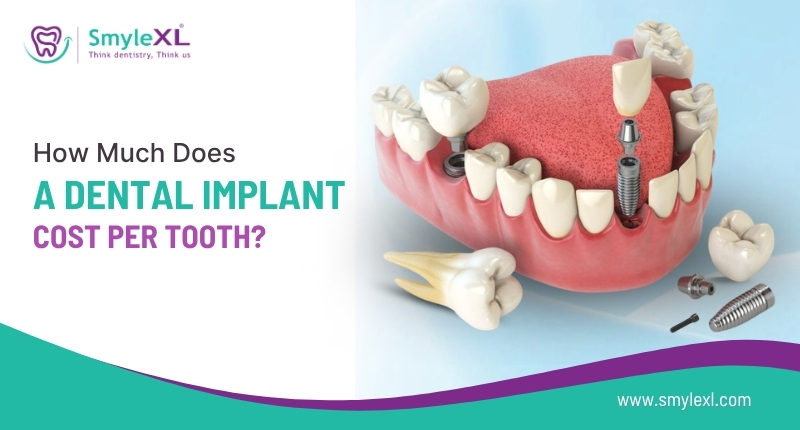
A single dental implant replaces both the root and the visible crown without affecting nearby healthy teeth.
The process usually involves:
- Consultation and evaluation : Your dentist first examines your teeth, gums, and jawbone using digital scans or X-rays. This helps determine whether you have sufficient bone support for the implant and allows for precise treatment planning.
- Implant placement: A titanium implant is carefully placed into the jawbone where the missing tooth once existed. This implant acts as an artificial tooth root and provides a strong foundation for the future crown.
- Healing period: Over the next few months, the implant gradually bonds with the jawbone through a natural process called osseointegration. This creates a secure and durable attachment that mimics the stability of a natural tooth root.
- Crown placement: Once healing is complete, a custom-made crown is attached to the implant. The crown is designed to match the color, shape, and size of your surrounding teeth, creating a seamless and natural-looking result.
Because the implant stands independently, it preserves surrounding tooth structure while restoring appearance and function.
Many patients choose this option because it offers a highly predictable way to replace a missing tooth.
What Exactly Are You Paying For?
When people hear the phrase dental implant cost, they often think they are paying for a single artificial tooth.
Actually, a dental implant consists of several components:
- Implant fixture placed inside the jawbone
- Connector component (abutment)
- Final crown
- Digital planning and imaging
- Surgical placement
- Follow-up care
A modern titanium implant acts as an artificial root that supports the replacement tooth.
Unlike temporary solutions, implants are designed to function as a long-term replacement for missing teeth.
This is one reason why dental implant treatment differs significantly from fillings, crowns, or extractions.
Why Does Dental Implant Cost Vary?
Not every implant case is identical.
Several factors influence the final dental implant cost.
1. Number of Missing Teeth
Replacing one tooth is very different from replacing several teeth.
A single dental implant generally involves one implant and one crown.
Patients missing multiple teeth may require a larger treatment plan.
2. Bone Quality
A healthy jawbone makes implant placement more straightforward.
However, some patients experience bone shrinkage after losing teeth. Additional procedures may sometimes be required before implant placement.
3. Implant Materials
Different implant systems are available today.
Many clinics use a titanium dental implant because titanium is strong, biocompatible, and has an excellent long-term success record.
4. Treatment Complexity
Simple cases typically require fewer procedures than complex restorations involving multiple missing teeth or bone loss.
This is why the overall cost of dental implants can vary from patient to patient.
What Can Increase Dental Implant Cost?
Certain situations may require additional procedures.
These can include:
- Bone grafting: If a tooth has been missing for a long time, the jawbone in that area may shrink due to a lack of stimulation. In such cases, a bone graft may be required to rebuild the bone and provide adequate support for the implant. This additional procedure can increase the overall treatment cost but improves the chances of long-term implant stability.
- Gum treatment: Healthy gums are essential for successful implant placement. If you have gum disease, inflammation, or infection, we recommend gum treatment before proceeding with the implant. Treating the gums first helps create a healthier environment for healing and reduces the risk of future complications.
- Additional imaging: Modern implant dentistry relies heavily on advanced diagnostics. Digital X-rays, CBCT scans, and 3D imaging allow us to evaluate bone quality, nerve locations, and implant positioning with greater precision. While these investigations add to the treatment cost, they significantly improve safety and accuracy.
- Complex surgical planning: Some implant cases are straightforward, while others require more detailed planning due to multiple missing teeth, bone loss, bite problems, or challenging anatomical conditions. Advanced surgical planning helps ensure precise implant placement and long-term success, which may influence the overall cost of dental implants.
These procedures are not needed for every patient, but they can influence the overall dental implant cost.
Why Can Waiting Become More Expensive?
It is tempting to delay treatment after losing a tooth.
After all, if the gap isn’t visible, why rush?
Unfortunately, missing teeth create changes inside the mouth over time.
1. Jawbone Changes Begin
- One major advantage of implants is the prevention of jawbone loss.
- Natural tooth roots stimulate the jawbone whenever you chew.
- Once a tooth is lost, the bone in that area gradually begins shrinking.
2. Neighboring Teeth Start Moving
- The gap created by a missing tooth often allows nearby teeth to drift.
- This can create bite problems and alignment changes.
- Implants support the protection of adjacent teeth by maintaining proper spacing.
3. Chewing Becomes Less Efficient
- Many patients unconsciously shift chewing to one side.
- Over time, this may affect overall oral function and comfort.
How Dentists Calculate Your Implant Cost?
Before providing an estimate, we at SmyleXL Dental Clinic in Kalyan West usually perform:
Oral Examination
A detailed assessment helps identify the condition of your teeth and gums.
Digital Imaging
Modern scans help evaluate bone levels and implant placement sites.
Treatment Planning
Every implant case is customized.
This detailed planning helps us to determine the exact dental implant cost based on your individual needs.
Hidden Costs People Often Forget
When evaluating dental implant cost, many patients focus only on the initial procedure.
However, long-term dental expenses also matter.
For example:
- Repairing a failing dental bridge
- Replacing worn removable appliances
- Managing shifting teeth
- Correcting bite problems
These additional expenses can accumulate over time.
This is why many dentists encourage patients to evaluate overall value rather than comparing treatment fees alone.
Why Many Patients View Implants as an Investment ?
Unlike temporary fixes, implants are designed to support long-term oral health.
They contribute to:
- Replacing missing tooth naturally
- Better oral function
- Improved appearance
- Adjacent teeth protection
- Reduced future dental complications
This makes implants one of the most comprehensive forms of restorative dental treatment available today.
Cheap Today, Expensive Tomorrow? Think Beyond the Initial Cost
The final dental implant cost depends on far more than the implant itself. Factors such as bone quality, treatment complexity, materials used, and individual oral health all play a role in determining the overall investment.
While alternatives like a dental bridge may work for some patients, implants offer unique advantages including stability, durability, permanent tooth replacement, and long-term support for oral health.
At SmyleXL Dental Clinic in Kalyan West, every implant treatment plan is customized according to your needs, helping you make an informed decision about the best solution for restoring your smile, comfort, and confidence for years to come.
FAQs
1. Is a dental implant better than a dental bridge?
Both treatments can replace a missing tooth, but they work differently. A dental bridge relies on the neighboring teeth for support, which often means those healthy teeth need to be reshaped. A dental implant, on the other hand, functions independently by replacing the missing root and tooth, helping preserve the natural structure of surrounding teeth. The best option depends on your oral health, bone support, and long-term goals.
2. How much does a single tooth implant cost in Kalyan West?
The cost of a single tooth implant in Kalyan West can vary depending on factors such as the implant brand, the quality of the crown, and whether additional procedures like bone grafting or gum treatment are required. Visit us at SmyleXL Dental Clinic for a detailed consultation on the best ways to obtain an accurate treatment estimate.
3. Can I get a dental implant if I smoke?
Yes, smokers can often receive dental implants, but smoking may increase the risk of healing complications and implant failure. Smoking can affect blood flow to the gums and slow down the bonding process between the implant and the jawbone. We always recommend reducing or stopping smoking before and after implant placement to improve treatment success.
4. Who cannot have dental implants?
Most adults are candidates for dental implants, but certain conditions may require additional evaluation or treatment first. Patients with uncontrolled diabetes, severe gum disease, inadequate jawbone support, heavy smoking habits, or certain medical conditions may need specialized care before implant placement. A thorough dental examination helps determine whether implants are the right option for you.