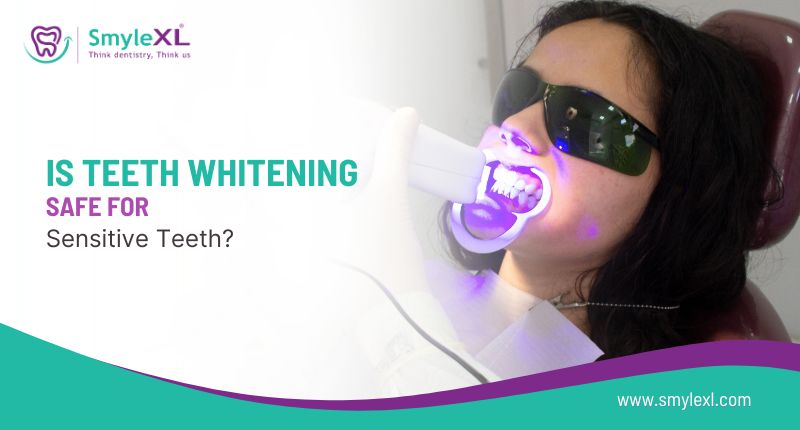

Have you ever scrolled through old photos and thought, “Wow, my smile looked so much brighter back then!” You sigh, look in the mirror, and wonder—“Why don’t my teeth look like that now?” But then reality hits: every time you sip on a cold soda or bite into an ice cream, your teeth sting. Sensitive teeth and teeth whitening? Sounds like a risky combination, right?
Also, as much as the morning tea or coffee is needed, the stains are unavoidable. Due to worn-out enamel, gum recession, or even genetic factors, your teeth are prone to stains. So the big question is—is teeth whitening treatment safe if you have sensitive teeth?
Let’s dive in and clear the confusion so you can make an informed decision without compromising your smile or comfort.
Table of Contents
ToggleWhy Sensitivity and Stains Often Go Hand-in-Hand
Tooth sensitivity is more common than most people realize. If your enamel (the outer protective layer) thins out or if your gums recede slightly, the softer dentin inside the tooth gets exposed. This makes your teeth react strongly to hot, cold, sweet, or acidic foods.
Now here’s the tricky part—these are often the same people who want whitening treatments the most. Coffee, tea, tobacco, and even regular aging can darken the enamel. Sensitive teeth plus dull color create a double challenge: You want a whiter smile, but you’re nervous about pain.
Is Teeth Whitening Treatment Safe for Sensitive Teeth?
The short answer: Yes, but with the right approach.
Professional teeth whitening treatment is designed to be safe even for patients with sensitivity, provided it is performed under the supervision of a dentist. Dentists use techniques to minimize discomfort, such as applying desensitizing gels before or after treatment.
Key factors that make whitening safe for sensitive teeth:
- Customized approach: Dentists examine the level of sensitivity before recommending a treatment.
- Controlled strength: Professional whitening uses regulated peroxide levels to avoid damage.
- Protective measures: Special gels, fluoride varnishes, or protective shields are applied.
- Gradual process: Whitening can be done in stages to reduce sensitivity.
So, instead of a simple “yes or no,” the actual answer depends on how the treatment is performed and who performs it.
Professional vs. DIY Whitening: Why It Matters More for Sensitive Teeth
When you have tooth sensitivity, the how matters just as much as the what.
Professional Whitening (at clinics like SmyleXL):
- Safe for sensitive teeth when performed under expert supervision
- Immediate and long-lasting results
- Dentist supervision ensures no harm to enamel or gums.
DIY Whitening Kits or Home Remedies:
- May worsen sensitivity if used incorrectly
- Lack of professional guidance
- Results are unpredictable
Many people in India try home remedies like baking soda, lemon juice, or charcoal for whitening. While these may give a temporary glow, they often erode enamel and increase sensitivity.
How Dentists at SmyleXL Make Whitening Comfortable for Sensitive Teeth
Dental clinics like SmyleXL follow a step-by-step approach to ensure whitening is effective and comfortable:
- Pre-treatment check-up – The dentist examines enamel thickness, gum health, and existing sensitivity levels.
- Desensitizing agents – Special gels or fluoride varnishes may be applied before the whitening begins.
- Controlled whitening gels – The peroxide concentration is adjusted so it’s strong enough to remove stains but gentle enough for sensitive teeth.
- Protective barriers – Gums and lips are shielded during the procedure.
- Post-care advice – Patients are guided on what to eat, drink, and avoid immediately after treatment to prevent irritation.
This approach ensures that whitening doesn’t worsen sensitivity—it actually makes patients feel more confident about their smile.
Tips to Reduce Sensitivity After Whitening
If you’re planning a teeth whitening treatment, here are a few lifestyle tweaks to keep things comfortable:
- Switch to a sensitivity toothpaste before and after treatment.
- Avoid hot and cold extremes (like ice cream or steaming soups) for 24–48 hours post-treatment.
- Stay away from staining foods such as coffee, tea, red wine, or beetroot immediately after whitening.
- Follow fluoride rinses or gels recommended by your dentist.
- Stay hydrated—water helps wash away any mild irritants.
These simple steps reduce post-whitening sensitivity and keep your results long-lasting.
Who Should Avoid Teeth Whitening?
While whitening is generally safe, there are certain cases where it may not be the best idea:
- People with severe gum recession or untreated cavities.
- Individuals with cracked teeth or exposed roots.
- Pregnant or lactating women (due to precautionary reasons).
- Patients with unrealistic expectations—whitening won’t change natural tooth color, only remove stains.
If you fall into any of these categories, your dentist will guide you toward alternative cosmetic treatments like veneers or bonding.
Frequently Asked Questions (FAQs)
- Does teeth whitening make sensitivity worse?
Not necessarily. When performed by a professional, protective gels and shields are applied to reduce discomfort throughout the process. While some people may notice slight, short-term sensitivity afterward, it usually fades quickly. With the right aftercare, these effects are minimal and easy to manage.. - How long do the results of professional teeth whitening last?
On average, the results last 12–18 months, depending on your diet and oral hygiene habits. Regular intake of coffee, tea, or tobacco can cause faster discoloration. If you maintain good oral care and follow your dentist’s advice, your brighter smile will last much longer. - Can whitening damage my enamel permanently?
No, professional teeth whitening does not damage enamel when supervised by a dentist. The procedure only removes surface stains without weakening or thinning the tooth structure. This makes it a safe cosmetic option even for those with sensitivity. - How soon can I eat normally after whitening?
It’s best to wait 24–48 hours before eating or drinking anything dark or strongly colored, like coffee, curries, or red wine. During this period, stick to light-colored foods such as rice, bread, bananas, and milk. This helps prevent stains from settling on freshly whitened teeth. - What’s the best option for someone with severe sensitivity?
For patients with excessive sensitivity, dentists often recommend a step-by-step whitening plan using lower-concentration gels across multiple sessions. This slower approach reduces the chances of irritation and allows the teeth to adapt. Combining it with desensitizing products makes the process both safe and comfortable.
A Brighter Smile Without the Pain
Teeth whitening treatment is safe for sensitive teeth when performed under professional supervision. The key is personalization, caution, and expert guidance.
At SmyleXL, our dentists combine advanced whitening techniques with protective care so you don’t have to choose between comfort and confidence. Whether you sip endless cups of chai, enjoy street food, or simply want to shine in your selfies, your smile deserves safe and effective care.
Ready to brighten your smile safely? Book your teeth whitening treatment today with SmyleXL and step out with the confidence you deserve!