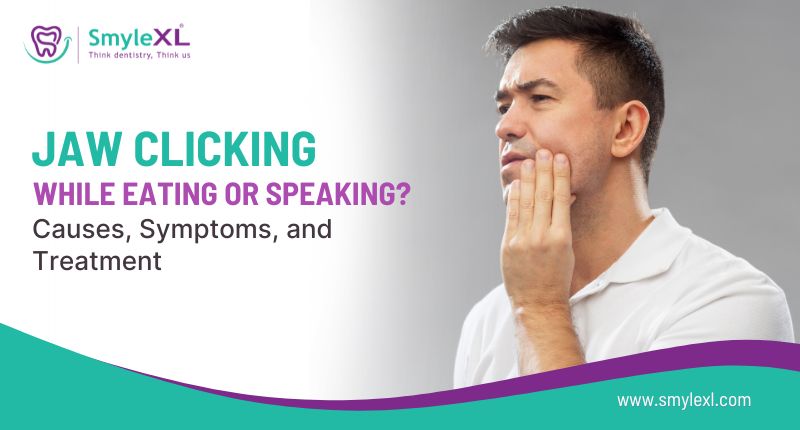

Nearly one in three people experiences a clicking or popping sound in the jaw at some point in life. Most don’t talk about it. Many don’t even think of it as a problem.
It’s just a small click while chewing.
A faint pop when yawning.
Something that feels easy to ignore.
Your jaw still opens. You can still eat. You can still speak. So it must be normal… right?
Not always.
For many people, this is how their search for Jaw Pain Treatment in Ahmednagar begins, not with pain, but with a sound that refuses to stay quiet.
Jaw clicking is common. But it isn’t always “normal.” Some clicks are harmless. Others are gentle warnings from your jaw joint asking for attention. Understanding what your jaw is trying to tell you is the first step toward keeping it smooth, comfortable, and pain-free.
Table of Contents
ToggleWhat Is Jaw Clicking?
Your jaw doesn’t open and close by chance. It works because of a small but powerful joint on each side of your face, right in front of your ears. This joint is called the temporomandibular joint, or TMJ.
Every time you:
- Chew food
- Speak
- Yawn
- Laugh
- Sing in the shower
…this joint moves.
A jaw clicking sound happens when the parts of this joint don’t glide as smoothly as they should. Instead of moving in a soft, silent way, they shift slightly out of place and snap back in. That movement creates the sound.
Think of it like a door that still opens and closes, but the hinge makes noise. The door works, but something isn’t moving as smoothly as it should.
Sometimes, this sound appears without pain and fades on its own. Other times, it stays, repeats, and slowly turns into discomfort. That’s where conditions like TMJ disorder begin to show up.
Jaw clicking is your body’s way of saying, “Something here is under stress.”
Symptoms That Often Come With Clicking
A clicking jaw rarely travels alone. It brings small companions that feel easy to ignore at first.
You may notice:
- Pain near the ear
- Tightness in the jaw
- Jaw pain while chewing
- Difficulty opening your mouth fully
- A tired jaw after talking for long
- Headaches near the temples
- Neck or shoulder stiffness
- A jaw that feels “stuck” sometimes
At first, they feel mild. You adjust. You chew on the other side. You avoid opening wide.
But the jaw is not meant to live under constant strain.
How Jaw Clicking Is Diagnosed?
Jaw clicking is not guessed. It’s understood.
At SmyleXL Dental Clinic, every step of Jaw Pain Treatment in Ahmednagar begins with listening, both to you and to your jaw.
When you visit a dental clinic for this issue, the process is simple and gentle. It usually starts with a conversation:
- When did the sound begin?
- Does it hurt?
- Is it worse while eating, yawning, or speaking?
- Do you grind your teeth at night?
- Does your jaw ever feel stuck?
Then comes a physical check. The dentist gently feels the jaw while you open and close your mouth, listens for the sound, checks your bite, and looks at how smoothly your jaw moves.
In some cases, an X-ray or scan may be advised, not because it’s serious, but because it helps understand:
- The position of the jaw joint
- How the bones are moving
- Whether there is joint wear or imbalance
Diagnosis is about understanding movement, not hunting for disease. Most jaw problems are functional, not dangerous. They just need the right direction.
Treatment Options That Actually Help
Jaw clicking is rarely treated with one dramatic step. It’s corrected gently, in layers.
At SmyleXL Dental Clinic, our approach to Jaw Pain Treatment in Ahmednagar always begins with understanding why your jaw is clicking. Once the cause is clear, care becomes simple, targeted, and comfortable.
Depending on the cause, treatment may include:
1. Bite Correction
If your teeth don’t meet evenly, your jaw keeps adjusting. Aligning the bite reduces joint stress and smooths movement.
2. Night Guards
For those who grind or clench, a simple night guard protects the joint while you sleep. It allows muscles to relax and joints to rest.
3. Jaw Exercises
Small, guided movements strengthen and calm the jaw muscles. These improve flexibility and reduce stiffness.
4. Muscle Relaxation
Warm compresses, gentle massage, and posture correction often reduce tightness around the joint.
5. Short-Term Medication
In some cases, mild anti-inflammatory support helps calm irritation.
Treatment is never about force. It’s about letting the jaw return to its natural rhythm.
Daily Habits That Calm Your Jaw
Small changes bring the biggest relief.
- Avoid very hard or chewy foods
- Reduce gum chewing
- Don’t open your mouth too wide while yawning
- Keep your teeth slightly apart when resting
- Use warm compresses during stiffness
- Sit straight, jaw posture follows spine posture
- Try gentle jaw stretches once or twice a day
Pro Tip:
Your jaw loves routine. Calm habits repeated daily work better than one big effort.
FAQs
1. Can jaw clicking heal on its own?
Sometimes, yes. If it’s stress-related or muscle-based, rest and habit changes can reduce it. But if clicking is linked to bite imbalance or joint misalignment, it often stays. Early guidance prevents long-term discomfort.
2. Is jaw clicking always related to TMJ disorder?
Not always. A sound alone doesn’t mean TMJ disorder. But persistent clicking with pain, stiffness, or locking is often linked to it.
3. Why does my jaw click more while eating?
Eating requires wide movement and pressure. If the joint isn’t gliding smoothly, this motion exaggerates the sound and strain.
4. Does jaw clicking cause headaches?
Yes. The jaw is connected to facial and head muscles. Constant strain can trigger tension headaches and temple pain.
5. When should I seek Jaw Pain Treatment?
If clicking lasts more than a few weeks, or pain joins the sound, it’s time. Early care keeps the joint flexible and prevents stiffness from settling in.
When a Small Sound Means Something More
Your jaw works quietly every day, while you eat, speak, smile, and yawn. When it begins to click, it isn’t complaining loudly. It’s just asking for balance.
At SmyleXL Dental Clinic, we help people understand their jaw, not fear it. Whether it’s muscle tension, bite imbalance, or early TMJ stress, the right guidance brings calm back.
If that small click has been following you, this is your sign.
Reach out for Jaw Pain Treatment in Ahmednagar at SmyleXL Dental Clinic and give your jaw the smooth, silent movement it deserves.