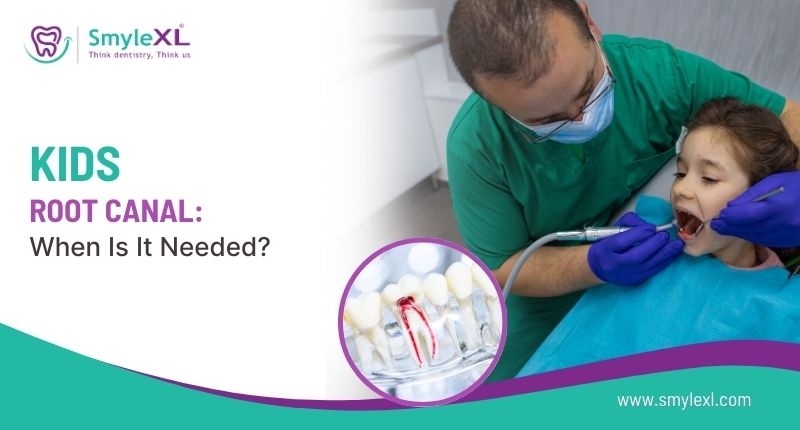

Think of a child’s tooth like a tiny house with many rooms inside it. The enamel is the strong outer wall, the dentin makes up the inner structure, and the pulp is like the main power room where the nerves and blood supply stay. When the “power room” becomes infected or damaged, simply repairing the walls from outside isn’t enough; the problem must be fixed from within. That’s essentially what happens with a kids root canal, a treatment meant to save the tooth rather than remove it.
Many parents feel anxious when a dentist recommends this procedure for their child. But when handled gently and at the right time, a root canal for children is safe, effective, and important for long-term dental health. At SmyleXL Dental Clinic, we help parents understand when a child really needs a root canal in Kondhwa, why the treatment is necessary, and how it helps prevent deeper problems as the child grows
Table of Contents
ToggleWhy Do Children Need a Root Canal? Understanding the Basics
A root canal for kids, also known as pulp therapy, pulpotomy, or pulpectomy, is needed when the soft inner part of the tooth (the pulp) becomes infected or inflamed. This can happen due to:
- Deep cavities
- Dental trauma
- Cracks or fractures
- Untreated tooth decay
- Repeated dental work on the same tooth
Baby teeth may fall out eventually, but they must remain healthy till the right age to ensure:
- Proper chewing
- Normal jaw growth
- Space maintenance for permanent teeth
- Clear speech development
- Healthy habits around eating and oral care
This is why saving a damaged baby tooth is often better than removing it prematurely.
Common Symptoms That May Indicate a Needed Root Canal
Parents may notice symptoms long before the child understands how to explain them. Keep an eye out for:
- Persistent Toothache
If your child keeps complaining of the same tooth hurting, especially while eating or at night, the pulp may be infected.
- Sensitivity to Hot or Cold
Extreme sensitivity that doesn’t fade quickly can be a sign of nerve involvement.
- Swelling or Tender Gums
Swollen, red, tender, or puffy gums near a tooth indicate an underlying infection.
- Darkening of the Tooth
A tooth that turns brown, gray, or dark yellow may have lost vitality.
- Abscess or Pus Formation
Small pimples on the gums (fistula) may appear when infection is present.
- Pain When Biting
Discomfort while chewing or applying pressure can be a sign of deep decay.
- Loose Tooth at an Unusual Age
A baby tooth that becomes loose too early due to infection needs attention.
If you notice any signs, visit SmyleXL Dental Clinic for a root canal in Kondhwa.
Types of Root Canal Treatments for Kids
There isn’t just one type of root canal procedure for children. Depending on the severity of infection, the dentist may recommend:
- Pulpotomy (Partial Removal of Affected Pulp)
Used when the infection is limited to the top portion of the pulp. The unhealthy part is removed, and the remaining healthy pulp is preserved.
- Pulpectomy (Complete Removal of Pulp)
Used when the entire pulp, including roots, is infected. The canals are cleaned, shaped, and filled, similar to an adult root canal.
- Apexogenesis
Done to help the root continue developing in young permanent teeth.
- Apexification
If the root cannot continue its natural growth, this procedure helps close the root tip artificially.
Your dentist at SmyleXL Dental Clinic will recommend the right approach for a root canal in Kondhwa based on X-rays and clinical evaluation.
What Causes Severe Tooth Decay in Children?
Understanding the cause helps parents prevent future issues. The most common reasons include:
- Frequent Snacking
Sticky, sugary snacks can linger longer on kids’ teeth.
- Night-Time Bottle or Feeding
Milk or sweet liquids before bed can cause early childhood caries.
- Poor Brushing Habits
Children often miss back teeth, leading to decay.
- Weak Enamel
Some kids naturally have softer enamel, increasing cavity risk.
- Dental Trauma
A fall or injury can disturb the pulp even without visible cracks.
- Genetics
Tooth structure and enamel strength can run in families.
Knowing these triggers can help reduce the risk of needing a root canal.
How Dentists Diagnose When a Child Needs a Root Canal
At SmyleXL Dental Clinic, we use a step-by-step evaluation to determine if your child truly needs this treatment:
- Visual examination – checking for cavities, swelling, or discoloration
- Gentle probing – identifying sensitivity or pain spots
- X-rays – assessing the depth of decay and pulp involvement
- Percussion test – tapping the tooth to check for root irritation
- Thermal testing – checking the nerve response
These tests ensure the diagnosis is accurate and the treatment chosen is appropriate.
Step-by-Step Root Canal Procedure for Kids
Parents often feel more at ease when they know exactly what will happen. Here’s a simplified breakdown:
1. Numbing the Area
The dentist uses a gentle local anesthetic to make the process pain-free.
2. Removing Decay
The decayed portion of the tooth is removed to access the pulp.
3. Cleaning the Pulp Chamber
Depending on the type of root canal, the infected pulp is partially or fully removed.
4. Disinfecting the Area
Special materials are used to clean and prevent future infection.
5. Filling the Root Canals
The empty space is filled with a biocompatible material suited for baby teeth.
6. Sealing the Tooth
A stainless steel crown or a strong filling is placed to protect the treated tooth.
Crowns are often recommended because children chew with greater force, and baby teeth with large fillings need extra protection.
Benefits of Root Canal Treatment for Children
✔ Prevents spreading infection
✔ Avoids early tooth loss
✔ Helps the child chew properly
✔ Protects developing permanent teeth
✔ Reduces pain
✔ Supports proper speech development
Preventing Future Root Canal Needs: Parent Tips
Kids are naturally prone to sweet cravings and inconsistent brushing habits, but these tips can help prevent decay:
- Brush Twice a Day
Use a child-friendly brush and fluoride toothpaste.
- Floss Daily
Especially between the back teeth.
- Limit Sugary Foods
Avoid sticky candies, chocolates, and sugary drinks.
- No Bedtime Bottle
Only water after brushing at night.
- Regular Dental Checkups
Every 6 months at SmyleXL Dental Clinic.
- Use Sealants
Sealants protect teeth from decay-causing food particles.
- Encourage Healthy Snacks
Cheese, fruits, and nuts instead of chocolates or chips.
When Should You Visit a Dentist Immediately?
Seek urgent care if you notice:
- Continuous tooth pain
- Swelling near the tooth or jaw
- Pus formation
- Fever accompanying a toothache
- Sudden tooth discoloration
- Trauma from a fall or injury
Prompt treatment prevents complications.
Why Choose SmyleXL Dental Clinic for Kids Root Canal Treatment?
At SmyleXL Dental Clinic, we focus on:
✔ Gentle, child-friendly care
Our team is trained in pediatric behavior management.
✔ Accurate diagnosis
Modern diagnostic tools ensure the right treatment decision.
✔ Comfortable procedures
We prioritize painless approaches.
✔ Detailed parent guidance
We explain every step so parents feel confident and informed.
✔ Long-term results
We ensure the treated tooth stays healthy until it naturally falls out.
We make dental visits pleasant for children and stress-free for parents.
A root canal for kids may sound overwhelming, but it is often the most effective way to save an infected baby tooth and protect your child’s long-term oral health. With timely care and expert evaluation at SmyleXL Dental Clinic, a root canal in Kondhwa becomes a comfortable, efficient, and highly beneficial treatment.
If your child has tooth pain or signs of decay, don’t wait; early intervention makes treatment easier and ensures healthier smiles for years to come.