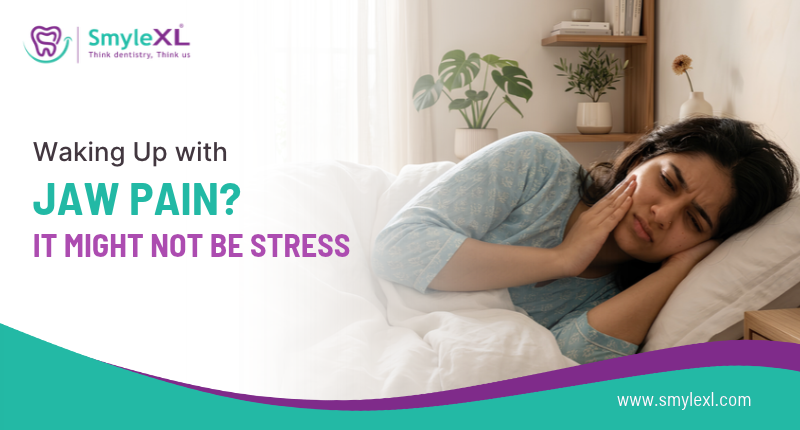


You wake up, stretch, maybe check your phone, and then your jaw reminds you it exists. Not gently. There’s a stiffness, a dull ache, maybe a clicking sound when you try to yawn. You’ve been horizontal for eight hours doing absolutely nothing, and somehow your jaw is the most exhausted thing in the room.
It’s a strange kind of tired, the kind that makes you wonder what exactly was happening in there while you were supposed to be resting. The answer, for a lot of people, is quite a bit. Clenching, grinding, holding tension in ways the body doesn’t announce until morning, and by then, the damage for the night is already done.
Morning jaw stiffness is more common than most people realize, and more treatable than most people expect. Here’s what’s actually going on, and what jaw pain treatment looks like depending on what’s causing it.
Table of Contents
ToggleWhy Does Jaw Stiffness Happen Overnight?
Your jaw doesn’t clock out when you sleep. For many people, it’s working overtime; clenching, grinding, or holding tension in ways that leave the muscles sore and stiff by morning.
The most common culprits:
Teeth Grinding (Bruxism)
Bruxism is the habit of grinding or clenching teeth, usually during sleep, without awareness. The jaw muscles work through the night under sustained tension, and by morning, they’re essentially fatigued. Teeth grinding treatment addresses both the habit and the damage it causes to teeth and joints.
Stress-related jaw clenching is the most common trigger; the jaw holds tension the way shoulders do, except you can’t stretch it out in the elevator.
Temporomandibular Joint Issues
The temporomandibular joint, the hinge connecting the jaw to the skull, is one of the most complex joints in the body. Temporomandibular joint pain occurs when this joint is inflamed, misaligned, or under chronic stress. Jaw joint inflammation from TMJ issues produces stiffness, clicking, and sometimes limited mouth opening that’s most pronounced in the morning.
Sleep Position
Sleeping on your side with pressure on the jaw, particularly with a firm pillow, can compress the joint and surrounding muscles through the night. The result is jaw discomfort in the morning, even in people without underlying TMJ issues.
Bite Misalignment
When the upper and lower teeth don’t meet evenly, the jaw muscles compensate constantly, even during sleep. This sustained, uneven muscle activity is a significant contributor to morning stiffness and the need for jaw muscle pain relief.
How to Know If It’s Serious
Morning stiffness that resolves within 20–30 minutes and doesn’t recur throughout the day is usually muscular; manageable with home remedies vs professional care approaches, depending on frequency.
Seek jaw pain treatment sooner rather than later if:
- Stiffness is accompanied by significant pain or clicking
- You can’t fully open your mouth in the morning
- Headaches, ear pain, or neck tension accompany the jaw symptoms
- Teeth are visibly wearing down or becoming sensitive
- Symptoms have been present for more than a few weeks
Treatment Options: From Home Remedies to Professional Care
Home Remedies and Self-Care
Jaw stiffness remedies at home are a reasonable starting point for mild, occasional symptoms:
- Jaw exercises: gentle stretching and range-of-motion exercises help restore improved jaw mobility and reduce morning stiffness over time
- Warm compress applied to the jaw for 10–15 minutes reduces jaw joint inflammation and loosens tight muscles
- Avoiding hard, chewy foods during flare-ups reduces the load on an already stressed joint
- Jaw pain relief from anti-inflammatories can manage acute discomfort
Home remedies vs professional care is a reasonable consideration for mild cases, but if symptoms recur consistently, professional assessment is the more efficient path.
Night Guards and Occlusal Splints
A custom night guard or occlusal splint is the most commonly prescribed solution for bruxism and stress-related jaw clenching. Worn during sleep, it creates a barrier between the upper and lower teeth, reducing grinding force and allowing the jaw muscles to rest in a more neutral position.
The difference between a custom occlusal splint from a dentist and an over-the-counter guard is significant; fit affects both comfort and effectiveness. A poorly fitting guard can sometimes worsen symptoms.
Physical Therapy
Physical therapy vs surgery is rarely a difficult choice for most TMJ patients; physical therapy comes first, surgery almost never. A physiotherapist experienced with jaw conditions uses manual therapy, targeted jaw exercises, and posture correction to address the muscular and joint components of temporomandibular joint pain.
Improved jaw mobility and reduced jaw stiffness are consistent outcomes with a structured physiotherapy program for mild to moderate TMJ issues.
Dental Treatment
Where bite misalignment is contributing to the problem, jaw pain treatment may involve dental work like selective reshaping of tooth surfaces, orthodontic correction, or restorations that improve how the bite comes together. This is a longer-term solution that addresses the structural cause rather than managing symptoms.
Advanced Therapies
For persistent, severe temporomandibular joint pain that hasn’t responded to conservative treatment, options include Botox for jaw muscle pain relief by relaxing the overactive muscles, and, in rare cases, surgical intervention. Between physical therapy vs surgery, surgery is genuinely the last resort and is required in a small minority of cases.
What Does Jaw Pain Treatment Cost at SmyleXL Dental Clinic?
At SmyleXL Dental Clinic on Nashik Road, Nashik, here’s what jaw pain treatment typically costs:
| Treatment | Approximate Cost |
| X-Rays & Imaging | ₹500 – ₹3,000 |
| Custom night guard / occlusal splint | ₹5,000 – ₹15,000 |
| Dental work (bite correction) | ₹1,000 – ₹15,000 |
| Advanced TMJ / orthodontic therapies | ₹35,000 – ₹2,00,000 |
TMJ treatment cost at the conservative end, a custom splint and follow-up, is manageable for most patients. Safe jaw pain management, starting with the least invasive option first, is always the approach at SmyleXL Dental Clinic.
Non-Invasive Options First, Always
Here’s something worth knowing before anxiety sets in about temporomandibular joint pain: the overwhelming majority of morning jaw stiffness cases never require anything surgical, injected, or particularly dramatic. Non-invasive jaw treatment, like a well-fitted night guard, consistent jaw exercises, and addressing stress-related jaw clenching through lifestyle adjustments, resolves most presentations completely.
The key is not waiting too long. Mild stiffness that’s addressed early stays mild. Mild stiffness that’s ignored for a year has a habit of becoming something that needs more than a splint.
Long-term jaw pain relief comes from identifying the cause, not just managing the symptom. A thorough assessment at SmyleXL Dental Clinic in Nashik maps exactly what’s driving the stiffness and builds a safe jaw pain management plan around it — starting with the simplest, least invasive option and only escalating if necessary.
Frequently Asked Questions
How to deal with jaw pain?
Start with jaw pain relief through warm compresses, jaw exercises, and soft foods to reduce joint load. For persistent symptoms, a custom night guard or occlusal splint addresses bruxism and stress-related jaw clenching effectively. Safe jaw pain management always starts with the least invasive option. Professional jaw pain treatment is the next step when home care isn’t enough.
How to relax your jaw muscles?
Jaw stiffness remedies include warm compresses, gentle jaw exercises, and consciously releasing tension throughout the day, like the tongue resting on the roof of the mouth, teeth slightly apart. For chronic jaw muscle pain relief from bruxism, a custom occlusal splint worn at night prevents the clenching that keeps muscles in a constant state of tension.
What is the 3 finger test for jaw pain?
The three-finger test checks mouth opening range; if you can’t comfortably fit three stacked fingers vertically between your upper and lower front teeth, your jaw mobility is below the normal range. Restricted opening is a common sign of temporomandibular joint pain or significant jaw joint inflammation and warrants professional jaw pain treatment.
What is the main reason for jaw pain?
Bruxism and temporomandibular joint pain are the two most common causes of morning jaw stiffness and chronic jaw discomfort. Stress-related jaw clenching during sleep keeps muscles under sustained tension through the night. Bite misalignment and jaw joint inflammation are also significant contributors, often occurring alongside grinding rather than independently.
Can sleeping position affect jaw pain?
Yes, sleeping on your side with direct pressure on the jaw compresses the temporomandibular joint and surrounding muscles through the night, contributing to morning stiffness even without underlying bruxism. Back sleeping reduces this pressure significantly. Combined with a custom night guard for those who grind, adjusting sleep position is one of the more effective jaw discomfort remedies for positional contributors to morning stiffness.