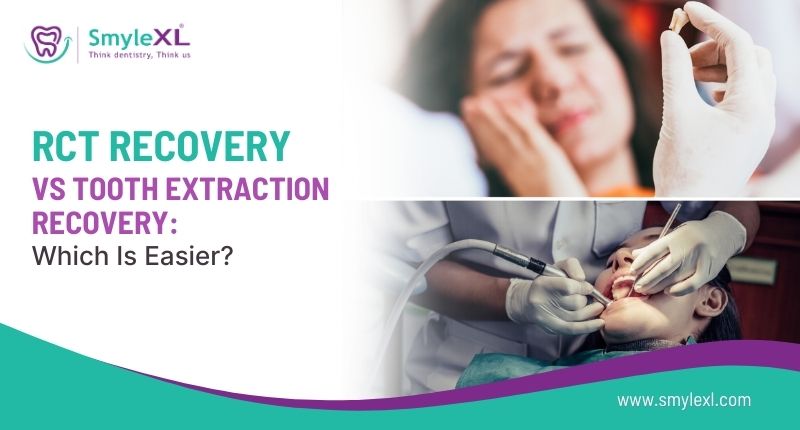

When you’re facing a dental issue, whether it’s a severe tooth infection, a painful cavity, or tooth damage, the idea of undergoing a procedure can be overwhelming. Two common solutions for these dental problems are root canal treatment (RCT) and tooth extraction. But, of course, a big question follows:
Which one is easier to recover from?
If you’re considering SmyleXL Dental Clinic for tooth extraction or root canal treatment in Kondhwa, you probably want to know which procedure involves less pain, downtime, and post-treatment care. Both treatments are highly effective, but they involve different recovery experiences. We’ll guide you through both options, ensuring you make an informed decision based on your specific needs.
Table of Contents
ToggleWhat Is Root Canal Treatment (RCT)?
Root Canal Treatment (RCT) is a surgical procedure performed to treat infections in the pulp (the soft tissue inside the tooth). The goal of RCT is to save a tooth that is severely decayed or infected, preventing the need for an extraction.
How Root Canal Treatment Works:
- Anesthesia: Local anesthesia is administered to numb the area around the infected tooth.
- Pulp Removal: The infected pulp is carefully removed from the inside of the tooth.
- Cleaning and Sealing: The hollow space is thoroughly cleaned and sealed to prevent future infections.
- Restoration: In most cases, a crown or filling is placed on top to restore the tooth’s structure and function.
What Is Tooth Extraction?
Tooth extraction is the process of removing a tooth from its socket in the bone. This procedure is typically performed when a tooth is too damaged to be repaired with a filling or root canal, or if it’s causing other dental issues such as crowding.
How Tooth Extraction Works:
- Anesthesia: Local anesthesia (or sedation) is used to numb the area and keep you comfortable during the extraction.
- Tooth Removal: The dentist will carefully remove the tooth, and in some cases, surgical intervention may be necessary if the tooth is impacted or broken.
- Post-Extraction Care: The dentist will clean the extraction site and provide care instructions for the healing process.
Recovery from Root Canal Treatment vs Tooth Extraction
1. Pain and Discomfort
Root Canal Treatment Recovery:
- After the procedure, most patients experience mild discomfort or soreness for a few days. This is due to the inflammation and irritation of the surrounding tissue after the procedure.
- Pain management: pain relievers are typically enough to manage any discomfort. If your tooth was severely infected, you might experience a bit more pain in the first 24 hours, but this usually subsides quickly.
- Duration: Pain and discomfort after a root canal treatment are usually short-lived, and most people feel normal within 3–5 days.
Tooth Extraction Recovery:
- After extraction, some swelling, pain, and bleeding are normal, especially within the first 24 hours. The level of pain depends on the complexity of the extraction.
- Pain management: Depending on how complicated the extraction is, your dentist may prescribe stronger painkillers. Medications may still work if the extraction was simple. For more complicated extractions (like wisdom teeth), pain may persist for a week or longer.
- Duration: Healing time after a tooth extraction can take anywhere from 7 days to 2 weeks for normal recovery. However, full bone healing can take several months.
Winner: Root Canal Treatment tends to have less pain and a quicker recovery time compared to tooth extraction.
2. Swelling and Bruising
Root Canal Treatment Recovery:
- Swelling and bruising are typically minimal after a root canal treatment.
- Most patients experience slight swelling around the treated area, which usually resolves within a few days.
Tooth Extraction Recovery:
- Swelling and bruising are more common and tend to be more pronounced after a tooth extraction.
- The level of swelling can depend on the tooth being removed (for example, wisdom teeth may cause more swelling). Applying ice packs to the affected area can help reduce swelling in the first 24 hours.
Winner: Root Canal Treatment tends to have less swelling and bruising compared to tooth extraction.
3. Diet and Eating Restrictions
Root Canal Treatment Recovery:
- After a root canal, you may need to avoid chewing on the treated tooth until a permanent crown or restoration is placed (usually within a week or two).
- You can eat soft foods right after the procedure, but be cautious to avoid anything too hot or cold while the tooth heals.
Tooth Extraction Recovery:
- After an extraction, you will need to avoid eating solid foods for a few days. Soft foods like mashed potatoes, smoothies, and yogurt are ideal.
- You should also avoid drinking through a straw, as the suction can dislodge the blood clot and delay healing.
Winner: Root Canal Treatment offers a quicker return to normal eating habits compared to tooth extraction.
4. Healing Time
Root Canal Treatment Recovery:
- Most patients can return to normal activities after a day or two. Once the tooth is restored with a permanent crown, the treated tooth should feel like any other tooth in your mouth.
- Full healing of the surrounding tissue takes a few days, but most people feel comfortable returning to work or school after a short rest.
Tooth Extraction Recovery:
- Full recovery from a simple extraction takes around 1–2 weeks, but you can return to normal activities in 48 to 72 hours. For more complex extractions, like wisdom teeth or surgical extractions, recovery can take several weeks.
- You will need to follow strict aftercare instructions, such as avoiding smoking and maintaining proper oral hygiene, to prevent infection.
Winner: Root Canal Treatment tends to have a faster healing time and requires less downtime compared to tooth extraction.
5. Risk of Infection and Complications
Root Canal Treatment Recovery:
- The risk of infection after a root canal treatment is low if the procedure is done correctly and the tooth is sealed properly.
- If the tooth is not restored with a crown or filling, it may become vulnerable to infection, but this can be avoided with proper aftercare.
Tooth Extraction Recovery:
- Tooth extraction recovery is generally straightforward, especially when you follow your dentist’s aftercare instructions. The risk of infection is low, and by keeping the extraction site clean and protected, you can prevent complications like dry socket, ensuring a healthy and quick recovery.
Winner: Both Root Canal Treatment and tooth extraction offer low risks of complications when proper aftercare is followed, ensuring a smooth and quick recovery with minimal discomfort.
Which Is Easier? Root Canal Treatment or Tooth Extraction?
While both procedures are effective in treating dental issues, Root Canal Treatment generally offers a quicker recovery, less pain, and fewer complications than tooth extraction. However, the choice between these two treatments ultimately depends on your situation.
- If your tooth is still salvageable and can be preserved, a root canal is the preferred choice as it saves the tooth and maintains its function.
- If the tooth is too damaged or infected, a tooth extraction may be necessary, though it comes with a longer recovery period.
At SmyleXL Dental Clinic, we understand the importance of making the right choice for your dental health. Our team of experts provides comprehensive consultations to help you decide whether Root Canal Treatment in Kondhwa or tooth extraction is the best option for you.
All You Need to Know!
If you’re facing a tooth issue and wondering whether Root Canal Treatment in Kondhwa or extraction is the right solution for you, don’t wait. Book an appointment with SmyleXL Dental Clinic today and let our team guide you toward the best treatment for your oral health.
Call us now or schedule your consultation online! We’re here to help you make an informed choice and ensure your recovery is as smooth as possible.