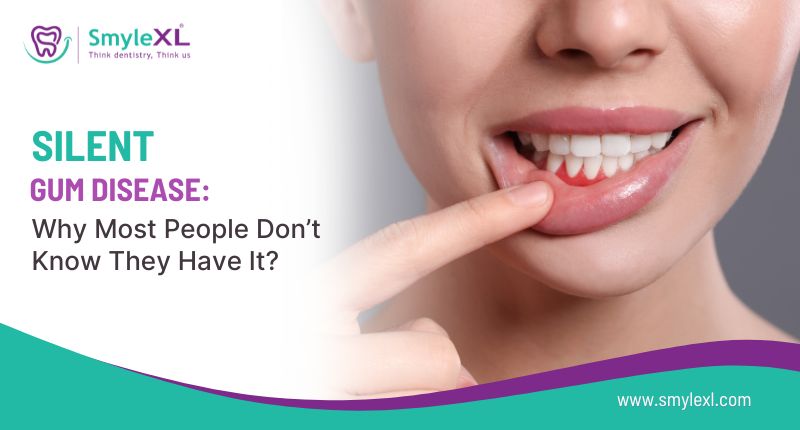

When most people think about dental health, they often focus on cavities, toothaches, and whitening treatments, but what about the health of your gums? Did you know that gum disease (also called periodontal disease) is one of the most prevalent dental conditions worldwide?
The surprising part? Many people don’t even know they have it, because it can be silent.
Gum disease develops slowly and without obvious symptoms, which means it can be silently damaging your oral health without you even realizing it. If left untreated, gum disease can lead to tooth loss, bad breath, and even contribute to other serious health problems like heart disease and diabetes.
At SmyleXL Dental Clinicin Davanagere, we educate everyone about the dangers of silent gum disease and how gum treatment can help. In this blog, we’ll uncover why gum disease often goes unnoticed, what to look out for, and how early intervention can make all the difference in preserving your smile and your health.
Table of Contents
ToggleWhat Is Gum Disease?
Gum disease, also called gingivitis or periodontitis, is a condition where the gums become inflamed and infected. The problem is that the symptoms aren’t always noticeable in the early stages, which is why it’s often called “silent.”
Gingivitis (Early Stage of Gum Disease):
- Inflammation of the gums caused by plaque build-up around the teeth.
- Gums may look slightly swollen, reddened, or bleed when brushing.
- At this stage, it’s reversible with proper care.
Periodontitis (Advanced Stage of Gum Disease):
- More severe inflammation and infection that affects the supporting structures of the teeth, including the bone.
- Gums begin to recede, and pockets form between teeth and gums, which can harbor bacteria.
- In this stage, tooth loss can occur if left untreated.
Why Is Gum Disease Often Silent?
One of the biggest reasons gum disease is so silent is that the early signs are often subtle and easy to miss. It’s very common for people to think a little gum bleeding or bad breath is normal or just a minor issue that doesn’t require a visit to the dentist.
Here are a few reasons why gum disease often goes undetected:
- No Pain in the Early Stages
- Unlike tooth decay, which can cause sharp pain when it becomes severe, gum disease is usually painless in the beginning. Even if your gums are inflamed or bleeding, it may not hurt, and that’s why people often ignore it.
- Slow Development
- Gum disease doesn’t happen overnight. It develops slowly over months or even years, giving your body time to adapt and for symptoms to go unnoticed. This is why people can have mild to moderate gum disease without realizing it.
- Common “Unnoticed” Symptoms
- While some signs of gum disease, such as redness or swelling, might seem obvious, others like bad breath (halitosis), gum recession, or sensitive teeth might be mistaken for other conditions. These issues may appear gradual, so many don’t see them as signs of a serious problem.
- Overlapping with Other Conditions
- Many symptoms of gum disease, such as bleeding gums or dry mouth, can also overlap with other conditions, such as hormonal changes, medications, or smoking. This makes it harder for people to connect these symptoms to gum disease.
Risk Factors for Silent Gum Disease
While everyone is at risk for gum disease, there are certain factors that can increase the likelihood of developing this silent condition. Knowing these risk factors can help you stay vigilant and proactive about your gum health.
Common Risk Factors:
- Poor Oral Hygiene: Not brushing or flossing regularly can allow plaque to build up, which leads to gum disease.
- Smoking or Chewing Tobacco: Tobacco use is a major risk factor for gum disease and can make treatment less effective.
- Diabetes: Uncontrolled blood sugar levels can impair your body’s ability to fight off infections, making it easier for gum disease to develop.
- Genetics: Some people may be more prone to gum disease due to family history.
- Pregnancy or Hormonal Changes: Hormonal shifts can make gums more sensitive and prone to inflammation.
- Medications: Certain medications can reduce saliva flow, leading to dry mouth and a higher risk of gum disease.
- Stress: Stress can weaken the immune system, making it harder for your body to fight infections, including gum disease.
How Do You Know If You Have Silent Gum Disease?
Because the early stages of gum disease are so subtle, it’s important to watch for signs that may indicate gum problems. Here are a few common symptoms to look out for:
Warning Signs:
- Gums that bleed easily, especially when brushing or flossing.
- Red, swollen, or tender gums that appear irritated.
- Persistent bad breath or a bad taste in the mouth.
- Gum recession, where the gums pull away from the teeth, making teeth appear longer.
- Loose teeth or changes in bite alignment.
- Sensitive teeth or discomfort while eating certain foods.
If you notice any of these signs, don’t wait for the symptoms to worsen. Early intervention with gum treatment is key to preventing further damage.
Gum Treatment Options
At SmyleXL Dental Clinic, we offer several gum treatment options depending on the severity of the gum disease. The goal of treatment is to reduce inflammation, stop infection, and prevent tooth loss.
1. Scaling and Root Planing
This is a non-surgical procedure where your dentist removes plaque and tartar from above and below the gum line. They also smooth rough spots on the roots to help the gums reattach to the teeth. This is often the first line of treatment for early-stage gum disease (gingivitis).
2. Surgical Gum Treatment
For advanced gum disease (periodontitis), surgery may be necessary. Flap surgery involves lifting back the gums to remove tartar deposits, and gum grafting can restore gum tissue that has receded. In severe cases, a dentist may recommend bone grafting to regenerate lost bone tissue.
3. Laser Treatment
Laser technology is becoming more common in gum disease treatment. It allows for minimally invasive treatment with reduced discomfort and faster healing. It can be used to remove infected tissue, sterilize the affected area, and promote healing.
Prevention: How to Avoid Silent Gum Disease?
While treatment is essential, prevention is always better than a cure. Here are some tips to keep your gums healthy and avoid the silent damage of gum disease:
1. Brush and Floss Daily
- Brush at least twice a day with fluoride toothpaste, and don’t forget to floss daily to remove food particles and plaque from between your teeth and along the gum line.
2. Regular Dental Check-Ups
- Visit your dentist every 6 months for routine cleanings and check-ups. Regular exams will allow your dentist to spot early signs of gum disease and address them before they become serious.
3. Eat a Balanced Diet
- A healthy diet rich in vitamins and minerals helps maintain healthy gums. Avoid sugary snacks and drinks that can promote plaque buildup.
4. Quit Smoking
- Smoking weakens your immune system and makes it harder for your gums to fight infections. Quitting smoking improves gum health and overall wellness.
5. Manage Health Conditions
- If you have conditions like diabetes, work with your healthcare provider to manage them. Control over systemic conditions can help prevent gum disease.
Take Control Of Your Gum Health Today
Silent gum disease is often called the “hidden danger” of oral health because it can progress without symptoms and cause lasting damage. But with regular care, routine dental visits, and proper gum treatment, you can protect your smile from the long-term effects of gum disease.
If you’re noticing any symptoms or simply want to ensure your gums are healthy, don’t wait. Book your appointment today at SmyleXL Dental Clinic, Davanagere, for a comprehensive gum treatment or check-up and personalized treatment plan. Together, we’ll ensure your gums stay healthy, strong, and free from disease.