
Wisdom teeth are funny little things. They show up late, act dramatic, and sometimes create chaos in a perfectly peaceful mouth.
For some people, they grow in smoothly and behave themselves. For others? Not so much.
If you’re feeling a dull ache at the back of your jaw or struggling to chew comfortably, your wisdom teeth might be trying to make an entrance, and not a graceful one. That’s when conversations around wisdom tooth removal start becoming relevant.
At SmyleXL Dental Clinic in Kondhwa, Pune, impacted wisdom teeth are one of the most common reasons patients walk in holding their cheek and saying, “It started as a small pain…”
Let’s talk about what impacted wisdom teeth are, the symptoms you absolutely shouldn’t ignore, and when it’s time to consider wisdom tooth extraction.
Table of Contents
ToggleWhat Does “Impacted” Even Mean?
Normally, teeth grow upward and settle neatly into position.
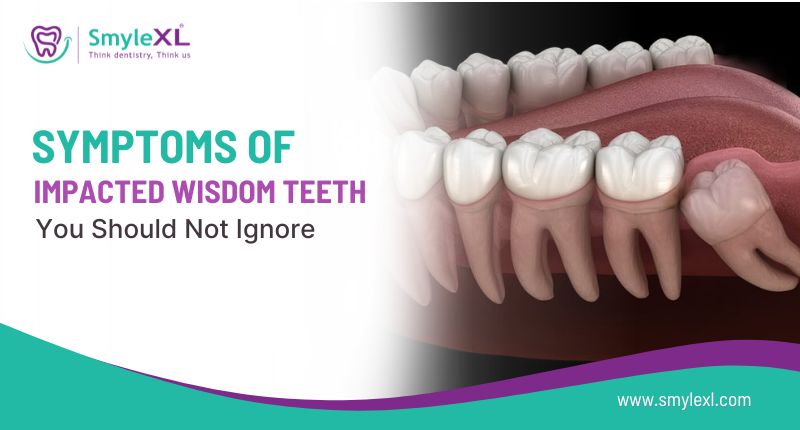
An impacted wisdom tooth doesn’t have enough space to do that. It may:
- Grow sideways
- Partially erupt
- Stay trapped under the gum
- Push against the neighboring tooth
Imagine trying to park a big SUV in a space meant for a scooter. That’s basically what’s happening at the back of your mouth.
And when there’s no room, trouble begins.
Common Symptoms of Impacted Wisdom Teeth
Some signs are obvious. Others are subtle and easy to ignore, until they aren’t.
Here’s what to watch out for:
1. Persistent Pain at the Back of the Jaw
This is usually the first sign.
It may start as a mild discomfort that comes and goes. Over time, it can turn into throbbing pain that radiates toward the ear or temple.
If pain keeps returning in the same area, it’s worth getting it checked before you need urgent wisdom tooth removal.
2. Swollen or Tender Gums
If the gum behind your last molar feels puffy, red, or sore, an impacted tooth might be partially erupting.
Food can get trapped under the gum flap, leading to infection. This condition, called pericoronitis, can make chewing uncomfortable and brushing painful.
3. Difficulty Opening Your Mouth
If you suddenly feel stiffness while opening your mouth fully, your wisdom tooth could be causing inflammation in the surrounding tissues.
It may not seem directly related at first, but jaw stiffness is a common complaint in cases requiring wisdom tooth extraction.
4. Bad Breath or Unpleasant Taste
When food particles get trapped around a partially erupted wisdom tooth, bacteria thrive.
Even if you brush properly, you may notice:
- Persistent bad breath
- A bad taste in your mouth
That’s often a sign of infection brewing underneath.
5. Swelling Around the Jaw
Visible swelling near the back of your jaw is something you shouldn’t ignore.
It may indicate:
- Infection
- Pus formation
- Pressure from an impacted tooth
In such cases, delaying wisdom tooth removal can worsen the problem.
6. Headaches or Ear Pain
Surprising, right?
Because wisdom teeth are located near nerves, inflammation can cause referred pain to the ear, head, or neck.
If your headaches seem oddly connected to jaw discomfort, your wisdom teeth might be the culprits.
7. Damage to Nearby Teeth
An impacted wisdom tooth can push against the second molar.
Over time, this pressure can:
- Cause cavities in neighboring teeth
- Lead to gum damage
- Create alignment issues
Sometimes, by the time pain appears, the neighboring tooth is already affected.
Why Ignoring Impacted Wisdom Teeth Is Risky
It’s tempting to ignore wisdom tooth pain, especially when it disappears after a day or two. But impacted teeth rarely solve the problem on their own. They usually come back with more trouble.
Here’s what can happen if you keep postponing a check-up:
Repeated Infections
Partially erupted wisdom teeth create small spaces where food and bacteria get trapped. This can lead to recurring swelling, gum infections, and increasing discomfort, sometimes requiring urgent wisdom tooth removal.
Damage to Nearby Teeth
An impacted tooth often pushes against the molar next to it. Over time, this pressure can cause cavities or gum problems in the neighboring tooth, making treatment more complicated than a simple wisdom tooth extraction.
Sudden Severe Pain
Wisdom teeth are unpredictable. They may stay quiet for months and then suddenly cause intense pain and swelling, usually at the worst possible time.
Jaw Stiffness and Swelling
Ongoing inflammation can make chewing uncomfortable and limit how wide you can open your mouth.
What Happens During Wisdom Tooth Removal?
If you’re imagining something dramatic, relax.
At SmyleXL Dental Clinic in Kondhwa, Pune, the process is systematic and controlled.
Here’s what typically happens:
- The area is numbed.
- The dentist evaluates the tooth position.
- A small incision may be made if needed.
- The tooth is gently removed.
- The area is cleaned and stitched (if required).
Most procedures are completed comfortably, and recovery is usually straightforward with proper aftercare.
When Should You Visit the Dentist?
Book a consultation if you notice:
- Recurring pain in the back of your mouth
- Swelling that doesn’t settle
- Difficulty chewing
- Jaw stiffness
- Repeated infections
The earlier you act, the easier the solution.
FAQs
Q1. How do I know if my wisdom tooth is impacted?
An impacted wisdom tooth often causes pain, swelling, jaw stiffness, or repeated infections. However, in some cases, there may be no visible symptoms initially. An X-ray is the most reliable way to determine the position of the tooth and whether it is trapped under the gum or bone. Regular dental check-ups help detect issues early.
Q2. Is wisdom tooth removal painful?
The procedure itself is typically not painful because the area is numbed with local anesthesia. You may feel slight pressure during the process, but sharp pain is uncommon. After the procedure, mild discomfort or swelling may occur for a few days, which can be managed with prescribed medication and proper care.
Q3. How long does it take to recover after wisdom tooth extraction?
Recovery time varies from person to person. Most people feel significantly better within a few days. Swelling and mild soreness usually reduce gradually. Following aftercare instructions, such as avoiding hard foods and maintaining oral hygiene, helps speed up healing.
Q4. Can I avoid removing my impacted wisdom tooth?
If the tooth is not causing pain, infection, or damage to surrounding teeth, your dentist may simply monitor it. However, if symptoms appear or complications develop, delaying wisdom tooth removal can lead to bigger problems. A professional evaluation is necessary to decide the best course of action.
Q5. What should I avoid after wisdom tooth extraction?
After wisdom tooth extraction, avoid hard, spicy, or extremely hot foods for a few days. Do not smoke or use straws, as they can disturb the healing clot. Gentle oral hygiene is important, but avoid brushing directly over the surgical site initially. Following your dentist’s advice ensures a smooth recovery.
Don’t Let a Tiny Tooth Create a Big Problem
Wisdom teeth have a reputation for showing up uninvited and overstaying their welcome.
If you’re experiencing symptoms that point toward impaction, it’s better to address them sooner rather than later.
At SmyleXL Dental Clinic in Kondhwa, Pune, expert evaluation and safe wisdom tooth removal procedures are available to help you get back to eating, talking, and smiling comfortably.
If something feels off at the back of your mouth, don’t wait for it to turn into an emergency. Book a consultation today, and let’s make sure your wisdom teeth don’t outsmart you.