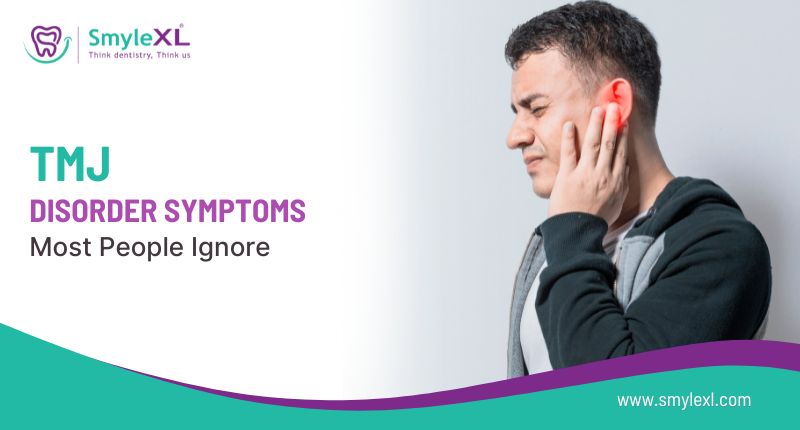

There’s a certain kind of jaw discomfort that many people brush off, the stiffness when you wake up, the clicking sound while chewing, the mild ache near your ears after talking for too long, or that sudden tightness when you yawn. Most of us simply assume it’s “just fatigue,” “just stress,” or “just one of those days.”
But quite often, these ignored signs point toward a TMJ disorder. If you’re in Sun Pharma Road and considering Treatment for jaw pain in Sun Pharma Road, you might find yourself saying what many patients at SmyleXL Dental Clinic do:
“I didn’t realize the jaw joint was the real issue!”
“I didn’t realize this was connected to the jaw joint!”
So let’s talk about the symptoms most people ignore, the ones that quietly indicate your jaw joint needs attention. By the end of this guide, you’ll know what to look out for, what each symptom means, and how to manage it before it becomes a bigger concern.
Table of Contents
ToggleWhat Is TMJ, and Why Does It Act Up?
The TMJ (Temporomandibular Joint) is the hinge connecting your jaw to your skull. It’s a small joint but a very hardworking one, every time you chew, talk, yawn, swallow, or clench unconsciously, this joint is in action.
When the TMJ becomes strained, inflamed, misaligned, or overworked, it leads to TMJ disorder (TMD). And because the joint sits so close to muscles, nerves, and ligaments, the symptoms often spread across the jaw, head, neck, and even ears.
This is why most people don’t realize the problem is rooted in the jaw joint.
Common TMJ Disorder Symptoms People Ignore
Below are the symptoms that show up in early-stage TMJ problems but often go unnoticed or misunderstood.
- Jaw Clicking and Popping
One of the earliest signs is a clicking or popping sound when you:
- chew
- yawn
- speak
- move your jaw sideways
People often ignore this because it doesn’t hurt in the beginning. But persistent clicking means the jaw joint isn’t functioning smoothly. It’s the first sign that the TMJ disc inside the joint may not be moving in alignment.
- Morning Jaw Stiffness
If your jaw feels tight or sore when you wake up, chances are you clench or grind your teeth at night (bruxism). This creates continuous strain on the TMJ, leading to stiffness by morning.
Many people think this is due to sleeping position, but it’s actually a classic TMJ symptom.
- Ear Pain or Fullness
This is one of the most confusing symptoms.
Because the TMJ is located right next to the ear canal, inflammation in the jaw joint often creates:
- ear pressure
- dull ache
- ringing sensation (tinnitus)
- feeling of fullness
These symptoms mimic ear infections, but they’re often jaw-related.
- Headaches and Facial Pain
TMJ issues frequently trigger headaches that feel like:
- tension around the temples
- pressure near the eyes
- heaviness around the cheeks
- tightness along the jawline
People often treat these headaches with painkillers, unaware that the root cause lies in the jaw joint.
- Difficulty or Pain While Chewing
When the TMJ is strained, even simple chewing feels uncomfortable or tiring. You may notice that:
- the jaw shifts slightly when opening
- you can’t bite down evenly
- one side feels sore
- chewy foods feel like a workout
These are clear signs of TMJ imbalance.
- Limited Mouth Opening
If you struggle to open your mouth wide, like while biting into a sandwich or yawning, your TMJ may be inflamed or the muscles surrounding it may be spasming.
This is an important sign because it shows that the joint movement is restricted.
- Neck and Shoulder Tension
TMJ disorders often affect posture. You may unconsciously tighten your neck muscles to compensate for jaw discomfort, leading to:
- neck stiffness
- shoulder aches
- upper back discomfort
Again, most people don’t connect these symptoms to the jaw.
Why People Ignore TMJ Symptoms So Easily
Three main reasons:
- The symptoms mimic other issues
Earache? People think it’s an ear infection.
Headache? They assume it’s stress.
Jaw pain? They think they slept badly.
- TMJ discomfort comes and goes
The intermittent nature of TMJ symptoms makes people ignore them until they worsen.
- It’s not commonly discussed
Most people don’t know jaw pain is even treatable until they discover clinics offering Treatment for Jaw Pain in Sun Pharma Road like SmyleXL Dental Clinic.
Treatment for Jaw Pain in Sun Pharma Road: What Influences TMJ Care?
When someone comes in with TMJ symptoms, the treatment approach depends on what’s causing the strain. At SmyleXL Dental Clinic, the focus is on identifying the exact trigger rather than giving generic recommendations.
Here are the main factors that influence treatment:
- Whether the Jaw Muscles Are Overactive
If you clench or grind subconsciously:
- the muscles tighten
- the TMJ becomes overloaded
- pain spreads to the neck and cheeks
Relaxation exercises, night guards, and habit correction often help.
- The Alignment of Your Teeth
If your teeth don’t align properly, it affects the movement of the jaw joint, leading to TMJ strain.
Correcting the bite improves joint function significantly.
- Stress Levels
Stress doesn’t just affect the mind, it directly tightens the jaw muscles.
Many TMJ cases are linked to stress-induced muscle tension.
- Existing Tooth or Gum Problems
Cavities, missing teeth, or uneven chewing habits can all cause TMJ imbalance.
- Posture Habits
Forward neck posture, common in people who work long hours on laptops, strains the jaw joint.
- Jaw Injury History
Even an old injury can create long-term TMJ problems.
Practical Tips to Manage TMJ Symptoms
These small changes often relieve daily discomfort:
Avoid Hard Foods
Keep away from chikki, hard rotis, or extremely chewy snacks.
Use a Warm Compress
Heat helps relax tight jaw muscles.
Practice Jaw-Relaxation Exercises
Gentle, slow movements help ease stiff muscles.
Limit Wide Jaw Movements
Avoid wide yawns or biting into very large food items.
Be Mindful of Jaw Clenching
Your jaw should rest naturally, with lips closed but teeth apart.
FAQs
1. How do I know if my jaw pain is actually a TMJ disorder?
If you experience symptoms like clicking, stiffness, ear discomfort, headaches, or difficulty chewing, there’s a good chance your jaw joint is involved. TMJ disorders often appear through a mix of facial and jaw-related signals. A dentist can identify the exact cause with a simple examination.
2. Can stress really cause TMJ pain?
Yes. Stress can cause subconscious clenching and grinding, tightening the jaw muscles and straining the TMJ. This is why many people notice jaw pain during high-stress periods. Relaxation habits, jaw exercises, and awareness help reduce this discomfort.
3. Is TMJ disorder permanent or treatable?
In most cases, it’s treatable with a combination of dental care, habit correction, posture improvements, and muscle relaxation. Early recognition helps prevent long-term joint damage. TMJ disorders are very manageable when treated at the right time.
If you’re exploring Treatment for Jaw Pain in Sun Pharma Road and want clarity on what’s causing your symptoms, we’d be happy to help.
At SmyleXL Dental Clinic, we keep TMJ care simple, practical, and comfortable, with a focus on natural relief and long-term jaw health.