
Few pains are as distracting as a toothache. It might start as a mild sting with cold water or a sharp twinge from something sweet, but soon even chewing or smiling feels uncomfortable.
This is often how cavities work: they begin small and silently grow, eventually leading to bigger dental problems if ignored.
The good news? Dentistry has a simple fix: dental fillings. They stop decay, restore tooth strength, and bring back comfort. Yet many people hesitate, imagining drills, pain, or high costs. In reality, fillings are quick, comfortable, and far more affordable than treating advanced decay.
In this blog, we’ll walk you through the dental filling process, explain why early treatment matters, and clear up questions about dental filling treatment cost, so you can feel confident about your decision.
Table of Contents
ToggleThe Silent Progression of a Cavity
Cavities are sneaky. They often start quietly with tiny enamel damage that doesn’t hurt at all. But as bacteria spread deeper into the tooth, sensitivity to hot, cold, or sweet foods kicks in. Ignore it, and the pain gets sharper, chewing becomes difficult, and the infection can eventually reach the pulp of the tooth.
The problem isn’t just discomfort. Untreated cavities can lead to fractures, abscesses, or even tooth loss. At that stage, treatment becomes more complex—and much more expensive—than a simple filling.
That’s why dentists stress early detection. A filling may feel like a small step, but it plays a huge role in protecting your natural teeth for the long run.
At SmyleXL Dental Clinic, we focus on catching cavities early. Even the smallest spots of decay are treated with precision and care, so you never have to face the pain—or the cost—of advanced dental problems later.
A Step-by-Step Guide to the Filling Procedure
If you’re new to dental fillings, here’s a step-by-step look at what typically happens during an appointment:
- Examination & Diagnosis
- The visit begins with a careful check of your teeth.
- The dentist looks for signs of decay and may recommend X-rays to see how deep the cavity goes.
- Once confirmed that a filling is the right solution, the procedure moves forward.
- The visit begins with a careful check of your teeth.
- Removing Decay
- The dentist uses precise instruments to gently remove the decayed part of the tooth.
- Many patients worry about this stage, but with there’s hardly any pain—only some vibrations or sounds that may feel unusual.
- This step ensures that no infected or weak areas are left behind.
- The dentist uses precise instruments to gently remove the decayed part of the tooth.
- Cleaning the Cavity
- Once the decay is gone, the cavity is carefully cleaned.
- Removing all bacteria and debris is crucial because it prevents future infection and ensures the filling material bonds securely.
- Once the decay is gone, the cavity is carefully cleaned.
- Choosing the Filling Material
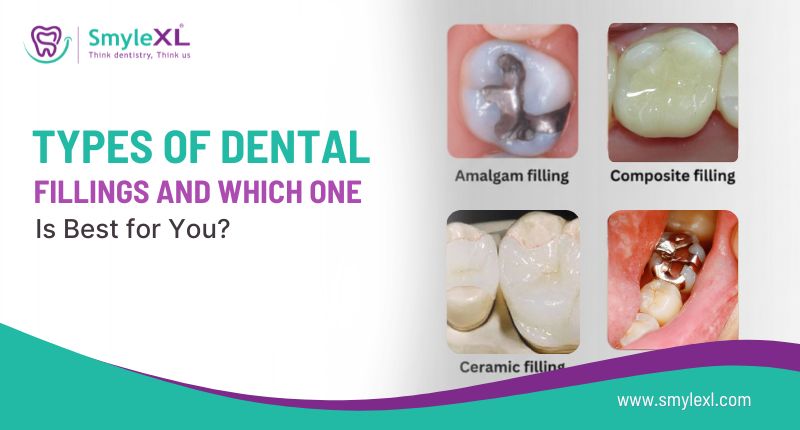
Today, patients have several material options, each with its own advantages:- Composite resin – Matches the natural tooth color, making it the most popular choice.
- Silver amalgam – Very durable and long-lasting, though less aesthetic.
- Porcelain or gold – Premium options that provide excellent durability and a more natural appearance.
- Composite resin – Matches the natural tooth color, making it the most popular choice.
The choice often depends on the tooth’s location, the patient’s budget, and personal preferences.
- Placing the Filling
- For composite resin, the dentist applies the material in thin layers.
- Each layer is hardened with a special light, building up a strong and natural-looking restoration.
- Once the filling is in place, it is shaped to match your bite and polished for a smooth finish.
- For composite resin, the dentist applies the material in thin layers.
Time Taken: In most cases, the entire procedure takes less than an hour. Patients are often surprised by how quick and painless the experience is compared to what they had imagined. Many even say it feels no different from a routine cleaning.
Understanding the Dental Filling Treatment Cost
One of the most common concerns patients have is the cost of treatment. The truth is that the dental filling treatment cost depends on several factors. The material chosen plays a major role. Composite fillings are affordable, tooth-colored, and widely used. Amalgam fillings are strong but less popular today due to their appearance. Porcelain and gold fillings last longer but come at a higher price. The size of the cavity and the also influences the cost of treatment.
The good news is that fillings are among the most cost-effective treatments in dentistry. By stopping decay early, they prevent the need for expensive procedures, such as crowns, root canals, or implants, later on.
Caring for Your Dental Filling
Once your filling is complete, a little care goes a long way in making it last.
- It’s normal to feel mild sensitivity for a few days—it usually fades quickly.
- Brush twice a day and floss gently to keep the area clean.
- Avoid chewing on hard objects like ice, pens, or bottle caps.
- Don’t skip your regular dental check-ups—your dentist can make sure the filling stays intact.
Why Early Treatment Matters
One of the best ways to care for your teeth is not to delay treatment in the first place. Many people put off getting a filling because they worry about pain or cost. Ironically, waiting only makes both worse.
- Early fillings are quick, comfortable, and affordable.
- Delayed cavities often require more complex—and costly—treatments like root canals or crowns.
Acting early saves your tooth, your comfort, and your wallet.
Preserving Your Smile’s Health
When you understand what really happens during a dental filling, the procedure feels far less intimidating. From diagnosis and cleaning to shaping and polishing, the process is straightforward, restoring the tooth’s natural strength and appearance. Most importantly, it prevents cavities from growing into painful, costly dental problems.
If you are experiencing tooth sensitivity, sharp pain, or visible dark spots on your teeth, do not wait until the damage spreads deeper. The dental filling treatment cost is a small investment compared to the discomfort and expense of advanced treatments. Acting now not only saves money but also preserves your natural teeth for the long run.
At SmyleXL Dental Clinic, we combine expertise with comfort to provide fillings that are durable, natural-looking, and budget-friendly. Please book your appointment today and give your teeth the care they truly deserve.
Frequently Asked Questions
Q1. How long do dental fillings last?
The lifespan of a dental filling depends on the material used, your oral hygiene, and daily habits. Composite (tooth-colored) fillings typically last around 5–7 years but can last longer with proper care. Amalgam (silver) fillings often last 10–15 years, while porcelain or gold fillings may last 15 years or more. Regular check-ups and good oral hygiene greatly increase the longevity of any filling.
Q2. Does getting a filling hurt?
No, the procedure is painless and the tools may feel unusual but not painful. Most patients are relieved by how comfortable the process actually is.
Q3. Can I eat right after the procedure?
With composite fillings, you can eat almost immediately, but it is wise to wait a couple of hours. For silver amalgam fillings, it is best to avoid chewing on that side for about twenty-four hours.
Q4. What is the usual dental filling treatment cost?
The price depends on the material and the size of the cavity. Composite fillings are affordable and widely used, while porcelain and gold are premium options with higher costs. At SmyleXL Dental Clinic, prices are clearly explained so there are no surprises.