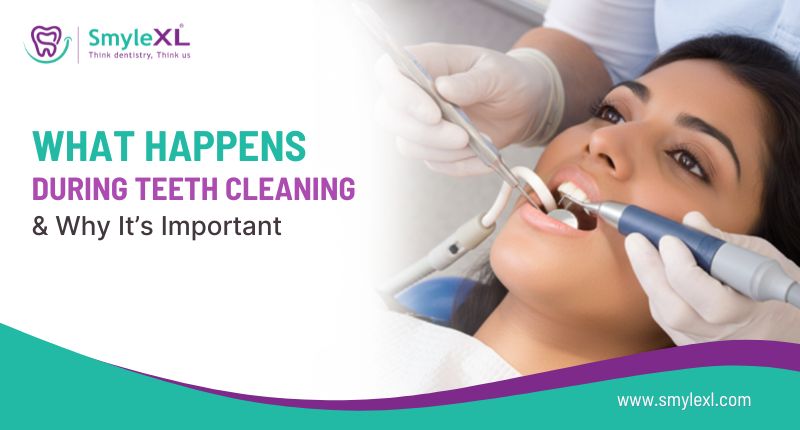

There’s a strange category of appointments we all treat casually. Oil changes. Annual health checkups. And right there on the list, teeth cleaning.
It doesn’t hurt (usually), it doesn’t feel urgent, and your teeth seem fine… so it keeps getting pushed to “next month.”
But here’s the twist: teeth cleaning isn’t about fixing something that’s broken. It’s about stopping things from breaking in the first place.
Table of Contents
ToggleAt SmyleXL Dental Clinic, many patients who come in for teeth cleaning in Phaltan say the same thing after their appointment:
“I didn’t realise how much I needed this.”
So if you’ve ever wondered what actually happens during teeth cleaning, and why dentists keep insisting it’s important, this is your no-filter, no-lecture explanation.
Teeth Cleaning Isn’t About Judging Your Brushing Skills
Let’s clear this up early: dentists aren’t secretly grading you.
Professional teeth cleaning exists because even the most disciplined brushing and flossing routine has limits. Your toothbrush does a great job on visible surfaces, but plaque has a talent for hiding in tight spaces, under the gums, and in spots you don’t even realise exist.
Over time, plaque hardens into tartar. And once tartar forms, brushing alone can’t remove it. That’s where professional cleaning steps in.
Before We Begin: What Is “Professional” Teeth Cleaning?
Professional teeth cleaning is a preventive dental procedure designed to remove:
- Hardened plaque (tartar)
- Bacterial buildup
- Surface stains
- Early irritants that cause gum disease
It’s not a cosmetic treatment. It’s not a painful treatment. It’s maintenance, like servicing your vehicle before warning lights appear.
When people talk about teeth cleaning in Phaltan, this is what they’re referring to.
Step-by-Step: What Actually Happens During Teeth Cleaning?
Let’s walk through the appointment, minus the mystery.
Step 1: A Calm, Quick Oral Check
Before any cleaning begins, your dentist or hygienist examines your mouth. This includes checking:
- Gums for inflammation or bleeding
- Teeth for visible plaque or tartar
- Signs of early cavities or sensitivity
This isn’t a long exam. It’s more like a quick scan to understand what your teeth need today.
Step 2: Scaling – The Part Everyone Talks About
Scaling is where the real work happens.
Using specialized instruments, the dentist gently removes tartar buildup from:
- Around the teeth
- Between teeth
- Along and slightly below the gumline
This is the step brushing can’t replace.
You may hear scraping sounds or feel mild vibrations, but for most people, it’s more odd than uncomfortable. If your gums are sensitive or inflamed, there may be slight tenderness, but nothing dramatic.
Step 3: Polishing – The Smooth Finish
Once the hard deposits are gone, your teeth are polished using a mildly abrasive paste and a rotating brush.
This step:
- Smoothens tooth surfaces
- Removes surface stains
- Makes it harder for plaque to stick again
Your teeth won’t just be clean, they’ll feel noticeably smoother.
Step 4: Rinse and Review
After cleaning, you rinse to wash away debris. Your dentist may then:
- Point out areas to pay attention to while brushing
- Suggest small improvements
- Answer any questions you’ve been holding back
And that’s it. No drills. No injections. No drama.
Why Teeth Cleaning Matters More Than You Think
Fresh breath is a nice bonus, but it’s only the surface-level benefit.
1. Prevents Gum Disease Before It Starts
Gum disease doesn’t begin with pain. It begins quietly, with plaque irritating the gums.
Professional cleaning removes the irritants early, preventing:
- Bleeding gums
- Gum recession
- Long-term tooth loosening
2. Helps Avoid Cavities
Plaque is full of bacteria that produce acids. These acids slowly weaken enamel.
Regular teeth cleaning reduces bacterial load and lowers the risk of cavities, especially in hard-to-reach areas.
3. Keeps Bad Breath From Becoming Chronic
Bad breath often comes from bacteria trapped under the gumline. Mouthwash can mask it, but cleaning removes the source.
That’s why people often feel “lighter” after a professional cleaning.
4. Saves You Money Over Time
Preventive care is always cheaper than corrective treatment.
A simple cleaning today can help you avoid:
- Deep gum treatments
- Root canals
- Tooth extractions
It’s one of the most cost-effective dental appointments you’ll ever have.
5. Helps Your Dentist Spot Problems Early
During cleaning visits, dentists often detect:
- Early cavities
- Gum issues
- Hairline cracks
- Signs of grinding
Catching these early keeps treatment simpler and less stressful.
“But My Teeth Don’t Hurt…” – Why That’s Not a Green Signal
Dental problems rarely hurt at the beginning.
By the time pain appears, damage is usually advanced. Teeth cleaning works quietly in the background, preventing those situations from ever developing.
That’s why we at SmyleXL Dental Clinic recommend regular teeth cleaning in Phaltan, even when everything seems fine.
How Often Should Teeth Be Cleaned?
For most people, every six months is ideal.
However, you may need more frequent cleaning if you:
- Smoke or use tobacco
- Have diabetes
- Are prone to gum disease
- Wear braces or aligners
Your dentist will suggest a schedule based on your specific needs. No generic rule here.
What Teeth Cleaning Is NOT
Let’s bust a few misconceptions.
- It’s not whitening (though teeth may look brighter)
- It’s not painful for most people
- It’s not only for people with dental problems
- It’s not optional maintenance
Think of it as routine health care, not a cosmetic indulgence.
Life After Teeth Cleaning: What Changes?
Most people notice:
- Fresher breath
- Cleaner mouth feel
- Smoother teeth
- Reduced gum irritation
You can eat normally afterward, though dentists usually suggest avoiding extremely hot, cold, or heavily stained foods for a few hours if sensitivity is present.
FAQs
Q1. Is teeth cleaning painful?
Teeth cleaning is generally not painful. You may feel mild discomfort or sensitivity, especially if there’s heavy tartar buildup or gum inflammation. This usually subsides quickly. Dentists can adjust technique or take breaks to keep you comfortable.
Q2. How long does teeth cleaning take?
A routine teeth cleaning usually takes 30 to 45 minutes. If there’s more buildup or gum issues, it may take slightly longer. It’s a short appointment with long-term benefits.
Q3. Can teeth cleaning whiten my teeth?
Teeth cleaning removes surface stains from tea, coffee, and food, which often makes teeth appear brighter. However, it doesn’t change the natural shade of your teeth as whitening treatments do.
Q4. Can I eat immediately after teeth cleaning?
Yes, you can eat after teeth cleaning. If your teeth feel sensitive, it’s best to avoid very hot, cold, or strongly colored foods for a few hours. Otherwise, normal eating is fine.
Q5. Is teeth cleaning safe for sensitive teeth?
Yes. In fact, regular cleaning can reduce sensitivity over time by improving gum health. If you already have sensitivity, your dentist can adjust the procedure to make it more comfortable.
Why Skipping Teeth Cleaning Is Easier Than Dealing With the Consequences
Skipping once won’t cause chaos. Skipping repeatedly? That’s where small issues quietly turn into big ones.
Teeth cleaning doesn’t demand much, just a little time twice a year. What it gives back is peace of mind, healthier gums, and fewer surprises.
Clean Teeth, Calm Future
Teeth cleaning isn’t about perfection. It’s about prevention.
Whether you brush like a pro or sometimes forget the night routine, professional cleaning fills the gaps your toothbrush can’t reach.
If you’re in or around Phaltan, regular teeth cleaning in Phaltan at SmyleXL Dental Clinic helps keep your smile healthy, your gums strong, and your future dental visits simple.
Book your appointment today, and give your teeth the quiet care they deserve.