
Losing a tooth may not always feel urgent. If the gap isn’t visible while smiling, many people assume it’s only a cosmetic issue. Some delay treatment because there is no immediate pain. Others believe they can manage without replacing it.
But a missing tooth does more than create an empty space.
Over time, that single gap can slowly affect your bite, your jawbone, your surrounding teeth, and even your facial structure.
Understanding what truly happens when a tooth is left untreated helps you make an informed decision before minor changes turn into bigger concerns.
At SmyleXL Dental Clinic, we often educate patients about timely replacement options, including affordable dental implant treatment, to prevent these long-term complications.
Table of Contents
ToggleHow a Missing Tooth Affects Your Oral Health Over Time?
The Shifting of Nearby Teeth
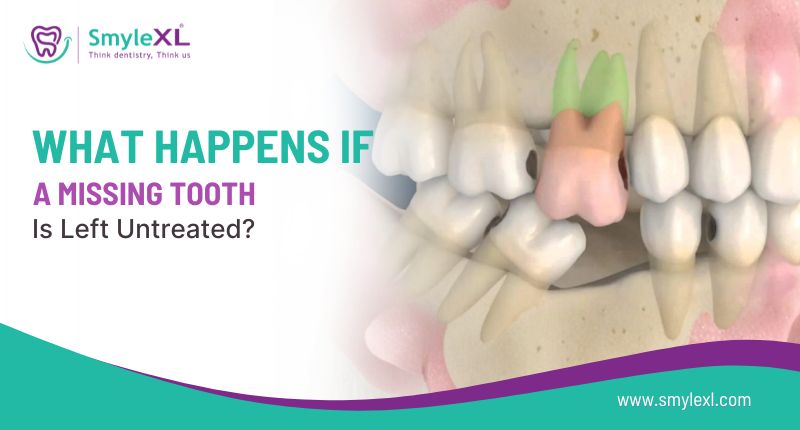
Teeth are designed to work as a team. Each tooth supports the one next to it. When one tooth is lost, the surrounding teeth begin to shift toward the empty space.
This movement may seem small at first. But gradually, it can lead to:
- Misalignment
- Crowding
- Bite imbalance
- Difficulty cleaning between teeth
As teeth shift, plaque buildup increases because brushing and flossing become harder. This raises the risk of cavities and gum disease in areas that were previously healthy.
A single missing tooth can quietly disturb the balance of your entire dental arch.
Bone Loss in the Jaw
One of the most serious effects of leaving a missing tooth untreated is bone loss.
Your jawbone needs stimulation to stay strong. That stimulation comes from the tooth root during chewing. When a tooth is removed or lost, the underlying bone no longer receives pressure. Without stimulation, the body begins to resorb, or shrink, that bone.
Over time, this can lead to:
- Reduced jawbone density
- Changes in facial shape
- Sunken appearance around the mouth
- Weak foundation for future treatments
Bone loss can begin within months after tooth loss. The longer you wait, the more complex replacement procedures may become.
Bite Problems and Uneven Pressure
When one tooth is missing, the remaining teeth take on extra pressure during chewing. This imbalance can strain specific teeth and even the jaw joints.
Patients sometimes notice:
- Jaw discomfort
- Headaches
- Tooth sensitivity
- Cracks in surrounding teeth
An uneven bite, if left uncorrected, can lead to long-term wear and tear. This affects not just one area, but the overall function of your mouth.
Increased Risk of Gum Disease
Gaps created by missing teeth can trap food particles. When shifting begins, small spaces form between teeth that are harder to clean.
Poor cleaning in these areas increases plaque buildup. Plaque accumulation leads to gum inflammation, which can progress to gum disease.
If gum disease develops, it further weakens surrounding teeth and supporting bone, creating a cycle of dental problems that could have been prevented with early replacement.
Speech Changes
Teeth play a role in how certain sounds are pronounced. Missing front teeth, in particular, can affect speech clarity.
Some patients develop:
- Whistling sounds while speaking
- Difficulty pronouncing certain words
- Self-consciousness during conversations
Even small changes in speech can affect confidence over time.
Impact on Appearance
A missing tooth, especially in the front, affects your smile immediately. But even back teeth contribute to facial support.
As bone loss progresses, the face may appear:
- Slightly sunken
- Less supported around the lips
- Older than actual age
These changes do not happen overnight. They occur gradually, which is why many people do not connect them to tooth loss until much later.
Why Early Replacement of Missing Teeth Matters?
The earlier a missing tooth is replaced, the better the outcome.
Modern dentistry offers multiple replacement options, including bridges, dentures, and implants. Among these, dental implants are widely preferred because they replace both the root and crown of the tooth, providing stability and bone support.
Implants help:
- Prevent bone loss
- Maintain alignment
- Restore chewing strength
- Preserve facial structure
However, patients often delay treatment assuming it may be expensive.
This is where understanding your options becomes important.
Choosing the Right Solution For Missing Teeth
Not every missing tooth requires the same approach. The ideal solution depends on:
- Number of missing teeth
- Location
- Bone condition
- Overall oral health
A thorough evaluation helps determine whether an implant, bridge, or other restoration is suitable.
For many patients, dental implants provide the most long-term stability. And today, access to affordable dental implant treatment has made this option more approachable than before.
Delaying treatment may increase costs later due to bone grafting or additional procedures. Addressing the issue early can be both clinically and financially sensible.
Long-Term Consequences of Ignoring the Gap Between Teeth
Let’s summarise what can happen if a missing tooth is left untreated for years:
- Teeth drift and become misaligned
- Jawbone shrinks
- Facial support reduces
- Bite imbalance causes strain
- Higher risk of decay and gum disease
- Increased restorative costs later
What starts as a small gap can gradually affect overall oral health.
Protecting Your Smile from Further Changes
Many patients say they do not feel pain, so they assume treatment can wait. But the absence of pain does not mean the absence of damage.
Dental structures change quietly. By the time symptoms appear, correction may require more extensive intervention.
Early consultation allows you to understand your current condition and available solutions clearly.
Aise mishapen se bachne k liye choose SmyleXL, as we offer affordable dental implant treatment designed to restore both function and appearance without unnecessary delay.
FAQs
How soon after losing a tooth should I consider replacement?
Ideally, replacement should be considered as soon as the area has healed, usually within a few months, to prevent bone loss and shifting.
Is it okay to leave a back tooth untreated if it’s not visible?
Even back teeth are important for chewing balance and jaw support. Leaving them untreated can lead to bite problems.
Does bone loss happen immediately after tooth loss?
Bone changes can begin within months. The longer the delay, the more bone may be lost.
Are dental implants a permanent solution?
With proper care and regular dental visits, implants can last many years and provide long-term stability.
Is dental implant treatment expensive?
Costs vary depending on individual cases, but options for affordable dental implant treatment are available, making replacement accessible for many patients.
Don’t Delay Tooth Replacement
A missing tooth is not just a cosmetic gap. It affects alignment, bone strength, chewing efficiency, and facial support over time.
Addressing the issue early protects both your oral health and your confidence. If you have lost a tooth and are unsure about your options, schedule a consultation at SmyleXL. Timely guidance and affordable dental implant treatment can help restore your smile and prevent long-term complications.
Your teeth are meant to function together. Replacing a missing one helps maintain that balance for years ahead.