
You bite into something crunchy and suddenly feel a sharp “zing” in your tooth.
You pause for two seconds.
Then immediately do what most people do:
pretend nothing happened.
“Thoda sensitivity असेल.”
“Painkiller घेतो.”
“Weekend नंतर dentist कडे जाईन.”
And then life continues… until that tiny crack slowly turns into a much bigger problem.
At SmyleXL Dental Clinic, Sinhagad Road, Dr. Ganesh C Kulkarni often sees patients seeking root canal treatment who ignored a small crack, thinking it was harmless, only to later develop severe pain, swelling, or infection.
And what’s even scarier is that some cracks are not even visible properly from the outside.
And unfortunately, delaying treatment may sometimes allow bacteria to travel deep inside the tooth.
Table of Contents
ToggleWhy Cracked Teeth Are More Serious Than They Look
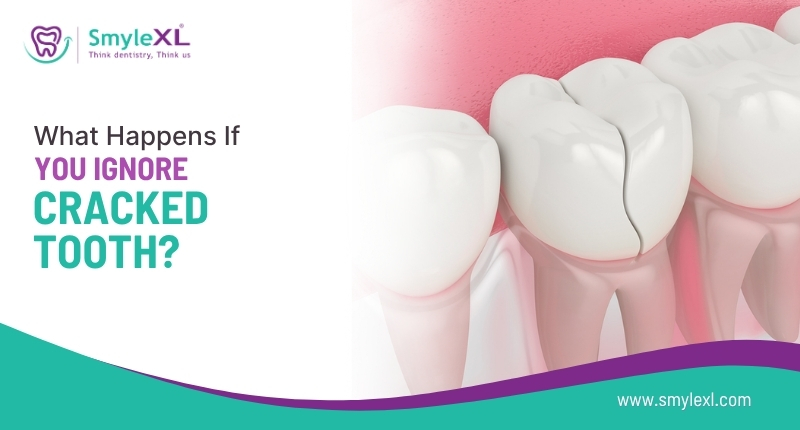
Not every cracked tooth immediately breaks in half dramatically like movie scenes.
Sometimes the crack is tiny and hidden.
But even a small deep tooth crack can create openings where bacteria start entering the inner layers of the tooth.
Over time, this may lead to:
- pain while chewing
- sensitivity
- swelling
- tooth nerve infection
- nerve damage
This is why early cracked tooth treatment is extremely important.
What Usually Causes a Tooth to Crack?
Cracks can happen because of:
- chewing hard foods
- grinding teeth
- accidents
- old fillings
- sudden trauma
- weakened enamel
- untreated cavities
Large cavities may weaken tooth structure over time, increasing the risk of a cracked or damaged tooth during normal chewing.
Molars are especially vulnerable because they handle the maximum pressure while eating.
The “It Only Hurts Sometimes” Problem
One of the biggest reasons people delay visiting clinics is that the tooth crack pain treatment feels inconsistent initially.
Sometimes it hurts while chewing.
Sometimes cold water hurts.
Sometimes there’s no pain at all.
This often happens because pressure temporarily opens and closes the crack during biting.
Patients dealing with pain while biting may already have deeper structural damage developing inside the tooth.
And unfortunately, pain that “comes and goes” does not always mean the problem is small.
What Happens Inside the Tooth After a Crack?
Under the outer enamel lies the inner nerve tissue called the pulp.
When cracks deepen, they may allow:
- food particles
- saliva
- bacteria
to enter the inner tooth structure.
This process of bacteria entering the tooth may eventually lead to:
- inflammation
- infection
- abscess formation
- nerve damage
At this stage, the tooth may develop serious dental pulp damage and require more advanced treatment.
Can a Cracked Tooth Heal on Its Own?
Unfortunately, no.
Unlike skin or bones, teeth do not naturally repair cracks by themselves.
Ignoring cracked enamel problems may allow the crack to worsen gradually with daily chewing pressure.
Over time, small untreated cracks may become:
- deeper fractures
- tooth nerve infection
- split teeth
- severe structural damage
This is why early tooth fracture treatment matters so much.
What If the Crack Reaches the Nerve?
Once the crack extends deeper into the nerve area, symptoms may become more intense.
Patients may experience:
- severe sensitivity
- throbbing pain
- swelling
- sleep disturbance
- lingering discomfort
At this stage, tooth nerve infection may already be developing inside the tooth.
This is where procedures like root canal treatment often become necessary to remove infection and preserve the tooth structure.
Can Root Canal Treatment Save a Cracked Tooth?
In many situations, yes.
At our clinic, modern root canal treatment in Sinhagad Road, focuses on removing infected tissue from inside the tooth while preserving the outer tooth whenever possible.
For deeper cracks involving nerve damage, dentists may recommend:
- RCT for a cracked tooth
- broken tooth root canal therapy
- damaged tooth nerve treatment
The goal is to stop infection while maintaining chewing function and structural support.
What Happens If You Ignore the Crack Completely?
This is where things become risky.
Delaying treatment may increase:
- infection severity
- fracture depth
- pain
- swelling
- tooth instability
These are some common untreated cracked tooth risks dentists worry about.
A neglected crack may eventually lead to:
- abscess formation
- spreading infection
- tooth splitting completely
- extraction necessity
And honestly, treating problems earlier is almost always easier than treating full-blown complications later.
Why Cracked Molars Are Extra Problematic
Molars absorb heavy chewing pressure every single day.
That’s why untreated molar cracks often worsen faster.
Patients needing cracked molar treatment may notice:
- Sharp chewing pain
- food trapping
- sensitivity
- discomfort while biting harder foods
Sometimes cracks remain hidden below the surface, creating a hidden tooth fracture that only becomes visible through dental examination or imaging.
When Does a Crown Become Necessary?
After deeper cracks or nerve treatment, the tooth often becomes structurally weaker.
This is why many patients require a dental crown after root canal to protect the tooth from future fracture.
The crown acts like a protective cap that helps:
- strengthen the tooth
- restore chewing ability
- reduce fracture risk
Especially after root canal treatment in Sinhagad Road, our dentists at SmyleXL Dental Clinic recommend crowns for molars because of heavy chewing forces.
The Infection Spread Nobody Sees Coming
One untreated crack can sometimes become much bigger than “just tooth pain.”
If bacteria continue entering the tooth, infection may eventually spread beyond the roots into surrounding tissues.
This process of tooth infection spread may lead to:
- swelling
- pus formation
- facial pain
- difficulty chewing
- gum infection
At this stage, patients may require:
- infected cracked tooth treatment
- antibiotics
- drainage
- emergency care
Emergency Cracked Tooth Care: When You Should Not Wait?
Some situations need urgent attention.
Seek immediate emergency cracked tooth care if you notice:
- severe swelling
- unbearable pain
- fever
- pus discharge
- difficulty opening the mouth
- sudden tooth breakage
Ignoring these symptoms may increase complications significantly.
Is Every Cracked Tooth Treatable?
Not always.
Broken tooth root canal therapy depends on:
- crack depth
- location
- infection extent
- remaining tooth structure
Some smaller cracks may only require fillings or crowns.
Deeper fractures may need:
- severe tooth crack treatment
- endodontic treatment
- root canal treatment
In certain severe cases where the crack extends too deeply below the gums, extraction may still become necessary.
The Real Goal: Preserving Natural Teeth
Modern dentistry focuses heavily on preserving natural teeth whenever safely possible.
Saving your original tooth often helps maintain:
- chewing function
- jaw stability
- natural bite alignment
That’s why dentists usually explore options like:
- cracked tooth treatment
- RCT for a cracked tooth
- restorative procedures
before immediately recommending extraction.
Signs You Should Never Ignore
A crack may not always look dramatic visually.
But these symptoms matter:
- sensitivity while chewing
- sudden sharp pain
- lingering cold sensitivity
- swelling
- discomfort with pressure
- visible lines on the tooth
Even minor symptoms may indicate deeper dental pulp damage developing underneath.
Why Early Treatment Makes a Huge Difference?
Smaller cracks are usually easier to manage.
Delaying RCT for a cracked tooth often increases:
- infection risk
- treatment complexity
- fracture depth
- cost
- recovery time
That’s why seeking early tooth fracture treatment can help prevent much bigger dental problems later.
Especially if the goal is to save the natural tooth.
FAQs
Can a cracked tooth become infected?
Yes. Cracks may allow bacteria to enter deeper layers of the tooth, which can eventually lead to infection and nerve damage.
Can a cracked tooth go untreated?
Ignoring a cracked tooth is usually not recommended because even a small crack can create an opening for bacteria to enter the inner layers of the tooth. Over time, this may lead to infection, abscess formation, swelling, or nerve damage. If the infection spreads further, it can also affect nearby gums, jawbone, or surrounding facial tissues, making treatment more complicated later.
How long does it take for a cracked tooth to become infected?
The timeline may vary depending on the depth of the crack and how much bacteria enters the tooth. In some cases, bacteria can begin reaching deeper layers within hours or days after the crack develops. As the infection progresses, inflammation, pain, and abscess formation may gradually occur over the next few days if treatment is delayed.
Will every cracked tooth need root canal treatment?
Not always. Smaller cracks may only require fillings or crowns, while deeper cracks involving the nerve may need additional treatment.
How do I know if a tooth crack is serious?
A serious crack may cause symptoms like swelling, sharp pain while chewing, lingering sensitivity, fever, bad breath, or tender glands near the jaw. Some patients also notice increasing discomfort while biting or pressure sensitivity on one side of the mouth. If these symptoms continue worsening, a dental examination should be done as early as possible to prevent further complications.
Can a cracked molar be saved?
Many cracked molars can still be restored depending on the crack depth and remaining tooth structure.
Why do cracked teeth hurt persistently?
Pressure from chewing may temporarily open and close the crack, causing pain that comes and goes.
Don’t Ignore Your Teeth’s Signals!
A cracked tooth may seem small initially, but ignoring it for too long can sometimes lead to infection, nerve damage, and serious structural problems.
Modern root canal treatment, cracked tooth treatment, and restorative procedures now make it possible to save many damaged teeth before extraction becomes necessary.
At SmyleXL Dental Clinic, Sinhagad Road, Dr. Ganesh C Kulkarni focuses on early diagnosis, patient education, and conservative dental care aimed at preserving natural teeth whenever possible.