
Your tooth enamel is the hardest substance in the human body, harder than bone, harder than most natural materials you’ll encounter in daily life. And yet, it has one significant weakness: it can’t regenerate. Once it’s gone, it’s gone. No amount of brushing, rinsing, or wishful thinking brings it back.
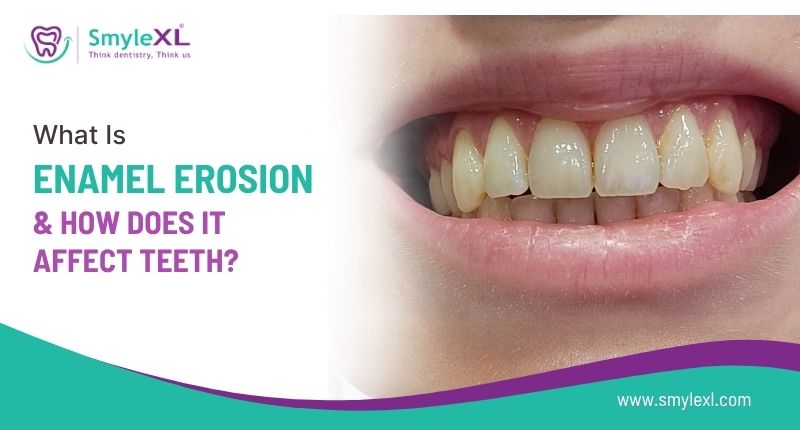
Enamel erosion is one of those conditions that develops so gradually that most people don’t notice it until it’s already caused meaningful damage. No dramatic moment, no single incident, just a slow, quiet wearing away of the tooth’s outer layer that eventually starts affecting how your teeth look, feel, and function.
Here’s what’s actually happening, why it matters, and what can be done about it; from the earliest stages all the way through to full mouth restoration when the damage has become extensive.
Table of Contents
ToggleWhat Is Enamel, and Why Does It Matter?
Enamel is the outermost layer of the tooth, the hard, translucent shell that covers the tooth’s crown. It protects the softer dentin underneath, insulates the nerve from temperature and pressure, and gives teeth their smooth, white appearance.
Dental enamel protection is essentially what keeps teeth functional. When enamel is healthy and intact, teeth handle chewing, temperature changes, and the general demands of daily life without complaint. When it starts eroding, those same daily demands begin to feel like a problem.
What Causes Enamel Erosion?
Enamel erodes when it’s exposed to acid frequently enough to outpace its natural buffering capacity. The sources of that acid vary, but the damage mechanism is the same.
Dietary Acids
Citrus fruits, fizzy drinks, sports drinks, vinegar-based foods, and even certain fruit juices are highly acidic. Regular consumption, particularly sipping throughout the day, keeps the mouth in an acidic state that gradually dissolves the enamel surface.
Acid Reflux or Gastroesophageal Reflux Disease (GERD)
Stomach acid reaching the mouth through reflux is one of the most aggressive causes of tooth sensitivity and enamel loss. Patients with chronic GERD often show significant enamel erosion on the inner surfaces of teeth, the surfaces that face the throat, even with excellent oral hygiene.
Dry Mouth
Saliva neutralizes acid and helps with enamel remineralization, the natural process by which minerals are redeposited onto enamel after acid exposure. Reduced saliva flow from medications, dehydration, or medical conditions removes this protective buffer and accelerates erosion.
Teeth Grinding (Bruxism)
Mechanical wear from grinding doesn’t involve acid, but the outcome is similar: gradual enamel loss, particularly on biting surfaces. Bruxism combined with dietary acid exposure is a particularly destructive combination, and one that frequently leads to extensive dental repair down the line.
Frequent Vomiting
Bulimia and conditions involving frequent vomiting expose teeth to stomach acid repeatedly, and the enamel on the inner surfaces of front teeth is often severely affected as a result.
Stages of Enamel Erosion: From Early to Severe
Not all enamel erosion requires the same response. Understanding where the damage currently sits helps determine the appropriate treatment.
| Stage | What’s Happening | Treatment Approach |
| Early | Surface acid exposure, minimal visible change | Enamel remineralization, dietary changes, and fluoride |
| Moderate | Visible sensitivity, color change, minor surface loss | Dental bonding materials, monitoring, fluoride therapy |
| Advanced | Significant surface loss, dentin exposure, and sensitivity | Porcelain crowns and veneers, restorative dental care |
| Severe | Multiple teeth affected, structural compromise, bite changes | Full mouth restoration, comprehensive tooth restoration |
How Is Enamel Erosion Treated?
Treatment depends entirely on the stage and extent of erosion.
Early Stage: Prevention and Remineralization
Enamel remineralization through high-fluoride toothpaste, in-clinic fluoride treatments, and dietary modification can slow or pause erosion at this stage. Dental enamel protection here means removing the triggers like acidic foods, untreated reflux, dry mouth, and supporting the tooth’s natural buffering capacity.
Moderate Stage: Bonding and Monitoring
When symptoms of worn enamel are visible but structural damage is limited, dental bonding materials can restore surface contour, reduce sensitivity, and protect remaining enamel, often in a single appointment with no significant tooth reduction.
Advanced Stage: Crowns and Veneers
When bonding alone isn’t sufficient, porcelain veneers and crowns become the appropriate option. Crowns cover the entire tooth surface; veneers address the front surfaces where erosion is most visible. Oral health restoration at this stage focuses on stabilizing damage and restoring a functional, comfortable bite.
Severe Stage: Full Mouth Restoration
When erosion has affected multiple teeth, altering the bite and making piecemeal repairs impractical, full mouth restoration is the most appropriate path. Complete smile reconstruction combines porcelain crowns and veneers, implants where needed, and bite correction into a coordinated plan. Dental reconstruction treatment of this scope is carefully sequenced so each step supports the one that follows. Full mouth reconstruction isn’t a last resort; it’s the most efficient solution when individual repairs would cost more, take longer, and deliver less predictable results.
Can Enamel Erosion Be Prevented?
Yes, particularly at the early and moderate stages. Practical prevention includes:
- Reducing the frequency of acidic food and drink consumption; it’s not just what you consume, but how often
- Rinsing with water after acidic foods rather than brushing immediately; brushing on softened enamel causes additional wear
- Using a straw for acidic drinks to reduce tooth contact
- Treating acid reflux properly, a gastroenterologist, not just a dentist, is part of the solution here
- Wearing a nightguard if grinding is a contributing factor
- Using fluoride toothpaste consistently to support enamel remineralization
- Regular dental check-ups: Early restorative dental care intervention is significantly less involved than treating advanced erosion
What Does Treatment Cost at SmyleXL Dental Clinic?
At SmyleXL Dental Clinic on Sun Pharma Road, Vadodara, the cost of smile restoration depends on the stage and scope of treatment needed:
| Treatment | Approximate Cost |
| Dental bonding materials (composite bonding) | ₹1,500 to ₹5,000 per tooth |
| Porcelain crowns and veneers (per tooth) | ₹10,000 – ₹15,000+ |
| Standard dental implants | ₹10,000 – ₹35,000 |
| All-on-4 / All-on-6 implants | ₹4,50,000 – ₹8,00,000 |
| Full mouth restoration (overall) | ₹1,50,000 – ₹8,00,000 |
Affordable dental restoration options, including phased treatment where procedures are spread across time, are always available and worth discussing during the initial consultation. Earlier intervention almost always means a lower overall cost of smile restoration.
Don’t Wait for It to Get Worse
Enamel erosion is one of those conditions where early action makes an outsized difference. The gap between treating it at the bonding stage and treating it at the full mouth restoration stage in cost, time, and complexity is significant.
At SmyleXL Dental Clinic in Vadodara, oral health restoration starts with a thorough assessment that identifies exactly where the erosion stands and what the most appropriate treatment path looks like. Extensive dental repair is sometimes unavoidable, but it’s far less likely when erosion is caught and addressed early.
Book your consultation at SmyleXL Dental Clinic today. The sooner it’s assessed, the more options you have.
Frequently Asked Questions
What does full mouth restoration mean?
Full-mouth restoration refers to a comprehensive treatment plan that addresses all teeth in the upper and lower jaws, restoring function, health, and appearance. It combines restorative dental care procedures like crowns, implants, and bridges with gum treatment and bite correction. In the context of enamel erosion, dental reconstruction treatment at this scale is recommended when erosion has affected enough teeth simultaneously that individual repairs are no longer the most practical approach.
How long does a full mouth restoration last?
With proper care, comprehensive tooth restoration results are built for long-term durability. Porcelain crowns and veneers typically last 10–15 years, and implants can last a lifetime when well-maintained. Long-term dental outcomes depend on oral hygiene consistency, regular check-ups, and whether underlying causes such as acid reflux, grinding, and dietary habits have been properly addressed alongside the damage. Treating the cause is what makes full mouth reconstruction results last.
Who needs full mouth rehabilitation?
Full mouth restoration is appropriate when erosion or other damage has affected multiple teeth simultaneously, compromising bite function, causing structural failure, or rendering individual repairs insufficient. It’s also the right path when existing restorations are failing together. The decision is always clinical, extensive dental repair at this scale is recommended when a coordinated approach delivers better long-term dental outcomes than treating each tooth separately.
Is full mouth restoration painful?
Procedures involved in full mouth restoration are performed under local anesthesia, so discomfort during treatment is well-managed. Post-procedure soreness varies; implant placement involves more recovery than crown placement. Because complete smile reconstruction is staged across multiple appointments, recovery is spread out rather than concentrated. Most patients find the process significantly more manageable than expected, particularly when dental enamel protection and patient comfort are prioritized throughout.
What is the difference between full mouth restoration and a smile makeover?
A smile makeover is cosmetic, improving appearance through veneers, whitening, or bonding. Full mouth reconstruction is clinically driven, restoring teeth structurally damaged from conditions like enamel erosion. Restorative dental care at this level addresses health and function first, with aesthetic improvement following naturally. The cost of smile restoration also differs; a smile makeover may involve one or two procedures, while oral health restoration at full-mouth scale requires a coordinated, multi-stage treatment plan.