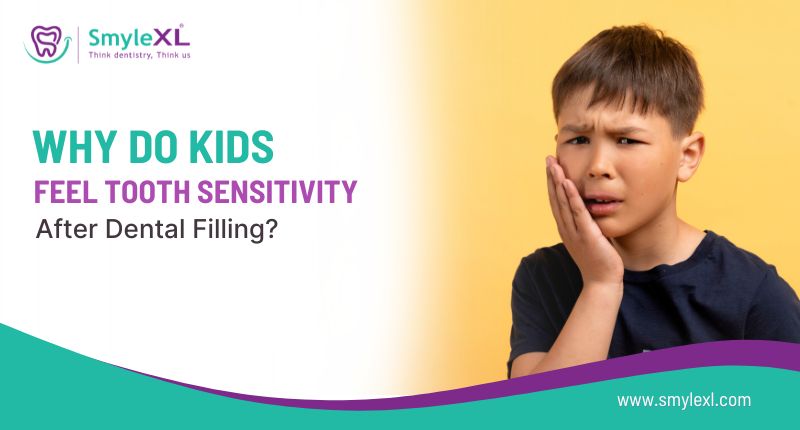

Your child just got a cavity filled, and you expect relief……finally!
Instead, they complain that their tooth hurts. They wince when drinking something cold. They mention a weird feeling when biting down. As a parent, this is confusing and worrying. Did something go wrong? Should you rush back to the dentist? The truth is that some sensitivity after a filling is completely normal, especially for children. Their teeth are different from adult teeth. The nerves are larger, the enamel is thinner, and their little mouths are still growing.
Understanding why this happens can save you from unnecessary worry and help you know when to simply wait it out versus when to seek help. If your child recently received a dental filling, this guide will walk you through what is normal, what is not, and how to help them feel better faster. At SmyleXL Dental Clinic, we see concerned parents every week after their child get a dental filling in Davanagere, and we want you to feel informed and at ease.
Why Children’s Teeth Are More Sensitive
Kids are not just small adults. Their teeth are structurally different.
Table of Contents
Toggle- The pulp chamber is larger and closer to the surface
- Dentinal tubules are wider and more open
- Enamel is thinner and offers less protection
- Nerves are more reactive to temperature changes
- Healing responses are different from mature teeth
This is why a procedure that causes mild discomfort in an adult can feel more intense for a child. Their teeth simply react more strongly to any kind of stimulation.
Why Deep Cavities Cause More Sensitivity
The depth of the cavity matters more than anything else.
- Deep cavities are closer to the nerve inside the tooth
- Removing decay near the nerve causes more irritation
- The dental drill generates heat despite water cooling
- Filling materials can conduct temperature changes
- The closer to the nerve, the longer the healing time
If your child has a large cavity, some extra sensitivity is expected. The tooth underwent major work and needs time to recover.
Food Stuck Between Teeth
Kids are not always good at explaining exactly where it hurts.
- Food packed between teeth can press on gums
- Gum pain often gets described as tooth pain
- Flossing might bring instant relief
- Your child may need help cleaning around new fillings
- Teaching proper flossing prevents this discomfort
A quick check with floss can solve this problem immediately. If the pain goes away after cleaning, you have found your answer.
Tooth Grinding and Clenching
Some children grind their teeth without realizing it.
- Grinding puts extra pressure on newly filled teeth
- Nighttime clenching is common in kids
- Stress or excitement can increase grinding
- The new filling may be more noticeable to their bite
- A night guard might help in some cases
Watch your child while they sleep or ask if they wake with sore jaws. This information helps your dentist understand the full picture.
The Role of Baby Teeth vs Permanent Teeth
Which teeth were filled makes a difference in sensitivity.
- Baby teeth have thinner enamel than permanent teeth
- The nerve is proportionally larger in primary teeth
- Baby teeth roots are dissolving as permanent teeth grow
- Permanent molars in teens have large pulp chambers
- Young permanent teeth are more sensitive than older ones
If a child receives a dental filling in Davanagere on a baby tooth at SmyleXL Dental Clinic, we explain to the parents that the reaction differs from a teenager getting the same work on a permanent molar. We make sure the parent knows that both are normal for their stage.
Allergies to Filling Materials
This is rare but worth knowing about.
- Some children react to certain metals or composites
- Allergy symptoms include persistent pain and inflammation
- Rash or irritation near the mouth may appear
- Switching to a different material solves the problem
- Your dentist can test for material allergies if needed
If sensitivity lasts weeks with no improvement, ask about material reactions. It is uncommon but treatable.
When to Simply Wait and Watch
Most post-filling sensitivity follows a predictable pattern.
- Mild discomfort for two to seven days
- Gradual improvement each day
- No swelling or fever
- The child eats and drinks normally
- Pain relievers actually help
If this sounds like your child, you can safely observe and let the tooth heal. Offer soft foods and avoid extreme temperatures for a few days.
When to Call the Dentist
Some situations need professional attention right away.
- Pain that gets worse instead of better
- Swelling of the gum or cheek
- Fever with no other cause
- Tooth keeps your child awake at night
- Sensitivity lasting more than two weeks
- Filling feels loose or looks broken
Trust your instincts. If something feels wrong, a quick check brings peace of mind. At SmyleXL Dental Clinic, we welcome parents who want to be sure everything is okay after their child gets a dental filling in Davanagere.
How to Help Your Child at Home
Simple things make a big difference in comfort.
- Soft foods for the first few days
- Avoid ice cream and hot soup immediately after
- Gentle brushing around the new filling
- Warm salt water rinses for gum irritation
- Extra hugs and patience during recovery
Kids feed off your calm energy. If you act like this is normal, they will believe it too.
Why Regular Checkups Matter
Follow-up visits catch small issues before they grow.
- Your dentist checks if the filling is still smooth
- X-rays may show if the nerve is healing well
- Bite adjustments can be made if needed
- Early signs of problems get addressed quickly
- Peace of mind for you and your child
A quick post-treatment check is always available. You never have to wonder alone.
FAQs
Q1. Can my child eat normally after a filling?
Soft foods are best for the first day or two. Avoid very hot or cold items. After that, they can return to normal eating as long as the tooth feels comfortable.
Q2. Is it normal for the gum to be sore after a filling?
Some gum soreness can happen from the clamp or the injection site. This should resolve within a few days. Warm salt water rinses help soothe irritated gums.
Q3. What if my child’s filling falls out?
Keep the area clean and call your dentist right away. A lost filling leaves the tooth exposed and vulnerable to more decay. Do not wait for the next scheduled visit.
Q4. Can a filling be adjusted if it feels too high?
Yes, absolutely. This is a common issue and an easy fix. Your dentist can smooth and polish the filling to match your child’s bite perfectly in just a minute or two.
Helping Your Child Through the Healing Process
Watching your child deal with any kind of discomfort is hard. You want to fix it, to make it better, to take it away. When it comes to tooth sensitivity after a filling, the good news is that most cases resolve on their own with simple care and a little patience. The key is knowing the difference between normal healing and something that needs attention. Your child’s tooth went through a procedure. It was cleaned, shaped, and filled. That takes time to settle. By offering soft foods, avoiding extreme temperatures, and giving gentle reassurance, you help their body do what it does best: heal.
At SmyleXL Dental Clinic, we are always here for questions, concerns, or a quick check if something does not feel right. Whether your child just had their first filling or their fifth, we want every experience with dental filling in Davanagere to be positive, comfortable, and stress-free for both of you.