
A tooth that hurts when you bite down can quickly make you wonder, Do I need root canal treatment? The answer isn’t always yes. Biting pain can happen because of a crack, deep tooth decay, irritation inside the tooth, pressure on the supporting tissues, or an infection. At SmyleXL Dental Clinic, we look at the pattern of your pain and the condition of the tooth before deciding what it needs. Let’s understand why biting can hurt and when a root canal therapy may actually be part of the treatment.
Table of Contents
ToggleWhy Does Your Tooth Hurt When You Bite Down?
Your teeth are designed to handle pressure every time you eat. When everything is healthy, biting into an apple or chewing your favorite snack shouldn’t cause pain.
So, when one particular tooth starts hurting as you bite down, it usually means something has changed either inside the tooth or in the tissues around it.
| Possible cause | What you may notice |
| Tooth decay | Sensitivity, pain with pressure or temperature |
| Cracked tooth | Sharp or unpredictable pain, sometimes when releasing the bite |
| Pulp inflammation | Sensitivity or lingering pain |
| Tooth Infection | Persistent pain, swelling, tenderness |
| High bite/pressure | Tooth feels sore when biting |
| Gum/supporting tissue inflammation | Tenderness around the tooth |
This is why tooth pain when biting down shouldn’t be judged only by how intense it feels. A quick, sharp pain and a dull, sore feeling may have different causes.
What Does Your Biting Pain Tell Us?
Dental pain can be a little sneaky. Your tooth doesn’t come with a notification saying, “Hey, I have a crack.” Instead, it gives you clues through the way it reacts.
For example, you may notice:
- A sharp pain when you bite down
- A dull or bruised feeling after chewing
- Pain only when you put pressure on one tooth
- Discomfort that comes and goes
- Pain when you release the bite
- Sensitivity along with biting discomfort
If the pain appears only when you chew something hard, pressure may be making an existing problem more noticeable.
On the other hand, if the tooth remains sore even after you stop eating, we may also look for inflammation around the tooth or its root.
There is no single pain pattern that can confirm a diagnosis. We use these clues along with an examination and, when needed, dental X-rays or other tests.
Could a Cracked Tooth Be Causing the Pain?
A cracked tooth is one possibility when biting causes a sudden, sharp sensation.
Small cracks can sometimes be difficult to spot because they may not be visible when you look at your tooth. Some cracks may also be difficult to detect on a regular X-ray.
One clue can be pain that occurs when pressure is released after biting. Imagine biting down on something and then feeling a quick “ouch” as you let go. That pattern can make us consider a crack as one possible reason.
But we wouldn’t label a tooth as cracked based on this symptom alone.
A tooth can hurt when biting for several other reasons too, including decay, inflammation, and pressure on the tissues supporting the tooth. We need to examine the tooth and consider the complete picture before deciding what is happening.
Can Tooth Decay Cause Pain When You Bite?
Yes. Tooth decay can also be behind biting discomfort.
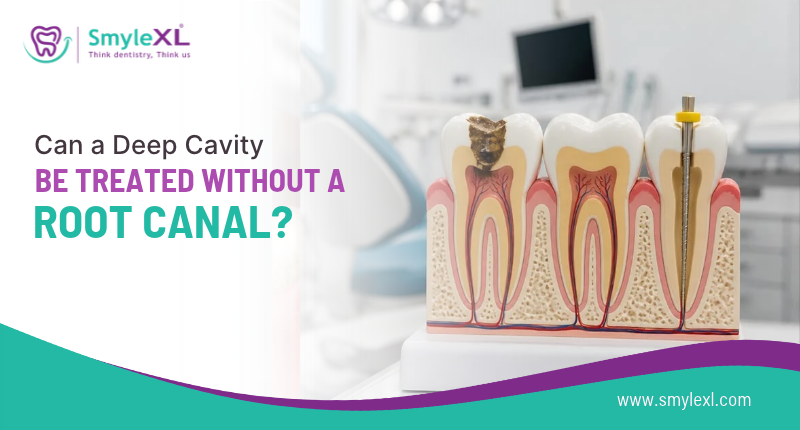
A cavity starts by affecting the outer parts of the tooth. If it continues to progress, it can move deeper towards the dental pulp, the soft tissue inside the tooth that contains nerves and blood vessels.
As the pulp becomes irritated, you may notice sensitivity or pain. In some cases, pressure from biting can also trigger discomfort.
This is one reason we don’t recommend waiting for severe pain before getting a dental check-up. A tooth can have a problem before it becomes dramatically painful.
If decay reaches the pulp and causes significant inflammation or infection, the treatment discussion may change. Depending on the condition of the pulp,
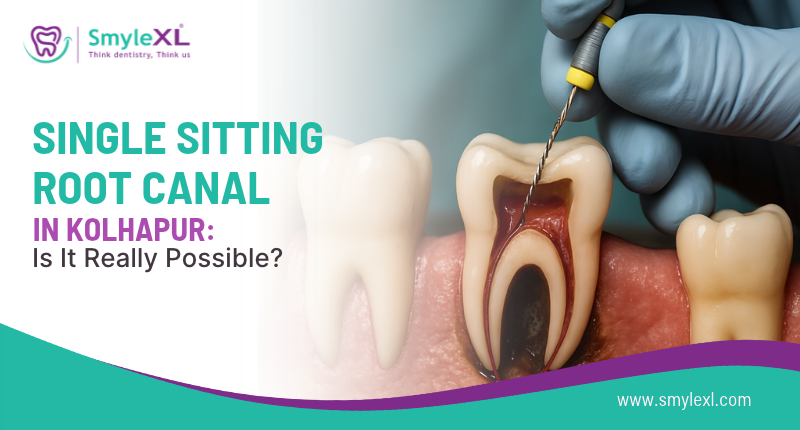
root canal treatment may be considered to remove the affected tissue, clean the inside of the tooth, and seal it.
The important part is that the treatment follows the diagnosis, rather than the other way around.
When Does a Tooth Infection Become a Concern?
A tooth infection can develop when bacteria reach the dental pulp, often through deep tooth decay, cracks, or other damage. If the infection progresses, bacteria can spread through the root canal system and into the tissues around the tooth.
You may experience ongoing pain, tenderness, sensitivity, or swelling. Some people may also notice a bad taste or a pimple-like swelling near the gum.
A dental abscess can occur when pus collects because of an infection. Swelling around the gum or face, fever, or difficulty swallowing or breathing needs prompt professional attention.
When infection or severe inflammation affects the dental pulp, root canal treatment may be used to treat the inside of the tooth and help preserve the natural tooth.
But again, not every painful tooth has an infection. This distinction matters because treating the wrong problem won’t solve the reason behind your pain.
When Might You Need Root Canal Treatment?
RCT may be considered when:
- The dental pulp is irreversibly inflamed or infected.
- The pulp is too damaged to heal on its own.
- The affected tissue needs to be removed, and the canal cleaned and sealed.
- The goal is to treat the problem while preserving the natural tooth.
However, biting pain alone does not mean you need a root canal.
It can also be caused by:
- A cracked or weakened tooth
- A cavity
- Inflammation around the tooth
- Excessive biting pressure
Each cause may need a different treatment. That’s why we first identify why the tooth hurts before recommending RCT.
Does Every Tooth That Hurts While Biting Need a Root Canal Therapy?
No, and this is an important distinction.
If you search for “tooth hurts when biting,” you may quickly come across root canal treatment as a possible answer. But a symptom isn’t the same thing as a diagnosis.
A tooth with a small cavity may need restorative treatment. A bite that is placing too much force on one tooth may need to be assessed differently. A crack may require careful evaluation based on its depth and location.
If the problem involves the dental pulp and the pulp cannot recover, a root canal therapy may become appropriate.
So rather than asking only, “Do I need a root canal?”, we need to ask:
What is causing the pain?
Once we understand that, the treatment options become much clearer.
What If Your Tooth Hurts Only When Chewing?
Tooth pain while chewing can be easy to ignore because the tooth may feel completely normal when you’re not eating.
You might even start chewing on the other side without thinking much about it.
But if the same tooth repeatedly hurts whenever you chew, that change is worth noticing.
Try to observe a few things:
- Does the pain happen when you bite down?
- Does it happen when you release the pressure?
- Is the pain sharp or dull?
- Does the tooth feel sore afterward?
- Does hot or cold food also trigger discomfort?
- Is there swelling around the tooth?
- Has the pain become more frequent?
These details can help us understand the problem more clearly.
Until you can get the tooth examined, it is sensible to avoid very hard foods and chew on the opposite side. Don’t keep biting down on the painful tooth just to check whether it still hurts. Your tooth has already submitted its complaint!
What Happens During a Dental Examination?
When you visit SmyleXL Dental Clinic with biting pain, we don’t need you to arrive with a diagnosis.
You simply need to tell us what you’ve been experiencing.
We may ask when the pain started, what triggers it, and whether it continues after you stop biting. We then examine the tooth and the surrounding area. Depending on what we find, dental X-rays or other tests may be useful.
This helps us distinguish between problems such as decay, a cracked tooth, inflammation around the root, and issues involving the dental pulp.
The goal is simple: find the reason before deciding on the treatment.
That approach also helps prevent unnecessary treatment. A painful tooth deserves attention, but it doesn’t deserve a random guess.
Don’t Ignore Repeated Biting Pain
One uncomfortable bite may seem easy to brush off. But if the same tooth keeps hurting whenever you chew, your body is giving you a reason to pay attention.
The pain could be linked to decay, a crack, pressure, inflammation, or an infection. If the dental pulp is severely affected, we may consider root canal treatment. If the cause is something else, the appropriate treatment may be different.
At SmyleXL Dental Clinic, we focus on understanding the cause of your dental pain before recommending RCT or any other treatment.
If your tooth hurts when you bite down, don’t let every meal become a guessing game. Book a dental consultation with SmyleXL Dental Clinic and let us find out what your tooth is trying to tell you.
SmyleXL Dental Clinic — Healthy teeth. Confident smiles.

Dr Sujit Pardeshi
Principal Dentist & Dental Care Expert
Dr. Sujit Pardeshi is an experienced dentist with 20+ years of experience in dentistry at SmyleXL Dental Clinic, Viman Nagar, Pune. His areas of expertise include general, cosmetic and restorative dentistry, root canal treatment, dental implants, crowns, dentures, teeth whitening and smile makeovers.
Professional Profile: Dr. Sujit Pardeshi
Facebook: SmyleXL Facebook
Instagram: SmyleXL Instagram
YouTube: SmyleXL YouTube