
Think about the last time you had a “small” problem that turned into a giant headache. Maybe it was a weird noise in your car engine that you ignored until the car stopped on the highway, or a tiny leak in the ceiling that waited for a thunderstorm to turn your living room into a swimming pool. Dental pain is exactly like that. It starts as a tiny “zing” when you drink cold water, and before you know it, you’re up at 3:00 AM, pacing the floor, wondering if you can somehow perform surgery on yourself with a pair of pliers.
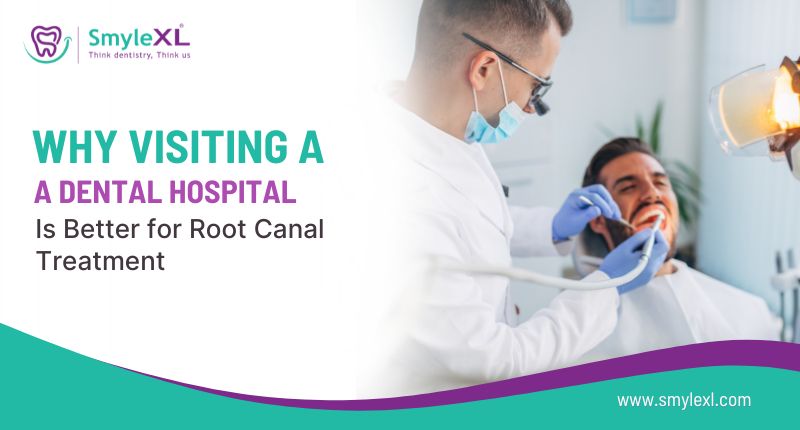
When that level of pain hits, your brain goes into survival mode. You don’t just want a quick fix; you want the heavy hitters. For many people, the next question is not whether to get it done, but where to get it done. A small clinic nearby? Or a proper root canal treatment hospital?
At first, the difference may not seem important. After all, the procedure sounds the same. But when it comes to something as delicate as treating an infection inside your tooth, the environment, equipment, and expertise matter more than you think.
At SmyleXL Dental Clinic, we believe patients should understand why choosing the right place for treatment can make all the difference.
Let us break it down in simple, clear language.
Table of Contents
ToggleWhat Happens During a Root Canal?
Before we talk about hospitals, let us understand the procedure.
Inside your tooth is soft tissue called pulp. When it gets infected due to deep cavities, cracks, or injury, it causes:
- Severe pain
- Sensitivity to hot and cold
- Swelling
- Sometimes pus formation
During a root canal, the infected pulp is removed, the inside of the tooth is cleaned and disinfected, and then sealed to prevent further infection.
It sounds straightforward. But in reality, it requires precision, experience, and the right tools.
That is where a root canal treatment hospital stands out.
1. Advanced Equipment Makes a Big Difference
A dental hospital is usually equipped with advanced technology that improves both accuracy and comfort.
This may include:
- Digital X-rays for clear imaging
- RVG systems for instant results
- Apex locators to measure root length accurately
- Rotary endodontic instruments for smoother cleaning
- Sterilization units that meet high medical standards
Why does this matter?
Because root canals are about cleaning very narrow, tiny canals inside your tooth. Even a small portion left untreated can cause infection later.
Advanced tools reduce that risk.
2. Experienced Specialists Under One Roof
In a dental hospital setting, you often have access to specialists.
For example:
- Endodontists who focus specifically on root canals
- Prosthodontists who handle crowns and restorations
- Oral surgeons, if complications arise
Having multiple experts available ensures:
- Better diagnosis
- More accurate treatment
- Immediate support if needed
You are not just depending on one opinion. You are supported by a team.
3. Better Infection Control and Sterilization
Let us talk about something very important: hygiene.
A root canal involves working deep inside the tooth. Proper sterilization is essential to prevent bacteria from re-entering.
In a hospital environment, you can expect:
- Strict sterilization protocols
- Autoclaved instruments
- Disposable items were required
- Clean and controlled treatment rooms
This reduces the chances of post-treatment infection significantly.
4. Handling Complicated Cases Safely
Not all root canals are simple.
Some cases involve:
- Curved or narrow root canals
- Previous failed treatments
- Severe infection
- Large swelling
- Broken instruments inside canals
These situations require advanced skill and equipment.
Choosing a root canal treatment hospital ensures that even complex cases can be handled confidently.
5. Emergency Support If Needed
Though rare, complications can happen.
In a hospital setting, you have:
- Immediate medical support
- Access to emergency equipment
- Trained staff to manage unexpected reactions
This adds an extra layer of safety.
6. More Accurate Diagnosis
Pain in your tooth may not always mean you need a root canal. Sometimes it could be:
- Gum infection
- Sinus-related pain
- Cracked tooth
- Deep cavity without pulp infection
In a hospital, diagnostic tools help confirm the exact cause before treatment begins.
This avoids unnecessary procedures.
7. Comfortable and Structured Treatment Process
Many people imagine hospitals as stressful places. But modern dental hospitals focus on patient comfort.
You can expect:
- Comfortable dental chairs
- Clear explanation before starting
- Step-by-step guidance
- Follow-up instructions
SmyleXL Dental Clinic ensures that patients understand what is happening at every stage.
When you know what to expect, fear reduces.
8. Reduced Chances of Retreatment
One of the biggest concerns patients have is:
“What if the pain comes back?”
Retreatment is usually needed when:
- Infection was not fully removed
- Canals were not cleaned properly
- The tooth was not sealed correctly
Advanced equipment and skilled specialists in a hospital reduce these risks significantly.
That means better long-term success.
9. Proper Follow-Up and Crown Placement
A root canal is not complete without placing a crown.
In a hospital setup:
- Impressions are taken accurately
- Crown fitting is precise
- Bite alignment is checked carefully
This ensures the treated tooth is strong and functional.
Skipping this step or delaying it can cause fractures.
10. Transparency in Treatment Planning
In a structured hospital environment, treatment plans are usually:
- Clearly explained
- Documented
- Supported with X-ray images
You know what is being done and why.
This builds trust.
What Patients Often Ask
Let us address a few common doubts.
Is a hospital more expensive?
Not necessarily. While equipment and facilities are advanced, the focus is on long-term success. Preventing complications saves money in the future.
Is the procedure painful?
With modern anesthesia and technology, discomfort is minimal. In fact, most patients feel relief after the infection is removed.
How long does it take?
Depending on the severity, it may take one or two visits. Complex cases may need more time.
When Should You Choose a Hospital for a Root Canal?
You should strongly consider it if:
- Pain is severe
- Swelling is present
- The previous root canal failed
- Tooth has a complex structure
- You want a higher success rate
A root canal treatment hospital is especially beneficial for cases that need precision and careful planning.
Why SmyleXL Dental Clinic?
At SmyleXL Dental Clinic, we combine:
- Experienced dentists
- Modern diagnostic tools
- Strict sterilization standards
- Clear communication
- Patient-focused care
We understand that root canal treatment often comes with fear and hesitation. That is why we prioritize comfort and clarity.
From the first consultation to final crown placement, the goal is simple: save your natural tooth safely and effectively.
The Bigger Picture
Saving a tooth is always better than removing it.
Your natural tooth helps with:
- Proper chewing
- Clear speech
- Maintaining jaw structure
- Preventing shifting of nearby teeth
A properly done root canal can last for many years, sometimes even a lifetime.
Choosing the right place for treatment plays a big role in that success.
Reclaiming Your Peace of Mind
A toothache may seem like a small problem at first, but once infection reaches the pulp, timely treatment becomes essential. Getting it done at a reliable root canal treatment hospital ensures better diagnosis, advanced technology, experienced specialists, and higher safety standards.
Instead of choosing based only on convenience, think about long-term results. A carefully performed root canal can save your tooth, relieve pain, and restore your confidence.
At SmyleXL Dental Clinic, we are committed to providing hospital-level precision and patient-centered care. When it comes to protecting your natural smile, choosing the right root canal treatment hospital can truly make all the difference.