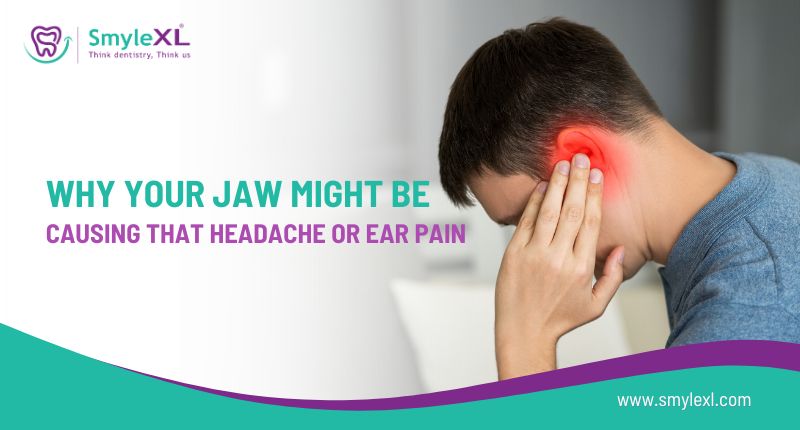

And no, it’s not all in your head… or maybe, it kind of is.
Your head hurts. Your ears feel full. You’ve done the full medical tour; ENT, neuro, even your friendly local baba, but no clear answers. You’ve popped pills, tried hot water bags, and maybe even blamed your Wi-Fi radiation. But the pain keeps coming back.
Now, what if the actual culprit is something you’ve been ignoring?
Your jaw. Yes, that part of your face you use for everything from chewing your food to cracking knuckles during arguments.
Let’s break it down.
Table of Contents
ToggleJaw and Head: A Closer Link Than You Think
You might think your jaw only helps with chewing, yawning, or making dramatic expressions during TV serials. But your jaw, specifically, a part of it called the TMJ (temporomandibular joint), is deeply connected to your head, neck, and even ears.
So if it goes even slightly out of sync, your whole face can act like it’s on strike.
Let’s say your jaw is even a little misaligned.
That tiny shift can create:
- Muscle tension
- Nerve pressure
- Inflammation
- Stress on nearby areas like your temples and ear canal
And what does that feel like?
Headaches. Ear pain. Jaw stiffness. Sometimes all three.
Real-Life Clues You Shouldn’t Ignore
Most people don’t even realize their jaw is causing trouble. They think, “It’s just a headache,” or “Maybe I didn’t sleep well.” But there are clear signs you can watch out for.
Here are some things that point towards a jaw issue:
- Clicking or popping sounds when you open your mouth
- Your jaw feels sore when you wake up
- Difficulty opening your mouth wide
- Pain while chewing or talking
- Headaches that feel like pressure around the temples or behind the eyes
- Ear pain or a feeling of fullness without an infection
- Teeth that are worn down or chipped
Still thinking it’s nothing?
Even clenching your jaw while watching a tense cricket match can start this chain reaction.
The Hidden Villain: Jaw Misalignment
You don’t have to have a serious injury for your jaw to be misaligned.
Even simple habits can mess things up over time:
- Chewing only on one side
- Resting your chin on your hand
- Teeth grinding while you sleep
- Poor posture (yes, your Netflix-watching slouch matters)
- Missing teeth that throw off your bite
These daily habits slowly shift your jaw from its natural position.
And when it shifts, pain follows like that one friend who never leaves the party.
If your bite feels “off,” or your teeth don’t meet evenly when you close your mouth, it could be a sign that you’re dealing with jaw misalignment, and that could very well be what’s triggering your pain.
Why The Ear Gets Dragged Into This Drama
You must be wondering, the jaw and the ear aren’t even that close, right?
Well, they are. In fact, the TMJ sits right next to your ear canal. That’s why even a small problem in the jaw can send pain signals to your ears.
People often feel:
- A sharp ache deep in the ear
- A stuffy or clogged feeling
- Ringing sounds (tinnitus)
- Dizziness or balance issues
And the worst part? You might treat it like an ear infection, but antibiotics won’t help here. It’s your jaw causing all the noise.
Teeth Grinding: The Silent Culprit
A lot of people grind their teeth without knowing it. Especially at night. You wake up feeling like you wrestled a tiger in your sleep. Your jaw is sore, your head’s pounding, and your teeth feel like they’ve done overtime.
Grinding your teeth (also called bruxism) puts a crazy amount of pressure on your jaw muscles and joints. Over time, this causes:
- Tension headaches
- Facial soreness
- Ear pain
- Worn-down teeth
- Jaw locking or clicking
If you’ve ever woken up with a sore face or feel like you’re chewing gum in your sleep, it’s time to ask your dentist about this.
To get answers to your jaw misalignment questions, book an appointment with our expert at SmyleXL Dental Clinic.
Stress = Tight Jaw = Pain
You know that feeling when you’re stressed, and your whole face feels tight? That’s not your imagination.
When we’re anxious or under pressure, we often clench our jaws without even realizing it. This constant tension messes with your jaw joint. Over time, this tightness becomes chronic pain.
Stress-related jaw clenching is a major trigger for both headaches and ear pain.
So if your job, exam prep, or family WhatsApp group is giving you stress, your jaw might be the one taking the hit.
So What’s the Fix?
Good news: You don’t have to live with this pain forever. There are real solutions. And no, they don’t involve hanging upside down or switching pillows every week.
Here’s what might help:
1. Jaw Pain Treatment from a Specialist
Get evaluated by a dentist who understands TMJ issues. You might need a custom night guard, bite correction, or even small dental changes to bring your jaw back into alignment.
2. Simple Exercises
There are easy jaw stretches and massages that can help relieve tension. A dentist or physiotherapist can guide you.
3. Stress Management
Sounds boring, but reducing stress through breathing exercises, yoga, or short walks can calm down that clenching habit.
4. Posture Check
Slouching affects your whole upper body, including your jaw position. Fix your posture, fix half the problem.
5. Avoid Chewing Gum & Hard Foods
Give your jaw a break. It’s been through enough.
Common But Misunderstood: Why It’s Often Missed
Here’s the tricky part: most doctors don’t always think of the jaw as the first reason behind ear pain or headaches. It’s not their fault. It’s just that TMJ issues don’t always show up on scans or X-rays.
That’s why many people go undiagnosed for years. They treat everything but the actual problem.
And while you may have been told “it’s just stress” or “maybe sinus,” deep down, you knew something wasn’t adding up.
If this sounds familiar, it might be time to consider that jaw misalignment could be the real reason behind your ongoing pain.
Still Not Sure If It’s Your Jaw?
Here’s a quick self-check (not a diagnosis, but a nudge in the right direction):
- Place your fingers just in front of your ears and open your mouth.
- Do you feel clicking, popping, or uneven movement?
- Press gently on your jaw joints. Is there tenderness?
- Does chewing sometimes feel like a task?
- Do you wake up with a tight jaw or sore teeth?
- Have your headaches been worse after stressful days?
If you nodded to most of these, it might be time to book an appointment and get proper jaw pain treatment before it gets worse.
Don’t Let Your Jaw Be the Silent Troublemaker
You’ve lived with that head pressure or annoying ear pain long enough. And maybe you were looking in all the wrong places. Sometimes, the answer isn’t in a CT scan or blood test.
Sometimes, it’s right under your nose, literally.
Your jaw could be the quiet troublemaker that’s messing up your peace.
But the good part is: it can be fixed.
With the right support, small changes, and expert advice, your jaw can go from villain to hero.
You just need to take that first step. Get it checked.
Even better, talk to a dentist who knows TMJ like the back of their hand.
What are you waiting for?
Get the right jaw pain treatment today and give your head, ears, and peace of mind the rest they deserve.
It’s not always the big problems that give you pain. Sometimes, it’s just a slightly off bite, a small misalignment that turns into a big mess. Fix the bite. Fix the pain.
Because honestly, headaches should come from bad jokes, not from your own face.
For more information about jaw pain treatment, feel free to book an appointment with our expert at SmyleXL Dental Clinic.